Food processors must comply with three major 2026 regulations: FSMA Rule 204 requiring detailed traceability for high-risk foods, EPA rules phasing out high-global warming potential refrigerants, and MAHA requirements to remove artificial preservatives. Industry solutions include data-driven tracking systems, modified atmosphere packaging, and cryogenic technologies.
- FSMA Rule 204 mandates end-to-end traceability for high-risk foods like cheese, focusing on Critical Tracking Events and Key Data Elements to enable rapid recalls
- EPA AIM Act requires phasing out high-global warming potential (GWP) refrigerants and transitioning to lower-GWP alternatives by 2026
- MAHA Strategy pushes removal of artificial preservatives, increasing demand for alternative preservation methods like modified atmosphere packaging (MAP)
- CGA P-95 Guideline published in May 2025 provides safety recommendations for cryogenic food freezing and chilling equipment
- Industry providers offer solutions including connected tunnel freezers with smart sensors, real-time monitoring systems, and sanitation specialists to help processors meet compliance challenges
With the turn of the calendar from 2025 to 2026 comes a slew of new laws and regulations impacting food processors. One of those being the implementation of stricter U.S. Environmental Protection Agency (EPA) rules under the American Innovation and Manufacturing (AIM) Act.
On Dec. 27, 2020, the AIM Act was enacted, authorizing the EPA to address hydrofluorocarbons (HFCs) to phase down the production and consumption of listed HFCs, manage these HFCs and their substitutes, and facilitate the transition to next-generation technologies through sector-based restrictions.
These regulations aim to phase out high-global warming potential (GWP) refrigerants (HFCs) and transition to lower-GWP alternatives, presenting several compliance and operational challenges for businesses.
Also effective come 2026—although a proposal has been made to delay it by 30 months until July 20, 2028—is the FSMA Rule 204 (Food Traceability Rule), an FDA requirement under the Food Safety Modernization Act (FSMA) mandating detailed records for high-risk foods on the Food Traceability List (FTL) to enable rapid tracing during outbreaks. This revised rule focuses on Critical Tracking Events (CTEs) like growing, receiving, and shipping, and Key Data Elements (KDEs) like traceability lot codes, aiming to significantly speed up recalls and protect public health, forcing food processors to be more accountable and proactive in the track and trace of their products.
“This regulation requires enhanced, end-to-end traceability for specific high-risk foods, like cheese. This creates a significant data management challenge for processors,” says Bill Adams, Director, Food and Pharmaceutical Solutions at Airgas, an Air Liquide company. “Data-driven systems and traceable inputs are direct solutions. For example, our Connected Tunnel is designed to automatically log key processing data, such as temperatures and processing times, for specific product batches. This helps customers capture the 'what, when, and where' of their critical tracking events. This, combined with our ability to provide traceability documentation for our food-grade Modified Atmosphere Packaging (MAP) gases (which are an input in their process), helps processors build the comprehensive data record required to meet these stringent new requirements.”
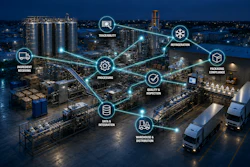
 Data-driven solutions help clients automatically capture the critical data needed to meet stringent new traceability requirements.Airgas
What’s more, the "Make America Healthy Again" (MAHA) strategy from the U.S. Department of Health and Human Services (HHS) is pushing processors to remove artificial preservatives and ingredients, Adams says.
“This trend directly increases the need for alternative preservation methods. We are working closely with customers to implement modified atmosphere packaging (MAP) solutions, which use a precise blend of food-grade gases to extend shelf life and maintain product freshness, quality, and safety, all without adding chemicals to the label.”
Aside from macro issues like trade tariffs and food safety requirements, “in May 2025, the Compressed Gas Association (CGA) published CGA P-95, Guideline for the Safe Installation and Use of Cryogenic Food Freezing and Chilling Equipment. This new, harmonized guideline provides detailed recommendations to support the safe and effective use of refrigerated liquefied gases in food applications,” says Don Smiley, Director of Food and Beverage at Messer.
And food processors are exhibiting a more concerted focus on CO2 to be used not only as a gas for carbonated beverages, but also as a liquid for dry ice production and inline freezing/chilling.
 The FPS Sanitation Division consists of sanitation specialists who conduct equipment audits and provide hands-on training for customers’ in-house teams.FPS Food Process Solutions
Although these rules and regulations (and others) are designed to enforce stricter food safety, they also pose financial and operational challenges for many of today’s food processors. That’s why some providers offer initiatives designed to help processors manage maintenance, training, and sanitation more effectively, according to Smiley.
Messer, for example, made available the Messer KwikChiller, a nitrogen-based, continuous, in-line cooling and freezing solution that delivers rapid, uniform temperature control and variable cooling rates for delicate products.
Messer also helps food processors overcome production and CO₂ supply challenges by converting lines to liquid nitrogen and installing cryogenic chilling and freezing technologies to help customers run more efficiently.
Messer also announced a $70 million strategic investment to construct a state-of-the-art air separation unit (ASU) in Berryville, Ark., to ensure reliable nitrogen, oxygen, and carbon dioxide supply, Smiley adds.
“Messer’s field-based team is continuously innovating, with a strong record of developing proven technologies to support the food and beverage industry’s challenges,” Smiley adds. “Our team has decades of hands-on experience of listening to our customers’ needs and delivering safe, cryogenic solutions that help increase throughput, improve efficiency, preserve quality, and support more resilient supply chains.”
For its part, Air Products released its Freshline Smart Technology designed to help food processors struggling with a lack of skilled labor and retention, says Vacaro.
 Freshline Smart Technology is designed to help food processors struggling with a lack of skilled labor and retention.Air Products
“Over the last several years, Air Products has offered what we call our Smart Technology platform. Air Products Smart Technology is a platform that our team designed and built that allows us to compile data from production equipment, such as freezers and blenders, and relay it to our internal communications system. It uses sensors and wireless communications technology to advise process optimization based on advanced analytics, as well as tracking key process parameters. All Air Products cryogenic tunnel freezers now come with the hardware necessary to securely connect to the network. There are many features available within the platform, but I'll provide a tangible example as to one of the use cases,” Vacaro.
“Air Products’ food freezing customers no longer need to spend hours training employees to become experts in operating their nitrogen freezing equipment. With Air Products’ Smart Technology, our team can help troubleshoot any issues in real time and provide the necessary guidance to make adjustments as needed,” he adds.
Air Products also introduced the MP+ tunnel freezer variant for customers looking to achieve a very high throughput crust freeze. It can process more than 5,000 pounds per hour in ~20 feet of freezing zone for certain food items, and is designed for food processors limited in space.
 Air Products' MP+ tunnel freezer variant is for customers looking to achieve a very high throughput crust freeze.John Tomaselli/Adobe Stock
Airgas, on the other hand, provided comprehensive cryogenic solutions that combine high-purity food-grade gases, state-of-the-art equipment, and unmatched application expertise, according to Adams.
“Our freezers (including tunnels and spirals) and chillers are all designed with sanitary, open, and accessible builds to directly address the sanitation challenge,” he says. “To solve the challenges of downtime, inefficiency, and reliability, we are focused on data-driven solutions. Our Connected Tunnel offer, for example, moves beyond just equipment by using sensors to gather continuous data on key operational parameters. This provides processors with actionable insights to monitor gas consumption, optimize performance, and enable predictive maintenance, directly reducing downtime and cutting operational costs. It transforms the freezer from a standalone, unmonitored piece of equipment into a smart, manageable asset.”
FPS Food Process Solutions also launched several initiatives designed specifically to help processors manage maintenance, training, and sanitation more effectively.
For instance, the FPS Remote Monitoring System collects and analyzes real-time data to help predict maintenance needs, minimize downtime, and improve overall equipment performance.
Additionally, the FPS Sanitation Division consists of sanitation specialists who conduct equipment audits and provide hands-on training for customers’ in-house teams.
 The FPS Remote Monitoring System collects and analyzes real-time data to help predict maintenance needs, minimize downtime, and improve overall equipment performance.FPS Food Process Solutions
“FPS Food Process Solutions has been at the forefront of thermal processing innovation for over 15 years, providing leading-edge freezing and cooling equipment to global food processors,” says Justin Lai, VP, Sales & Marketing for FPS Food Process Solutions. “Integration is the future. The more that refrigeration, monitoring, and sanitation systems are connected, the more efficiently a facility can run.”
And they can align with the ever-changing food safety rules and regulations of tomorrow.