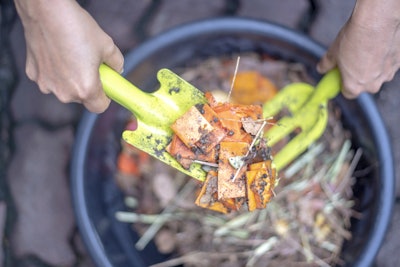
Michigan State University researchers developed a new biodegradable food packaging material based on polylactic acid and starch that breaks down in residential compost piles, addressing the challenge of food-contaminated plastics that cannot be recycled.
- Over 91% of plastic waste in the United States ends up in landfills, incinerators, or the environment because only 8.7% gets recycled
- Food contamination makes traditional plastic recycling impossible, as soiled plastics require extensive cleaning that renders them unrecyclable
- MSU's new material combines polylactic acid (PLA) with starch to enable breakdown in residential composting conditions, not just industrial facilities
- The biodegradable material breaks down into natural byproducts: water, carbon dioxide, and lactic acid
- Research findings published in ACS Sustainable Chemistry & Engineering detail the team's most efficient compostable material to date
A research team from Michigan State University’s School of Packaging has developed a new material to help consumers cut down our waste, according to a recent report on NBC News 8.
While "reduce, reuse, recycle" has been widely promoted, plastic recycling rates in the United States remain dismally low, with just 8.7% of plastic being recycled, leaving over 90% to end up in landfills, incinerated, or littering the environment. One major challenge in the recycling process is sorting various plastic types, exacerbated by the thousands of different plastics now in use.
Rafael Auras, a professor at MSU, has been working for nearly two decades to create a biodegradable plastic alternative that can be composted rather than recycled. The main issue with recycling is food contamination, as plastics soiled with food residue require extensive cleaning, rendering them unrecyclable. Auras believes composting is the key to addressing this issue.
The researchers have developed a new material based on polylactic acid (PLA), a biodegradable substance that, when manufactured properly, breaks down into natural byproducts like water, carbon dioxide, and lactic acid. While PLA already degrades easily in industrial composters, the challenge is to make it suitable for residential compost piles, which require lower temperatures and specific conditions.
To achieve this, the research team incorporated starch into PLA, aiming to find the right balance that allows the material to maintain its shape and integrity while rapidly breaking down in a composting environment. Their latest findings, published in the academic journal ACS Sustainable Chemistry & Engineering, detail their most efficient material to date.
Beyond fine-tuning this material, Auras and his team are looking to develop biodegradable food packaging. Protecting perishable items during their lifecycle is crucial, and creating sustainable packaging is the next challenge for the industry. Auras emphasizes the importance of protecting food products, especially given their high environmental footprint.