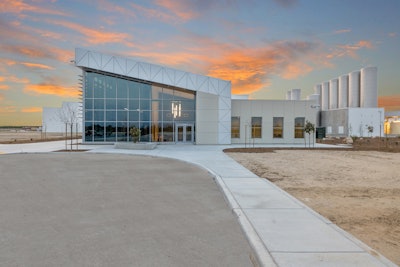
California Dairies opened a high-tech Valley Natural Beverages plant in Bakersfield that processes up to 150,000 gallons of milk daily using advanced automation, UHT technology, and renewable energy to diversify products and increase returns for its 250 member farmers.
- The 47-acre Bakersfield facility opened in December 2024, just 18 months after purchase, with capacity for 150,000 gallons daily and infrastructure to scale to 600,000 gallons
- Advanced processing systems include UHT technology, automated CIP cleaning, aseptic and ESL filling lines, and a GEA separator for complete product self-sufficiency
- The plant features 12 megawatts of renewable energy generation through solar panels, 10 linear generators, and two CHP turbines, targeting complete off-grid operation
- Sustainability innovations include anaerobic digester, advanced membrane bioreactor for wastewater treatment, reverse osmosis water purification, and ammonia refrigeration
- The facility diversifies dairy products beyond butter and powder into premium fluid milk and value-added beverages, with exports already reaching Mexico, Cambodia, and South Korea
Making the call to invest in the future can be a scary proposition for many F&B manufacturers given the uncertain economic climate the past few years. It might be especially so for producers of dairy products given the incredibly tight on farm margins. But California Dairies, Inc. (CDI), owners of Valley Natural Beverages, decided not to give in to those fears and instead set out on another path. CDI gave the green light to construct one of the most advanced dairy facilities in the U.S., underscoring its strategy to diversify beyond butter and milk powder and include premium dairy beverages for the more than 250 California farmers who own the cooperative and make up its membership.
Built from the ground up on a 47-acre greenfield site in Bakersfield, Calif., the plant is the cooperative’s first greenfield project. Opened earlier this year, the Valley Natural Beverages (VNB) plant is CDI’s first facility dedicated to fluid milk and value-add liquid products.
“This project really captures what we stand for as a co-op,” says Troy Hancock, Site Director for CDI Bakersfield. “Everything here is designed to add value for our member-owners. By processing more milk into fluid and extended shelf-life (ESL) products, we’re giving them access to a broader market and strengthening the California dairy market overall.”
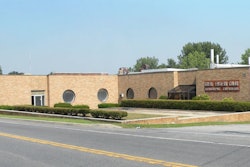
 The 47-acre greenfield site in Bakersfield, Calif., is the cooperative’s first new greenfield project in more than 15 years.Danny Klorman / California Dairies, Inc.
Currently, the plant can receive 25 truckloads—about 150,000 gallons—of milk daily, with infrastructure in place to scale to 100 loads, or roughly 600,000 gallons per day. The location in California’s Central Valley ensures a strong, localized milk supply, with numerous dairy farms within a 20-mile radius.
“The proximity to supply was key,” Hancock says. “We’ve got all the milk we’ll ever need right here, and we’re close to both I-5 and Highway 99 for easy access to the ports of Los Angeles and Oakland. That’s huge for our export business.”
Fast build, future-proof design
California Dairies, Inc. purchased the Bakersfield property in June 2023 and broke ground four months later. By December 2024—just 18 months from purchase—CDI was producing sellable product.
The contractor and architect for the 200,000-sq-ft build were Big-D Construction and E.A. Bonelli + Associates, respectively. From the earliest design stages, the goal was to create a flexible and expandable site that could adapt to market demands and new products.
“The current configuration supports three packaging lines,” Hancock says. “But we’ve built the backbone—utilities, controls, piping, electrical—for significant expansion.”
 The site currently operates three packaging lines, but there is room for seven more before additional construction would be needed to double that.Danny Klorman / California Dairies, Inc.
"It’s not glamorous, but details like that matter,” Hancock says. “We can expand, maintain, or service equipment without shutting down other parts of the plant.”
At full build-out, CDI’s Bakersfield facility can handle 600,000 gallons of milk per day, operate on renewable energy, recycle water onsite, and rely on high-efficiency automation to maintain top-tier product quality.
For Hancock, the project reflects both innovation and purpose. “We built this plant not just to meet today’s needs, but to prepare for what’s next,” he says. “Every pipe, every valve, every line was designed for growth. It’s a showcase of what’s possible when you align sustainability, technology, and cooperative values.”
Processing systems engineered for reliability
CDI worked closely with JCS Process & Control Systems to develop the processing architecture, which includes integrated batching, separation, inline blending, and pasteurization systems feeding filling lines—one extended-shelf-life (ESL) and two aseptic. The ESL line finishes with a packaging system from Elopak, while the aseptic lines use Tetra Pak.
“This is a fully automated system from end to end,” says Carlos Ponce, Production Supervisor at the VNB facility. “We can run multiple product types with very little operator intervention. If I want to clean a tank, it’s a one-button operation—everything runs through automated CIP [clean-in-place] cycles with real-time verification.”
 Integrated batching, separation, inline blending, and pasteurization systems feed three filling lines—one extended-shelf-life (ESL) and two aseptic.Danny Klorman / California Dairies, Inc.
The plant’s CIP system consists of three independent circuits on the raw side and a separate system for pasteurized lines. Both systems are designed with reuse capability to conserve water and energy while maintaining full regulatory compliance.
The fluid processing lines utilize GEA double-seat valves with integrated control tops, allowing simultaneous product flow and cleaning in adjacent lines without the risk of cross-contamination. “That technology gives us greater throughput and flexibility,” Ponce says. “We can be cleaning one section while processing in another, which keeps uptime high.”
For quality assurance, each batch undergoes stringent microbiological testing. A dedicated onsite lab collects and incubates samples in a 90°F “hot box” to confirm sterility before release. “We test everything— from raw milk to finished product,” Ponce says. “Some samples are held for two days, others for 30. It’s all about ensuring product integrity.”
 The fluid processing lines utilize double-seat valves with integrated control tops, allowing simultaneous product flow and cleaning in adjacent lines without cross-contamination risk.Danny Korman / California Dairies, Inc.
Ultra-high temperature processing: designed for precision and product diversity
The Bakersfield plant’s ultra-high temperature (UHT) system is the centerpiece of its liquid processing operation, allowing CDI to produce a wide range of high-value products—from shelf-stable creams to extended-shelf-life milks—within a single, tightly controlled framework.
Configured with direct steam infusion technology and a closed aseptic loop, the UHT system enables rapid thermal treatment while maintaining the product’s sensory and nutritional quality. Milk is heated to ultra-high temperatures for only a few seconds and then cooled immediately under sterile conditions, preserving the fresh dairy flavor that customers expect.
What makes the Bakersfield setup distinct is its scalable design and recipe-driven flexibility. Operators can switch between product types with minimal manual intervention, as temperature profiles, flow rates, and hold times are all preprogrammed and automatically executed through the plant’s control interface. The same base system can produce fluid milk one shift and whipping cream or nutritional formulations the next.
The integration of UHT with aseptic and ESL filling lines also streamlines production and minimizes exposure risk. Product flows directly from the sterilizer to filling, maintaining an aseptic environment throughout the process. This configuration supports both domestic refrigerated distribution and export of shelf-stable products—key to CDI’s long-term strategy of diversifying markets for its member farms.
To support future growth, the plant’s utility corridors and floor space were laid out to accommodate additional UHT trains as capacity needs rise. “We built this system with long-term flexibility in mind,” says Hancock. “We can expand throughput, add parallel heat exchangers, or tailor parameters for new formulations without redesigning the plant.”
All the systems at the Bakersfield plant are fed by a separator from GEA, a roughly 6-ft-tall and 6-ft in diameter conically shaped machine, that starts the entire process as raw product is received. Because CDI wanted the plant to ultimately be completely self-sufficient, the separator essentially acts as the heart of the facility.
“The GEA separator allows us to effectively get the cream and skim milk, the two components needed for most products that we produce,” says Ponce, adding that while there are other options to get those components, those options wouldn’t allow the facility to do everything internally.
Sitting near the separator is another high-tech piece of equipment that sets the Valley Natural Beverages facility apart: the JCS UltraBlend.
“UltraBlend is for a batch, such as a 1% or 2% mix, where we have to combine skim and raw milk to get a desired percentage,” says Ponce. “This will do all the math for you.”
And instead of sending it to the batch tanks, the UltraBlend can send the mixture directly to the UHT. If additional vitamins are needed for the product, that dosing occurs at the UHT.
“This is a quick way of being able to batch,” Ponce says. “Batches can be run directly from this all the way to the UHT.”
The UHT system’s combination of automation, sanitary design, and scalability positions VNB Bakersfield as one of the most advanced liquid dairy processing facilities in the western U.S.
Automation beyond the processing floor
Automation extends well beyond production. The Bakersfield plant’s automated storage and retrieval system (ASRS), supplied by Interlake Mecalux, provides a total of 8,400 pallet positions in a segregated warehouse—one side refrigerated for ESL products and the other ambient for aseptic.
“It’s a lights-out warehouse,” says Ponce. “Operators load materials into the system, and from there, everything is automated through palletizing, stretch wrapping, and storage. It’s a smooth flow that reduces manual handling and improves safety.”
The ASRS is integrated with the plant’s production scheduling and order management software, enabling automated load sequencing and trailer staging. A lockout-tagout system prevents personnel from entering the warehouse while cranes are operating. “Safety was built into every layer,” Ponce says. “You can’t just walk into the ASRS—it will automatically shut down. That’s the level of control we wanted.”
 The ASRS is integrated with the plant’s production scheduling and order management software, enabling automated load sequencing and trailer staging.Danny Klorman / California Dairies, Inc.
Water stewardship and wastewater innovation
Sustainability was a non-negotiable part of the Bakersfield design, particularly in water management. The facility features a dedicated anaerobic digester and advanced membrane bioreactor (AnMBR) for wastewater pre-treatment—systems that go beyond the standard equalization tanks used in most food plants.
“We’re really trying to set a new standard for effluent management,” Hancock says. “Most facilities just manage pH. We’re digesting and capturing biogas, reducing organic load, and planning to repurpose treated water.”
One of the site’s biggest advantages is its location adjacent to a municipal wastewater treatment plant. A 14-million-gallon-per-day pipeline runs beneath CDI’s property, carrying treated effluent.
“Water stewardship is anchored by a dedicated, onsite wastewater treatment facility, ensuring we are a good partner to the community,” Hancock says.
On the inbound side, all process water passes through reverse osmosis (RO) treatment, provided by Polaris with integration from JCS. “California has strict limits on salts and total dissolved solids,” Hancock says. “Using RO helps us meet those standards while reducing chemical use in cleaning.”
Powering the plant—and then some
Energy management is another area where Bakersfield stands apart. The site could eventually run completely off-grid through a combination of linear generators, solar, and combined heat and power (CHP) systems.
Ten linear generators, currently being installed, will produce around 2.3 megawatts. Unlike conventional generators, the linear design uses no combustion and can run on multiple fuels—including natural gas, biogas, ammonia, and hydrogen. “They’re fuel-agnostic and ultra-efficient,” Hancock says. “We can transition fuels over time without replacing equipment.”
Complementing the generators are two 5-megawatt CHP turbines, which will provide both electricity and process steam. Solar panels installed on the south end of the property will supply additional renewable power, bringing total generating capacity to around 12 megawatts.
“California power rates are among the highest in the country,” Hancock said. “We’re paying 30 to 35 cents per kWh from PG&E. We believe we can produce our own for less than 20 cents. The goal is complete self-sufficiency.”
Refrigeration and safety systems
The Bakersfield plant uses ammonia refrigeration—a deliberate choice for both performance and sustainability. “Ammonia is actually the most energy-efficient and environmentally friendly refrigerant available,” Hancock says. “It provides better cooling with lower power use than synthetic alternatives.”
For safety, the ammonia system is fully isolated to a single engine room. Throughout the rest of the facility, a glycol loop provides chilled water for process and storage areas. “There’s no ammonia in any occupied area,” Hancock emphasizes. “We’ve got sensors and shutoffs everywhere. Worker safety is the top priority.”
Employee-focused design
While automation plays a central role, CDI also designed the plant to support the people who keep it running. Drivers have a dedicated lounge area to rest between milk deliveries, and all production spaces are climate controlled.
“We wanted to make this a comfortable, safe environment,” Hancock says. “Our employees are working in conditioned spaces year-round, and that’s rare in processing.”
The maintenance department is equipped with modern tools, including an automated parts lift system that retrieves components from vertical storage trays at the touch of a button. “It saves space and time,” Hancock says. “It’s the kind of efficiency that makes day-to-day operations smoother.”
 Sustainability was a non-negotiable part of the Bakersfield design, particularly in water management.Danny Klorman / California Dairies, Inc.
Global reach, local mission
The Bakersfield plant’s location also enhances CDI’s global strategy. The cooperative has already begun exporting products to Mexico, Cambodia, and South Korea, focusing on higher-fat products like cream and whipping cream.
“There’s growing recognition of dairy’s nutritional and functional values. Our new capabilities put us in a strong position to serve that demand,” says Hancock.
Ultimately, every decision behind the Bakersfield plant ties back to the farmers who own CDI. “Everything we do is about getting our member-owners the best return on their milk,” Hancock says. “We’re owned by dairy families, and this facility helps secure their future.”