Create a free ProFood World account to continue reading
Proposed Changes to Poultry and Swine Processing by USDA FSIS
According to the FSIS, the updates are intended to provide establishments with greater operational flexibility while maintaining food safety and compliance with federal inspection standards.
The USDA FSIS proposed new rules in February 2026 to increase operational flexibility in poultry and swine processing while maintaining strict food safety standards and federal inspection oversight. Poultry facilities could operate at higher line speeds, and swine processors would gain flexibility in determining their own operating speeds based on process control capabilities.
Poultry line speeds would increase to 175 birds per minute for young chickens and 60 for turkeys, up from 140 and 55 respectively
Swine processing would have no fixed regulatory line speed limit, allowing facilities to determine speeds based on process control capability
Federal inspectors retain authority to mandate line speed reductions if carcass-by-carcass inspection or process control cannot be maintained
Public comment period runs through April 20, 2026 for both proposed rules
FSIS emphasizes Salmonella reduction in poultry and Listeria prevention in ready-to-eat meat as ongoing food safety priorities
Announced in February 2026, the U.S. Department of Agriculture’s (USDA) Food Safety and Inspection Service (FSIS) proposed two rules to revise regulatory requirements for facilities operating under the New Poultry Inspection System (NPIS) and the New Swine Inspection System (NSIS).
If finalized, the changes could influence plant operations in several ways, including:
Line speed and production capacity
Workforce training
Process control measures
Federal inspection authority
Foodborne pathogen prevention
Support for smaller processors
Modernization and technology integration
According to the FSIS, the updates are intended to provide establishments with greater operational flexibility while maintaining food safety and compliance with federal inspection standards.
Proposed changes for poultry processing
The first proposed rule would update regulatory requirements for establishments operating under NPIS, allowing trained plant personnel to perform certain sorting functions while federal inspectors focus on food safety verification. Establishments remain responsible for ensuring carcasses meet required standards.
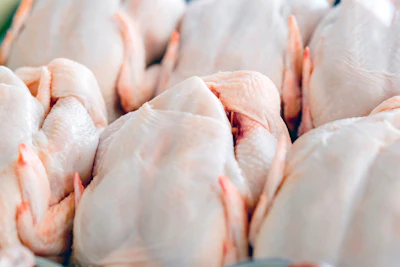
Under the proposal, the FSIS would permit NPIS establishments to operate at line speeds of up to 175 birds per minute for young chickens and 60 birds per minute for turkeys, provided they maintain effective process control. This is a change from 140 and 55 birds per minute, respectively.
The Inspector in Charge retains the authority to require a reduction in line speed whenever adequate carcass-by-carcass inspection cannot be conducted or when process control is lost.
The FSIS also proposes to eliminate requirements beyond its statutory scope, including worker safety attestations regulated by the U.S. Occupational Safety and Health Administration (OSHA), while maintaining all inspection and verification functions.
Proposed changes for swine processing
A separate proposed rule would update regulatory requirements for establishments operating under the NSIS.
Currently, NSIS facilities operate under a maximum regulatory line speed of 1,106 head per hour. That limit would be removed under the proposed rule. Instead, establishments would determine operating speeds based on their ability to maintain process control and comply with all requirements applicable to food safety.
Federal inspection oversight would remain unchanged. Inspectors would continue to conduct carcass-by-carcass inspection, and all existing verification activities would remain in place.
Additionally, the rule would streamline certain regulatory provisions for swine slaughter by removing outdated inspection procedures and other administrative requirements that fall outside the statutory responsibilities of the FSIS.
Potential production capacity impacts
Among the potential impacts of the proposed rules is production capacity, which could change how plants manage output. This is especially true in swine processing, where removing a fixed regulatory line speed allows establishments with modern equipment and strong process control to better match production to equipment and staffing levels.
However, the proposals reinforce that process control remains the determining factor in plant operations. Establishments that increase line speeds must ensure that sorting, inspection readiness, sanitation, and defect removal processes remain effective.
Processors may need to review operational procedures and supporting process control documentation to ensure that carcasses presented to inspectors continue to meet regulatory requirements even as production volumes increase.
Workforce considerations
Operational flexibility under the new proposed rules may also affect workforce management.
Facilities operating under NPIS and NSIS rely on trained plant personnel to identify and remove carcasses with defects before presentation to federal inspectors. As line speeds increase, worker training and line balance become increasingly important to ensure these tasks are performed effectively.
Plants considering higher operating speeds may evaluate staffing levels, training programs, and workstation design to maintain both productivity and compliance.
Equipment and automation
Facilities with advanced processing equipment and automated monitoring systems may be best positioned to take advantage of the flexibility proposed by the FSIS.
Many processors have invested in improved carcass handling systems, automated defect detection technologies, and digital monitoring platforms that track production and food safety metrics in real time. These systems can help plants identify deviations in process control early and make operational adjustments when necessary.
As regulatory oversight increasingly emphasizes documented process control, the ability to monitor and demonstrate consistent operational performance may become even more important for processors.
Federal inspection authority remains central
Under both proposed rules, FSIS inspection authority remains unchanged. The Inspector in Charge can mandate line speed reductions to ensure thorough carcass-by-carcass inspection and effective process control. This is to prevent operational flexibility from compromising federal inspection responsibilities.
This authority remains a central component of the federal inspection system and serves as a safeguard for public health.
Continued focus on foodborne pathogens
As part of safeguarding public health, agency leaders emphasized ongoing efforts to address major foodborne pathogen risks.
At the National Turkey Federation Annual Convention in Fort Lauderdale, Fla., on February 19, 2026, Under Secretary for Food Safety Mindy Brashears highlighted efforts to reduce Salmonellaenterica in poultry. Salmonella is a leading cause of foodborne illness in the U.S., with the Center for Disease Control (CDC) estimating about 1.35 million infections annually, with roughly 23% linked to poultry.
Listeria monocytogenes, while less common, also poses a significant risk in deli turkey products and ready-to-eat (RTE) meat. The FSIS sampling indicates 0.3–0.4% of poultry samples and RTE meat test positive.
Brashears identified preventive controls and environmental monitoring as essential tools for the highest-risk processes. She added that the FSIS is evaluating improved metrics and sampling strategies and stressed that continued progress will depend on collaboration among industry, researchers, and federal partners.
Support for smaller processors
Another area of focus is support for smaller processors. According to the FSIS, small and very small establishments represent more than 91% of federally inspected facilities. Recognizing the unique challenges these businesses face, the agency is developing a strategy to strengthen support, including technical guidance, training, and outreach.
The FSIS plans to improve coordination with other government agencies and industry partners to help smaller establishments navigate regulatory requirements, adopt best practices, and maintain compliance efficiently.
This strategy is intended to ensure that smaller processors can continue to operate safely and competitively, particularly as new technologies and process improvements are introduced across the industry. By tailoring resources and guidance to the scale and capabilities of smaller facilities, the FSIS aims to enhance food safety outcomes without imposing unnecessary burdens.
A broader modernization effort
These proposed rules are part of a broader modernization effort underway at the FSIS.
During remarks at the Southwest Meat Association’s Meat, Education, Advocacy, and Technology Forum in Arlington, Texas on February 18, 2026, FSIS Administrator Justin Ransom outlined the agency’s strategy for strengthening workforce capabilities. He further discussed plans to expand the use of data and technology to support regulatory decision making.
Ransom noted that the agency is investing in workforce development and analytical tools designed to identify emerging risk trends across the food system. He also highlighted ongoing efforts to explore artificial intelligence tools that could support faster, more proactive oversight.
Modernizing rules, he said, reflects current operating realities across the industry, including advances in equipment, training, and inspection tools.
Public comment period
The FSIS is accepting public comments on both proposed rules through April 20, 2026.
Docket No. FSIS‑2025‑0012/RIN0583‑AE01 (poultry)
Docket No. FSIS‑2025‑0009/RIN0583‑AE02 (swine)
After reviewing feedback from industry stakeholders and other interested parties, the agency will determine the next steps toward final rulemaking.
For poultry and swine processors, the proposed rules reflect an evolving regulatory framework that combines federal inspection oversight with greater operational flexibility. However, establishments must continue to demonstrate effective process control while supporting the core mission of the FSIS to protect public health and ensure food safety.
See What’s Possible in Food Manufacturing at PACK EXPO International
Explore new machinery & materials from 2,600 exhibitors. Gain insights from 150+ free educational sessions. Find solutions to enhance quality & protect your brand at North America’s largest packaging & processing event for food, beverage & beyond.