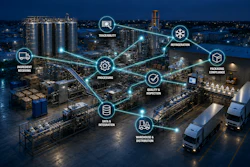
During the recent MESA North American Conference in Charlotte, N.C., I had the pleasure of leading an unConference session on the topic of food safety and traceability. During the discussion, it became clear that there is quite a challenge in front of food producers and manufacturers to meet upcoming regulations from the U.S. Food and Drug Administration (FDA). Those of us in the automation and manufacturing IT industries can help clear up some of the confusion and show leadership as companies large and small seek to comply with the new regulatory environment.
Here are four things to know about food safety and traceability:
Food manufacturers will be required to comply with new traceability requirements. The FDA has a legal mandate, called the Food Safety Modernization Act (FSMA), to ensure that food products are traced from their origins through the supply chain to the consumer. As part of this process, the FDA is defining critical tracking events and key data elements for small, medium and large producers. Food producers at each point on the supply chain will be required to track and keep records for each unit of food.
Automated traceability is not required, but it can make things easier. The FDA has not mandated any particular technology to automate traceability. However, experience in the manufacturing industry has shown that automated track and trace systems do a superb job of capturing the required information at a granular level and providing detailed, fast-access records of product genealogy. One of the FDA’s goals is to provide fast forensic traceability in the case of an incident, but manufacturers can also benefit from automation with reduced-scope targeted recalls and improved quality control within the plant.
Automated traceability is available in many forms today. Effective automated traceability built on networked control systems and manufacturing IT platforms, such as modern manufacturing execution systems (MES), are already available in the marketplace and have been proven out over the past two decades. The challenge for manufacturers lies in selecting the right system and ensuring it is a good fit for their particular manufacturing environment.
MESA has many resources to help food manufacturers understand how it fits. For those same two decades, MESA has been working to help manufacturers and producers understand how to employ information technology effectively. As an industry-wide, noncommercial association, MESA has helped develop best practices, including the widely recognized MESA model showing how technology and business functions interact in manufacturing. Traceability is an important component of the model. Additionally, MESA has published several whitepapers around topics including the application of standards such as ISA-95, MES cost justification, and data interaction that are relevant to the new regulatory challenges faced by the food industry. Most recently, MESA’s Food Safety and Traceability working group has been working on a guidebook to help food manufacturers and producers understand the challenge and to provide some direction in responding to the challenge.
Food manufacturers and producers have only a short time to formulate a strategy for addressing the FDA’s new regulations. Take advantage of the MESA resource library and the accumulated knowledge of MESA member companies to help formulate your strategy today.
>>Jim Toman is lead consultant—manufacturing IT for Grantek, a consulting and integration firm that provides operational excellence solutions to the manufacturing industry. He is also a MESA Americas board member. Toman has a bachelor of science in information technology and a MESA GEP Certificate of Competency in MOM/MES methodologies.