Editor Liz Cuneo sits down with Chad Sienknecht, production manager at Trisco Foods, to discuss the continuous improvement project that earned him a 2026 CPG NextGen award. He explains how adding an automated bagging machine to the company’s dysphagia thickener pump line boosted output and cut labor requirements. He also shares his unconventional path from landscaping to leading lean manufacturing and how Trisco is cautiously adopting AI.
Follow this podcast on your favorite streaming platform - links can be found by clicking here.
Thank you, Chad, for joining me today. I’m here with Chad Sienknecht from Trisco Foods, and we’re going to talk a little about the recent CPG Innovator Award you received. Congratulations on that.
Thank you.
We’ll dive right in. Tell us a little about who you are, what your current role is at the company, and how long you’ve been there.
I’m Chad Sienknecht. I’ve been the production manager at Trisco Foods for about three and a half years, and I’ve been with Trisco overall for about seven years. In my production manager role, I oversee the entire production team and day-to-day operations on our production floor, from manufacturing our products to packaging and warehousing them. I also lead our lean manufacturing initiatives and various continuous improvement projects throughout the facility. So a big part of my role is finding ways to make our processes more efficient, developing our team, and helping create a culture where everyone’s looking for opportunities to improve.
Very cool. Tell us a little about Trisco Foods and what kinds of products you’re producing.
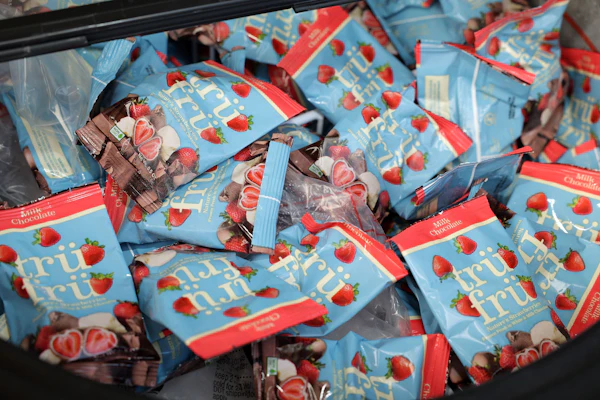
We’re a family-owned company based in Australia, and we started our plant here in Colorado Springs in 2019. Our Colorado Springs plant primarily focuses on a dysphagia product for people who can’t swallow liquids. It’s a liquid thickener in the medical food area. That’s our biggest product at the moment. We also make some traditional products, like coffee syrups and chocolate sauces. The company’s been around since 1875, so we very much specialize in sauces and syrups. And we have a great team back in Australia that handles new product development.
You mentioned you’ve been with the company about seven years. Did you work at another food company before that, or was this your first gig?
This is my first food manufacturing job. Before that, landscaping was my area of expertise. I spent some time with the city of Colorado Springs and El Paso County in their parks departments, doing landscaping and park maintenance. At the same time, I had my own landscaping business. And in my free time on weekends, I bounced at the bars downtown.
I was tired of doing everything and being busy all the time, so I wanted to take a chance, and I found Trisco Foods right before they opened. It’s funny: One of my good friends’ dads was a fire inspector in town, and he said, “Hey, there’s this new company opening up. Check them out, since I know you’re tired of what you’re doing.” I just took a chance, and that chance has paid off.
And here you are, having worked your way up to production manager. That’s cool. Do you have any educational background in manufacturing, production, or operations?
I don’t. I did a little college, and I played some college football but ended up getting hurt quite a bit. So I dropped out before I finished and moved back home. No special schooling at this point, but who knows what the future holds.
What do you enjoy most about your job?
I really enjoy building a successful team. I played a lot of sports growing up, and that team atmosphere is really what honed me for the production manager role: getting people more confident in their abilities and helping them work through challenges they might not overcome on their own. I also have a real passion for things like our KPIs, always trying to improve them and get that win for the day.
Speaking of that win, it sounds like you enjoy the tangible things that tell you when a project is really succeeding. PMMI just gave you a 2026 CPG NextGen award, specifically for increasing production output 75% while reducing labor requirements by 50% and material cost by 44%. Can you tell me about that project and its impact on the company?
That was a continuous improvement project involving our pump assembly. With our dispenser product, we have to ensure the end user gets the right amount of product to achieve the right thickness for their drinks. We have to put a specialized tip on the pumps before we bag them for the end user.
At the time, we were bagging manually with two manual baggers. We had to take the pump, put it into the bag, tape it, rip the bag off, put it into the sealer, and hit the seal button. It was a very manual process that took four to five operators at all times to keep up with our production needs.
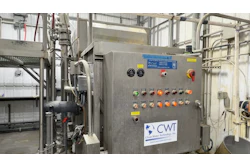
It was very much a bottleneck in our operation. To overcome that, I introduced an automated bagging machine to that production line, and we were able to reduce our operators to two people in the room at all times. Now they just apply the tip and drop the pump right into the bag. The machine does all the sealing and drops the bag into a box, ready for our production team on the packing line. That increased our output by 75%, getting us closer to eight pumps — or six pumps — a minute rather than four. It also reduced labor 50%, and we got cheaper bags along with it.
A win-win. That has to be a good feeling, optimizing that process for the company.
Definitely. It relieved a lot of stress for the production team, too. They were always asking, “Are we keeping up with production needs on pumps?” It’s really rewarding to be able to say, “We’re always good on pumps, and we’re always keeping up,” and have the team less stressed on that front.
Very cool. Switching gears a little to AI, the buzzword that it is: How has it changed your job day to day, if it has? And how welcoming would you say Trisco Foods is to having your team use AI?
We’ve slowly been working our way into that field. I use it here and there day to day, primarily for research, organizing information, and analyzing data. We’ve implemented some AI in other areas, not so much on our production floor or packing lines at this point, but more for the leadership team and the documentation side of the plant.
The company has been pretty open to it. We understand it can benefit us, but we’re taking a cautious approach, particularly when it comes to cybersecurity. We have it all locked down, and we’re not putting our information out there for people to get.
I hear that a lot. It’s a tool that helps with processing data, research, and making sense of large amounts of data and documents at work. But cybersecurity becomes an issue when we talk about actual processing equipment.
How do you see the food industry changing in the next five to 10 years? I know Trisco is a little specific in what you focus on, but do you see any upcoming trends in food?
On the AI front, I definitely see AI taking a bigger role on production floors and in packing: more automated packing, more robots using AI to make sure they’re packing correctly, all that. We just incorporated a robot into our plant in Australia, and I’m excited to get a chance to go there later this month and check it out. But I definitely see things getting more automated, at least on the production side.
When you say robot, do you mean a walking robot, or something like a robotic conveyor or filling machine?
The one we installed is more of a robotic arm that can restack boxes and do some of the manual labor required for palletizing.
Palletizing. End-of-line robotics is a really big deal in the industry, so I could see that. And you’re going to go out there and see it?
Yes, I have a trip planned for Oct. 26. I’ll be in Australia for a couple of days working in the plant, and then I’ll take a little vacation at the end of it.
Have you been there yet?
Yes, I went two years ago. It was my first trip out there, so this will be my second. I’ll help them launch a new product and check out some of the cool things they’re doing there.
That’s really cool. Thinking about company decisions, what would you say has the biggest impact? Is it consumer preference, regulation, sustainability pressures, or maybe finding ways to increase automation? What’s applying pressure on company decisions?
Trisco Foods is a contract manufacturer, so when we talk about big decisions for our company, the questions we ask are: Is it right for Trisco, and is it right for our customers? Our success is closely tied to the success of our customers, so we have to make sure we’re providing them quality products, reliable service, and good value. All of that plays a really big factor in what we’re looking to achieve when we make big decisions, whether it’s about their needs or what’s best for our company.
Excellent. Thank you so much, Chad, for chatting with me today, and congrats on the award.
Thank you very much.