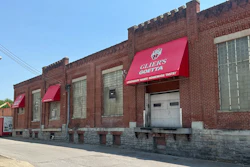
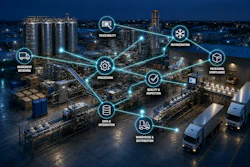
This podcast episode looks at how Royal Avebe, a farmer-owned starch and plant-protein cooperative in the Netherlands, electrified part of production at its Foxhol plant without adding grid capacity. Working with Schneider Electric, the site paired a new industrial electric boiler with unified power and process control, real-time energy visibility, and dynamic load management across more than 1,000 data points—shifting load during peak demand and absorbing excess renewable energy when it’s available.
Follow this podcast on your favorite streaming platform - links can be found by clicking here.
Transcript
Welcome to Through the Line, the podcast exploring innovations and information across the packaging and processing landscape. From topics impacting consumer packaged goods and healthcare packaging to the latest technologies in food processing operations.
Hi, I'm Casey Flanagan, Associate Editor with ProFood World. This AI-generated podcast episode covers how food and beverage manufacturers can electrify industrial operations while staying within grid constraints. It highlights how Dutch Cooperative Royal Avebe partnered with Schneider Electric to install electric heating and cut emissions without expanding grid capacity. It also explores how combining process control with real-time digital energy management allows processors to dynamically optimize energy use and support grid stability.
Imagine you have millions of dollars ready just sitting there to upgrade your manufacturing facility.
Right, which is a great position to be in.
Oh, absolutely. And you have this corporate mandate to drastically reduce your carbon footprint, and you are totally ready to invest. But then you go to the local utility company to get the extra power you need for these upgrades, and they look you in the eye and say, no.
Yeah, just a flat out denial.
Exactly. They tell you you cannot have a single extra kilowatt of electricity for the next five years. The grid is completely full.
It's a terrifying scenario for a plant manager.
It really is. And that is the stark reality for manufacturers across Europe right now. But today's deep dive explores how Royal Avebe, which is a farmer-owned cooperative, conquered that exact scenario. They partnered with Schneider Electric to electrify their production and achieve major sustainability gains, completely without expanding their constrained grid connection.
Which is quite a feat, honestly.
It is. So for those of you listening who manage operations in the packaging and processing industry, our mission today is to extract actionable insights from this new case study on Royal Avebe facility in Foxboro, the Netherlands.
Yeah, because across Europe, uh this issue of grid congestion has become this massive physical barrier to industrial growth and you know decarbonization.
Right. Facilities are facing incredibly long wait times. I mean sometimes years just to get new or upgraded power connections. So, okay, let's unpack this. I want you to think about this constraint in purely physical terms.
Okay. Lay it out.
Imagine needing to drastically increase the output of a packaging line, right? But being told you cannot add a single square foot to your factory floor.
You're just boxed in.
Exactly. You are forced to optimize the exact space you already have, finding efficiencies you uh you didn't even know existed. That was the reality for Royal Avebe, except their limitation wasn't floor space, it was their energy consumption footprint.
Yeah, and that physical limitation is what is the defining industrial challenge of this decade.
Totally.
For processors aiming to reduce emissions, this hard cap on grid capacity presents a massive operational dilemma. Because, you know, it's one thing for a corporate board to set ambitious decarbonization goals.
Right. Writing it on a whiteboard is easy.
Exactly. But it's an entirely different challenge for a plant manager to execute those goals when the underlying energy infrastructure literally cannot support the transition.
It's just not there.
Right. The grid congestion problem effectively traps facilities in their current energy footprint. If you try to, say, replace a massive gas-powered machine with an electric one, you risk tripping the breakers for the entire facility.
Which shuts down production.
Yes, shutting down production and potentially facing catastrophic fines from the utility provider because you exceeded your contracted energy limit.
Which is a nightmare. And because physical grid expansion was just completely off the table for Royal Avebe, they had to look inward. I mean they couldn't build out, so they had to build smarter.
They had to fundamentally rethink their energy use right down at the plant level to solve this bottleneck.
And to do this, they formed a partnership with Schneider Electric. Now, according to the case study, the solution they developed was built on three core pillars: unified power and process control, real-time energy visibility, and dynamic load management. Right. But I have to push back on this terminology right out of the gate. Because if you are managing a packaging line right now, you know how chaotic a factory floor can be.
Oh, absolutely.
The phrase unified operational view sounds like perfect marketing fluff. I've been in these facilities. You have uh legacy machines from 20 years ago operating right next to brand new equipment.
And they don't natively talk to each other.
Exactly. They do not speak the same language. So how did they actually achieve this unified view? Like what does that look like in reality rather than just on a glossy brochure?
That is exactly the right question to ask because an operational view is totally useless if it is just a buzzword. Right. Achieving it requires a highly specific, deeply integrated digital foundation. You literally have to force these disparate systems to speak a common language. At the Foxboro site, Schneider Electric didn't just install, you know, one piece of software.
It wasn't a quick patch.
No, they deployed a fully integrated architecture designed to connect the facility's power systems, its process operations, and its energy data into one single nervous system. And they achieved this by implementing a very precise technology stack.
Okay, let's break that stack down for the listener because the specific tools really do matter here.
Absolutely. So first, they use the ecostructure Fox Pro DCS for unified process control.
DCS standing for distributed control system.
Right. A DCS acts as the central brain for the manufacturing process itself. So it handles the temperatures, the flow rates, uh the actual physical mechanics of processing the product.
Okay, so that's the process side.
Yeah, but managing the process is only half the battle. They then integrated the ecostructure electrodynamic controller.
And that's the power side?
Exactly. This is the crucial piece for our grid constraint problem, because it handles real-time load orchestration. Think of it as a traffic cop, but specifically dedicated to electrical currents, deciding where power flows second by second.
Okay, so you have the DCS brain managing the factory and the electrodynamic controller traffic cop managing the electricity, but how do the actual human beings on the floor interact with this? Like what are they looking at?
For the operators on the floor, Schneider deployed the ecostructure control HMI.
HMI being human machine interface.
Right. Imagine the glowing dashboards and operators looking at while monitoring the floor. Traditionally, an operator might have uh one screen for the manufacturing process, and then a completely different system, or sometimes no system at all, for monitoring the facility's overall power draw.
They're flying blind on the energy side.
Basically, yeah. So this HMI bridges that gap, providing the necessary visibility and intervention capabilities on a single screen. And then behind the scenes, making sure all these rules and logic are set up correctly, the engineering and system configuration was managed through EcoSructure EPAS.
Okay. And then there's one more piece, right? Because they had to bring all of these moving parts together with Aviva PI system integration.
Yes.
The Aviva PI system is what consolidates the data, right? Because the case study points out that it pulls in more than 1,000 data points from across the entire facility.
It does. And consolidating over 1,000 data points is what actually creates that true unified view you were skeptical of earlier.
Right. The marketing fluff becomes reality.
Exactly. Because these data points are not just abstract numbers on a spreadsheet. They are real-time readings of, you know, valve positions, motor speeds, temperature gauges, and the instant electrical draw from hundreds of different components. So you are no longer looking at isolated machines running blind. You are looking at the facility as a single breathing organism. But you know, this raises an important question. Which is how does all of that data actually translate into action? Because having a thousand data points is completely overwhelming if you don't have a mechanism to use them.
Yeah. Data paralysis.
Right. The answer lies in the system's ability to continuously monitor and automatically adjust energy usage. By constantly analyzing those thousand-plus data points in real time, the plant ensures its operations stay strictly within its contracted grid limits while simultaneously optimizing its processing performance.
Okay, here's where it gets really interesting. Because this is where the digital foundation translates into real-world heavy industry. Having established that software architecture, Royal Avebe was able to make a massive physical change on the factory floor.
A huge change.
They successfully installed a new industrial electric boiler. This was a critical step because it completely eliminated fossil fuel-based heating for a portion of their production line.
Which is a huge sustainability win.
Huge. But crucially, and this is really the entire point of the case study, they achieved this heavy electrification without increasing their grid connection by a single kilowatt.
And this is exactly where dynamic load management proves its value. Because look, installing an industrial electric boiler is not like plugging in a toaster in your kitchen.
Right.
It's a massive, highly demanding piece of equipment that draws an incredible amount of amperage. In a traditional setup, turning that boiler on while the rest of the factory is running at full capacity would immediately exceed their contracted energy limit.
Bam, the breakers would trip.
Yeah, or the utility company would levy massive penalties.
So how did they avoid that? I mean, if the limit is a hard ceiling, how do you fit a massive new electrical draw under that ceiling without breaking it?
The mechanics of dynamic load management allow the facility to play a highly sophisticated game of electrical Tetris.
Electrical Tetris. I like that.
It really is. The system dynamically shifts loads during periods of high demand. So instead of drawing a constant, heavy amount of power that would exceed their grid limits, the ecostructure system orchestrates the energy use moment by moment, millisecond by millisecond.
Okay, so if the Avebe system notices that the overall facility is approaching its maximum grid limit, the electrodynamic controller steps in.
Exactly. It steps in and say it might automatically and temporarily power down a non-critical mixing vat for 30 seconds. Or it might slightly reduce the power to a secondary cooling system just long enough for the electric boiler to kick on, get up to temperature, and do its job. The system constantly borrows and returns power across the facility's thousand data points, so that the total power limit is never breached, and the core processing output is never compromised.
To put that into perspective for you, it is like transforming the entire processing facility into a highly intelligent sponge.
A sponge.
Yeah. It absorbs power rapidly when it's available, and it smartly rings it out, you know, pausing certain non-critical operations intelligently when the overall capacity is stressed. And it manages to do all of this without disrupting the core product going down the line. It's really a brilliant way to handle industrial energy consumption.
This is a great way to visualize it. But if we want to take that intelligent sponge analogy a step further, imagine a sponge that has millions of tiny nerve endings.
Okay, nerve endings.
Those nerve endings are the thousand-plus data points we discussed. They tell the sponge exactly which pores to squeeze and which to open, based on the real-time pressure of the grid. And furthermore, the system is designed to absorb excess renewable energy when it becomes available on the broader grid.
Wait, let's pause there. Absorbing excess renewable energy from the outside grid. Like, how does that work?
Well, the broader electrical grid is increasingly powered by wind and solar, right? Right. But wind and solar are intermittent. Sometimes the wind is blowing furiously, generating way more power than the region actually needs. When that happens, energy prices drop, and the grid actually needs places to dump that excess power just to remain stable. Exactly. Because Avebe has this deeply integrated digital system, they can see those signals. This capability completely transforms the facility. They are no longer just a passive consumer mindlessly draining power from the grid, regardless of the conditions. They become an active energy prosumer.
A prosumer, a hybrid of a producer and a consumer?
Exactly. By actively shifting their internal usage to absorb excess renewables when they're abundant, and then throttling back their overall draw when the regional grid is stressed, they are not just managing their own factory, they are actively supporting broader grid stability for the entire region.
So they become a shock absorber for the local utility infrastructure.
Yes.
That's incredible. It is entirely strategic. I mean, it changes the relationship between the manufacturer and the utility provider from a one-way street into a dynamic partnership. And it obviously produces highly measurable outcomes on the bottom line.
Absolutely.
The success of this implementation at the Foxboro site doesn't just solve a local problem. It provides a clear blueprint for the entire processing industry. Let's look at those long-term results, because Royal Avebe achieved a comprehensive list of benefits that go far beyond simply turning on a new boiler.
Right. It's not just about one machine.
First, they significantly reduce their carbon emissions. And this is not just a vague, you know, environmental win. It keeps them precisely on track for their specific corporate target of a 30% reduction in emissions by the year 2030.
Which is a metric that is highly scrutinized by stakeholders today. You can't just miss those targets. Right. Furthermore, they achieved improved energy efficiency through that continuous optimization we discussed. Because when you were tracking a thousand data points to manage your power limits, you inevitably discover inefficiencies in your day-to-day operations.
Oh, sure. You see things you wouldn't have noticed otherwise.
Exactly. You find motors that are running when they shouldn't be, or heating processes that are drawing more power than necessary. The system basically cleans up those wasteful habits automatically.
They also gained greater operational flexibility in response to fluctuating grid conditions. If you are managing a plant, you know the absolute dread of a utility company warning you about peak demand charges or potential rolling brownouts.
It's the worst.
Avebe system gives them the agility to navigate those fluctuations without forcing a full, chaotic shutdown of the line, which leads directly to their fourth major benefit. They established enhanced resilience.
Yeah, and we are operating in what is becoming an increasingly constrained and volatile energy market. Energy prices spike, grid stability wavers, supply chains get interrupted. Having a facility that can dynamically adapt its energy profile gives you a massive competitive advantage.
You're not just waiting for the lights to go out.
Right. You are no longer at the complete mercy of the utility's absolute worst-case scenario.
And finally, they secured their readiness for the future. By installing this digital architecture now, they are perfectly positioned for the future integration of even more advanced monitoring tools and you know on-site renewable energy sources.
Yeah, think about it. If they decide to cover their roof in solar panels five years from now, the brain of the facility, the DCS, the HMI, the Aviva Pi system is already in place to seamlessly integrate that new power source.
It's future-proofing.
Exactly. And to understand the human perspective behind all these technical metrics, we can look at the insight provided by Joyce DeVries Peterson, the Director of Communication and Public Affairs at Royal Avebe.
What did she say about it?
She stated that further electrifying their production processes is an important step in making their operations more sustainable. Specifically, she noted, together with Schneider Electric, we are demonstrating that it is possible to make concrete progress toward future-proof and more energy-efficient production within the limits of what our existing grid connection allows.
So what does this all mean? If you are a packaging and processing professional listening to this, you are probably wondering how you can apply this to your own operations.
Right.
You know the exact dread of trying to hit an ambitious environmental, social, and governance target when your facilities infrastructure is just completely maxed out. What Avebe did proves that you do not necessarily need a brand new building and you do not need to wait five years for the utility company to lay new high voltage cables to your site.
You just need a smarter brain for the building you already have.
Exactly. If we connect this to the bigger picture, well, Royal Avebe has created a highly scalable model for food and beverage manufacturers everywhere.
They really have. Because the traditional mindset was that infrastructure expansion had to precede operational evolution.
Right, build the pipes first.
Exactly. But that is no longer true. Processors do not have to wait years for grid expansion to take the next step in their decarbonization journey. Smarter energy strategies, combining targeted electrification with advanced digital energy management software, can unlock sustainability and competitiveness today, even within strict existing physical limits.
You are basically replacing physical copper wires with intelligent software algorithms.
That's a perfect way to put it.
So to summarize our deep dive today, Royal Avebe successfully conquered severe physical grid constraints by looking inward. They were locked in a box by the local utility grid, unable to pull more power to meet their sustainability goals. But by utilizing real-time data integration, advanced control systems like the Eco Structure Suite, and dynamic load management alongside Schneider Electric, they turned a critical energy bottleneck into a showcase for modern electrified processing.
They proved that a facility can decouple its sustainability goals from its physical grid limitations.
Yeah, they played electrical Tetris, managing over a thousand data points in real time to install a massive industrial electric boiler without tripping the breakers. It's incredible. And I want to leave you with a final thought to consider regarding this case study as you look at your own factory floors. Okay. If a single processing facility in the Netherlands can use software to become a dynamic prosumer, absorbing excess renewables and intelligently shifting loads without expanding its grid footprint, consider the implications for the future of manufacturing. It's massive. What happens to the global energy market when thousands of processing and packaging plants stop being passive consumers, draining the grid, and instead act as an interconnected network of virtual power plants, stabilizing it?
That changes everything.
It really does. Thank you for joining us for this deep dive into the Royal Avebe Case Study.
Thank you for listening.
Thank you for listening to Through the Line Packaging and Processing. You can listen to more episodes on all streaming platforms. Be sure to visit us at packworld.com, profoodworld.com, and healthcarepackaging.com for more packaging and processing news. This podcast was edited by Bri Guntz.
Companies in this podcast