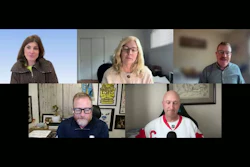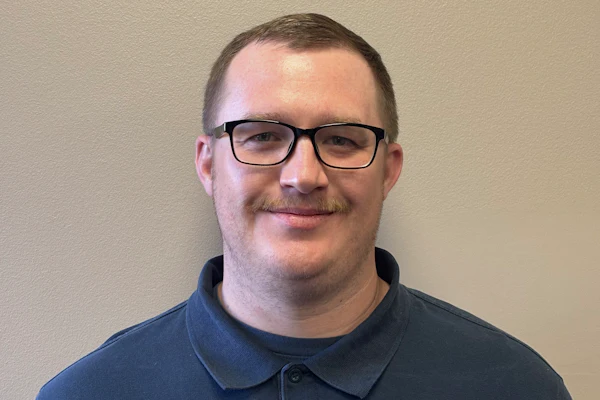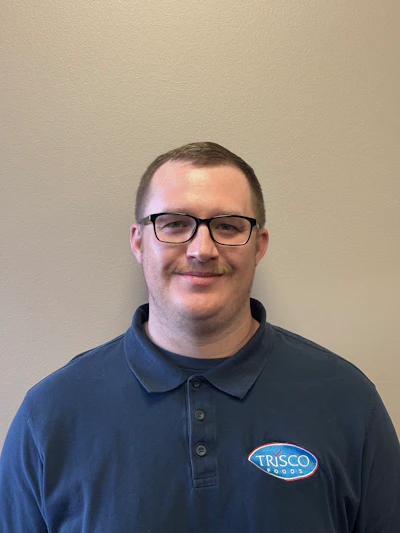
PMMI’s Inaugural CPG NexGen Award winners are delivering measurable advances in automation, productivity, sustainability, and packaging to transform how CPG products are made. One of these 10 rising innovators is Chad Seinknecht, production manager, Trisco Foods. His team is responsible for increasing production output by 75% while reducing labor requirements by 50%. I reached out to him to get the scoop.
Liz Cuneo: Tell us a little bit about who you are, what your current role is at the company, and how long you've been there.
Chad Seinknecht: I'm Chad Seinknecht. I've been the production manager at Trisco Foods for about three and a half years now. I've been with Trisco overall for about seven years. In my production manager role, I oversee the entire production team and day-to-day operations on our production floor, from manufacturing our products to packaging and warehousing them. Along with that, I lead our lean manufacturing initiatives in the plant and various continuous improvement projects throughout the facility.
A big part of my role is finding ways to make our processes more efficient, developing our team, and helping create a culture where everyone's looking for opportunities to improve.
Cuneo: Very cool. Tell us a little bit about Trisco Foods and what kinds of products you're producing.
Seinknecht: We're a family-owned company based out of Australia, and we started our plant here in Colorado Springs in 2019.
Our plant in Colorado Springs primarily focuses on a dysphagia product for people who can't swallow liquids. It's a liquid thickener in the medical food area. That's our biggest product at the moment. We also do some traditional products: coffee syrups and chocolate sauces. The company's been around since 1875, so we specialize in sauces and syrups. We have a great team back in Australia that helps with new product development.
Cuneo: You mentioned you've been with the company about seven years. Did you work at another food company before that, or was this your first gig?
Seinknecht: This is my first food manufacturing gig. Before that, landscaping was my area of expertise. I spent some time with the city of Colorado Springs, as well as El Paso County here in town, in their parks departments, doing landscaping and park maintenance. At the same time, I had my own landscaping business. In my free time on the weekends, I bounced at the bars downtown. I was tired of doing everything and being busy all the time, so I wanted to take a chance and found Trisco Foods right before they opened.
It's funny: one of my good friends' dads was a fire inspector in town. He said, "Hey, there's this new company opening up. Check them out, since I know you're tired of what you're doing." I took a chance, and that chance has paid off.
Cuneo: Here you are, having worked your way up to production manager. Congrats. Do you have any educational background in manufacturing, production, or operations?
Seinknecht: I don't. I did a little bit of college and played some college football. I ended up getting hurt quite a bit, so I dropped out before I finished and moved back home. No special schooling at this point. Who knows what the future holds?
Cuneo: Of course. What do you enjoy most about your job?
Seinknecht: I really enjoy creating a successful team. As I mentioned, I played a lot of sports growing up, and that team atmosphere was what honed me into the production manager role: getting people more confident in their abilities and helping them work through challenges they might not overcome on their own.
I have a real passion for other things as well, like our KPIs, trying to always improve those and get that win for the day.
Cuneo: Absolutely. Speaking of that win, it sounds like you enjoy some of those tangible things that tell us when a project's really succeeding. PMMI just awarded you a 2026 CPG NexGen Award, specifically for increasing production output. The numbers I have are increasing production output by 75% while reducing labor requirements by 50% and material costs by 44%. Can you tell me about that project and its impact on the company?
Seinknecht: That was a continuous improvement project I worked on involving our pump assembly. With the dysphagia product we make, we have to ensure the end user gets the right amount of product to get the right thickness for their drinks. We have to put a specialized tip on the pumps before we bag them up for the end user.
At the time, we were bagging manually with two manual baggers. We had to take the pump, put it into the bag, rip the bag off, put it into the sealer, and hit the seal button. It was a manual process that took four to five operators at all times to keep up with our production needs. It was a bottleneck in our operation.
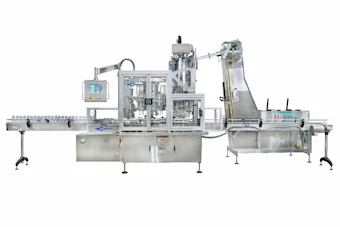
To overcome that, I introduced an automated bagging machine to that production line, and we were able to reduce our operators to two people in the room at all times. It allowed them to apply the tip and drop the pump right into the bag. The machine did all the sealing and dropped it into a box, ready for our production team on the packing line.
It increased our output by 75%, allowing us to get closer to—what was it, eight pumps or six pumps a minute rather than four? It also reduced labor by 50%, and we got cheaper bags along with it.
Cuneo: Nice. A win-win. That has to be a good feeling, optimizing that process for the company.
Seinknecht: Definitely. It relieved a lot of stress for the production team, too, from always asking, "Do we have pumps? Are we keeping up with production needs?" It's rewarding to be able to say, "Hey, we're always good on pumps, and we're always keeping up," and have the team less stressed on that front.
Cuneo: Switching gears to AI, being the buzzword that it is, how has it changed your day-to-day job, if it has? How welcoming would you say Trisco Foods is to having your team use AI?
Seinknecht: We have slowly been working into that field. I use it here and there in my day-to-day work, primarily for research, organizing information, and analyzing data. We've implemented some AI into other aspects, not so much on our production floor or packing lines at this point, but more for the leadership team and the documentation side of the plant.
The company's been pretty open to it, understanding it can benefit us, but we're taking a cautious approach, particularly when it comes to cybersecurity. We have it all locked down, and we're not putting our information out there for people to get.
Cuneo: I hear that a lot. How do you see the food industry changing in the next five to 10 years? I know Trisco is specific in what you focus on, but do you see any upcoming trends within food?
Seinknecht: On the AI front, I definitely see AI taking a bigger role on production floors in the packing realm. I believe we'll see more automated packing, more robots coming in, and AI being used to make sure they're packing correctly. We just incorporated a robot into our plant in Australia, so I'm excited to get a chance to go there later this month and check that out. I definitely see it getting more automated in the production area, at least.
Cuneo: When you say robot, do you mean a walking robot, or something like a robotic cartoner, conveyor, or filling machine?
Seinknecht: The one we installed is more of a robotic arm that can reset boxes and do some of the manual labor required for palletizing.
Cuneo: Palletizing, yes. End-of-the-line robotics is a really big deal in the industry. Very cool. You're going to go out there and see it?
Seinknecht: I have a trip planned for October 26. I'll be in Australia for a couple of weeks, working in the plant, and then take a little vacation at the end of it.
Cuneo: Have you been there yet? It sounds like you have.
Seinknecht: I went two years ago. It was my first trip, so this will be my second. I'll help them launch a new product and check out some of the cool things they're doing there as well.
Cuneo: That's really cool. Thinking about company decisions, what would you say has the biggest impact? Is it consumer preference, regulation, sustainability pressures, or finding ways to increase automation? What's applying some of the pressure on company decisions?
Seinknecht: Trisco Foods is a contract manufacturer, so when we talk about big decisions for our company, the questions we ask are, "Is it right for Trisco, and is it right for our customers?"
Our success is closely tied to the success of our customers, so we have to make sure we're providing quality products, reliable service, and good value. All of that comes into play and is a big factor in what we're looking to achieve when we're making those decisions, whether it's our customers' needs or what's best for our company as well.
Cuneo: Excellent. Thank you so much, Chad, for chatting with me today, and congratulations on the award.
Seinknecht: Thank you very much.