Note: Transcription completed by AI, may not accurately reflect content.
Matt Reynolds (00:00):
Hi, I'm Matt Reynolds. I'm the editor of Packaging World Magazine, coming to you close to live from Dusseldorf, Germany here at Inter Pack Every three year event, that's just massive. I'm here with my colleagues, Derek Thiel. He's the editor of Prof Food World Magazine and Casey Flanagan, he's an at large editor for all of the books in PM GM I Media Group, or PMG as we like to call it. We are coming off of a night in Old Town where we, it's a fun night. It was fun. We participated in some libations and spy HOK and various kinds of wursts, knockwurst and currywurst, and I forget what other kinds of worsts. And of course the sparkle, which is apparently it's a seasonal type of thing, white asparagus that's smothered in some sort of a Bernaise sauce. So probably not heart healthy eating despite being asparagus. But what did you guys think it was your first Schweinhaxen? Was it your first?
Derrick Teal (00:49):
It was delicious. It was very good. I think that talking about all the wurst, that was probably the guy that was behind us at the other table. He was probably feeling the worst of any of us, at least this morning. The
Casey Flanagan (01:01):
Worst today. Yeah, that's
Matt Reynolds (01:02):
For sure. There were one or two post out people. Casey was able to get a photograph with the guy passed out. Exactly. So it was a fun night, but luckily we got up on time because the show starts at 10:00 AM But we were here yesterday. I came in with some very missions. I was going to cover this and I was going to spend the whole morning covering it. And then the afternoon I had the same feeling. I was going to cover paper and barrier paper. Today I was much more scatterplot, so I'm all over the place. But you guys, sounds like you kind of have some bigger themes that you were laddering up to. So maybe Casey, we'll start with you. What were some of the big themes that you felt you uncovered today?
Casey Flanagan (01:39):
Yeah, absolutely. So I did feel like going into today, it was a similar feeling of not really knowing exactly what I'm going for. And you walk into the halls and you might know some of the basics of what to expect inside those, but it really comes down to what you do run into in the moment. And today I ran into a lot of end of line packaging and a bit of processing as well. But regardless, one of the main themes that I saw across that was the integration of AI into these systems. It seems like, from what I've seen on the show floor, more and more companies are adding AI into their systems and using it to really expand on the capabilities of these machines in pretty novel ways. So one of the innovations that I saw was at BBA and they had a prototype x-ray system that was detecting what you'd expect, the contaminants, the metal, and anything like that. Glass bone. Exactly. It was doing what you expect out of an x-ray system, but also the AI capability was detecting anomalies in the packages as they went by as well. So it was able to detect, for example, a missing label on the system based on what it had been fed for the baseline, what it should look like. It was able to, so it
Matt Reynolds (03:06):
Was comparing against a baseline kind of thing.
Casey Flanagan (03:08):
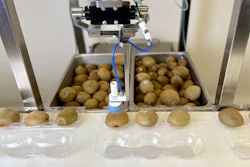
Exactly. And so that was a really interesting use of ai and that's a prototype. So they're working on getting that out. And then another one was Schubert. They had a really interesting pick and place system that was AI enabled, and that was scrambling packages as they came down the line, down the conveyor belt, so they could be piled up all against each other and it would pick those out and also reorient them onto the next part of the conveyor to organize everything. And it even had a box, excuse me, carton detection. And so it had carton detection. So if a carton was coming down, it would notice that and it would start adding the packages into that carton automatically. It would totally switch over and start filling those cartons as they came by. So that was a really interesting use of AI overall that I thought was a highlight of what I've seen today. Yeah,
Matt Reynolds (04:07):
So this might fly in the face of what you just said, but yes, AI we're seeing everywhere. But I came in, I flew over here expecting this to be the AI show because I was here in 2023, and there may have been some talk of ai, but it hadn't reached the threshold that it has now. It really isn't as endemic to every single booth as I thought it was going to be. I mean, there's some great obvious things that you're pointing to, but I have to wonder if we've gotten past that point where AI is a buzzword, AI is something to be used in marketing, say AI is the sizzle, but now maybe AI is the stake because it seems like it's almost baked into our consciousness. We don't have to call it out. We're using it. Even like you were saying today, taking notes for doing an interview with somebody. I've got my note taker will use AI to condense that into something just as part of my daily day-to-day schedule. I don't advertise that. So I have to wonder if sometime between the previous inter pack and this one, we've kind of gone over some Rubicon or threshold where AI is now just part of our day-to-day lives and we don't need to advertise it. I don't know if you had any similar experiences.
Derrick Teal (05:17):
Yeah, my experience is similar to yours in the sense that I still feel like when it comes to the marketing aspect and the press releases that we receive every day, that AI is in your face. But then here at the show, I've only seen it in a few places where they're talking about AI enabled this or AI enabled that. But for the most part, I haven't been inundated with it like I expected given what I see on a daily basis sitting at home or in front of the machine at work, not getting that. It's been a different experience,
Matt Reynolds (05:52):
I would say. Now, of course, now, as soon as I said that, I just recalled one use of ai it, it's more of a language responder or chat bot style. But I was at pac, it's a Durant company, and they had basically an OEE monitor system that instead of using the HMI to enter to check what you want to check, you actually interact directly with voice. So you ask them, you interrogate the, what's the machine OEE right now? Can you increase the seal jaw temperature to 90 degrees? A unique feature? When you do things like that via voice, it asks you for basically a safe word to say, do you really want to do this because you don't want to have any interpretation issues. But I mean, the fact that I didn't even think about that as ai, it was ai. So the fact that I didn't even think about it, I think reinforces that it's just baked into everything that we do in packaging and processing and the whole industry. So AI is indeed here as you found it, but it just wasn't quite as in my face as I thought. So anything else? How about you, Derek? What did you see out there?
Derrick Teal (06:57):
So something like you guys, I didn't come in here trying to look for anything in particular, but what sort of hit me between yesterday and today was the message of sustainability. I find that compared, we've done studies back home, PMI has done studies or gotten feedback from its audience and sustainability, while it has been at the top at one point, has steadily fallen down in terms of importance with end users and OEMs. And I think that message has been a little bit different here. I was sort of surprised at the amount of sustainable messaging that I've been getting or seeing throughout the show, walked by synagogue's booth, enormous booth. It's basically a hall. It is basically a hall. And we were giving some lectures as to their sustainable processes and methodologies. And from what I saw, they were packed.
Matt Reynolds (07:58):
Well, I would say two things on that. First of all, on the packaging side, it is one of the always very on the top of mind because the materials, the material input side of things is just massive in the material selection. But there, I guess four little letters for Europeans are hanging over everybody's head, and that's PPWR, which is legislation that's going to be harmonizing, basically what materials are used, and if there's debit, and it's almost a keratin stick, it's very similar to an extended and harmonized version of the United States EPR, which is a nascent version of what PPWR is going to be. So one person phrased it today as a bullet, you cannot dodge. And the fact is that most of the companies that are packaging are international companies. You might be a craft or a Mondelez or a Nestle, whoever you are on the food side or Proctor and Gamble or Henkel or whomever. But you're selling in both California and Maine and who have different EPR laws, and then you're selling in Europe, which is under or soon to be under PPWR. So there's no question that sustainability has been on the top of everybody's mind. How about, do you see any sustainability out there or,
Casey Flanagan (09:07):
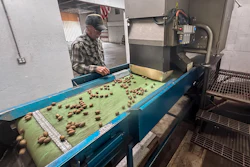
Yeah, actually I did see a bit in processing, which I found interesting. And that came in the form of, I guess waste reduction and byproduct utilization. Those TNA solutions had a de oiler or batch frying, batch fried potato chips to essentially make them healthier. You might see that 33% less fat potato chip, those kinds of products. So it was a system to enable that to create those kinds of products. And first off, it was horizontally oriented and that helped for product consistency. But on the sustainability note of it, it was vacuum. It had vacuum technology in it, and that vacuum technology was able to, it was part of what was pulling the oil, but it also allowed them to reuse that oil. So just that bit of extra byproduct utilization, it can definitely help for race reduction.
Derrick Teal (10:02):
And I guess one of the things that's different about a European show versus show based in North America is that they might be talking about sustainability, but it gets couched as energy efficiency to save money or something to help with regulations. You're talking about
Matt Reynolds (10:21):
In the states?
Derrick Teal (10:21):
In the States, yeah. Yeah, in general, yeah, it gets couched differently. It's still sustainability, but because I think sustainability gets, is currently being viewed as a luxury because it costs money
(10:33):
Or you think sustainability, oh, I have to spend more to use this green chemical or this process or other. Whereas if you say, well, if you use this energy efficient, more energy efficient boiler, you're going to cut your costs by such a percent over time. And I think that's where the difference is, I guess in messaging between the continents. And speaking of regulatory, I was at a booth today, DUR industries, and they do basically odor and air pollution abatement. And it was really interesting the process that they used because stuff like that's been around, usually they burn it off. If
Casey Flanagan (11:16):
You're
Derrick Teal (11:16):
Talking about VOCs, they're going to get burned off. And this process brought in the VOC laden air or odor, because it is actually the same process, brings it into the container, I guess is the best word for it, that's attached to attached nearby the process that's using this that needs it. And so it's on the outside, brings it in, and then brings it through a stack that's filled with heated ceramic blocks basically. And it turns the VOCs through their process, turns the VOCs into water vapor as opposed to burning it. So when you're burning, you get other sorts of nasties flying out into the air, whereas this, it turns it into water vapor. But even then they were saying, yeah, it could save you money because you're not, it's odors. You're not getting that bad reputation by angering the neighbors who are nearby. I'm a coffee roaster, and you get that bitter smell coming out, but that takes care of it. Or if they said one of their potential clients came by, they run a fish operation. And so yeah, dangerous, no one wants to live near a fishery, a fish processor. So yeah, so that was interesting. But again, the person I was talking to was funnily enough, based in Michigan, and that's what he was saying, he went beyond the pollution aspect of it. Yeah, okay. It's regulatory, but you know what, it's going to save you money in the long run based off of your reputation as being a steward of the environment sort of thing. Okay.
Matt Reynolds (12:55):
Yeah. Well, I mean, again, it was everywhere. You mentioned, just the incremental costs that savings that add up, even though if you're only using this many less kilowatt hours or whatever, seems small, but these are huge companies that use a lot. So when you can shave 2%, 5% off amortized over the volume that they're doing, it's definitely, it's the old stain staying from the early two thousands, being green to save green. There was another example today you're familiar with clamshells and PET. There was an interesting company, and this is in seven A, which is a lot of the incubator companies, a lot of really small, I guess, startup type of companies. This is a Swiss company that does a foaming, they actually foam create a foam out of PET, not just PET, it's recycled, but they can do this out of recycled PET. So it's already our pet.
(13:47):
They can create a foam out of it. And actually the vapor that they use to fill the little bubbles and everything is nitrogen. So it's inert and each whatever square inch of the PET, which ends up being thermoformed for a berry pack or something, and cherries and strawberries and that sort of thing is 20% lighter. Well, 20% is significant. And then you have more ties that over very wide amount. This is food contact safe. And it's not only is it recycled material, but it's recyclable material so that you can get the circularity on it. So yeah, it's like every little bit helps kind of situation.
Casey Flanagan (14:27):
Yeah, that is really interesting that it is a great point that the bigger the company, the more benefit this kind of brings. And one thing kind of on that note, but also maybe the opposite of that note is, so this show is catering to those giant companies, but it's also, I noticed today that it is catering to smaller companies more and more with automation. And so as I was walking the show floor, I was kind of thinking about it like cell phones in a way. Maybe this is a little bit before my time, but back in the day, a cell phone was prohibitively expensive. They were quite new, cutting edge technology. And nowadays there's so many budget options, everybody has one. So it almost seems like it's kind of moving toward that with plant automation. So one of the things that I found in that vein was from frim pumps, and it was a system that was mixing powder into liquid.
(15:27):
It was dissolving that powder in there. And I know this is something that you actually covered at Pex, but Las Vegas last year, so make sure to check out our innovation report on that and make sure you check out Friston pump in there. So it was the baby sibling of basically the exact same pump that they also had off to the side in that same booth. And so they were showing it as, Hey, this is if you're a smaller company and you want to have that capability, but you don't need that giant, or at least relatively big piece that was off to the side. So yeah, there was one more as well that I thought was interesting. It was a modified atmosphere packaging, a map, sealer and labeler, and it was from the brand digi, and that was able to do multiple different sizes of tray and also could put three labels on each of the trays. But the really interesting thing about it was that it was small enough to fit in a grocery store. So it allowed a butcher at a grocery store to have that same level of products, the food safety and allowing the shelf life to extend that. An industrial manufacturer might have it really, they can have that modified atmosphere packaging in that what you just might grab at your local butcher. So I thought that was pretty easy. I'll
Derrick Teal (16:55):
Say it before, like I said when you told me this earlier, I'm surprised that anybody would go to their local Butcher butcher and have a package like that. I'm eating that almost within a couple days. I'm not going to let it sit in my fridge for a couple weeks.
Matt Reynolds (17:07):
Depends on the product, but
Derrick Teal (17:08):
Depends the product, right? I don't know if I'm jumping the gun here, but talking about the future stuff. One thing that I finally saw in the wild was a humanoid robot. Now this one didn't do what I expected it to do. It just did some dancing and then tried to kick me. But I heard you saw,
Matt Reynolds (17:30):
Yeah, well, I can see the hall 17 right there, which is basically the EMA hall, the OEM, the Italian OEM that just takes up. It is just a massive, the entire building is ema. But they had a great presentation that had both the, what is it called? Spot I think Boston
Derrick Teal (17:46):
Dynamics.
Matt Reynolds (17:47):
The canine instead of human eye robot working in conjunction with a humanoid robot working in conjunction with a traditional, highly automated piece of equipment. I think there was a linear servo in the actual traditional automation. And then there was an AG GV. So it was all different elements working together. And sure enough, the dog, the canine was without a leash, let's say, because it was a cobot and it was able to walk right by you, and there were no guardrails or anything like that. So yes, it's actually happening. Casey, you're kind of our subject matter expert within the walls of PMG on humanoid robots. Did you expect to see them here when you came over?
Casey Flanagan (18:28):
Yeah, I wasn't sure how relevant and how prevalent they were going to be on the show floor here. And honestly, I'm a little bit jealous of you two for having seen it already. I have not had a chance to find one right there. Inching
Matt Reynolds (18:40):
Wedge away. Yeah,
Casey Flanagan (18:42):
Exactly. So yeah, I'll have to make it over there tomorrow and at least get a glimpse of that. And I'll also keep my eyes peeled for any further ones. But yeah, I do think that it's really interesting to see the industry pick these up more and at least to be showing them off at a show like this more. The one thing that I know from covering humanoid robots in a special report that we did for Packaging World about a year ago, it was a humanoid robots report was a huge barrier to them is the standards of it. So like you mentioned, if it's kicking around, it's not exactly, and I'm sure that was remote controlled by someone.
Derrick Teal (19:23):
It was, yeah. And it was also a much smaller version of the humanoid robots that I've seen, especially ones that might be going into a plant. I don't think they're going to be quite as small as this one was.
Casey Flanagan (19:35):
Right, absolutely. So for now, humanoid robots, if they are going to go in a plant, they have to be sectioned off. There's not a collaborative aspect to it because the safety standards just aren't in place. So a company can't, they would have liability if they tried to just place that right in their plant and have it start working alongside people. So I know regulations for that are more standards for that are down the pipeline and they're getting developed right now. There's one ISO standard that I covered about a year ago that I looked up recently, and it seems like it's still in development, so there's a possibility that those might end up really collaborative, but for now, that's a major barrier. So,
Matt Reynolds (20:16):
Well, I neglected to, I gave the acronym of PPWR, that's the Packaging and Packaging Waste Reduction Act, and then the company that did the foaming of PET was called Promix Foam. So a little bit of housekeeping there as I'm flying through on all this. But yeah, I mean, you mentioned something a while back that I'm glad you brought up because I didn't even think about it again until you brought it up. But there are a lot of instances I'm seeing of, we're talking about humanoid robots is the leading bleeding edge and it's the most expensive, and it's just currently outside of what most small to medium size brand owners and CPGs and contract packages are going to need. Now, it's definitely in the mail. It's going to be probably the workforce of the future, unfortunately. But there are plenty of companies and plenty of attendees at this show and plenty of attendees at PAC Expo that aren't going to need the highest, greatest and most expensive levels of automation.
(21:12):
So I mean, I was at beckoff today, and Beckoff is known for being the leading bleeding edge, one of the leading bleeding edge companies when it comes to controls automation, linear servo track systems and planar levitating tile technology. But they introduced economy level, basically formats that are just kind of slightly paired down, all the quality. They say the insureds, the beckoff quality, but maybe somebody doesn't need quite the extent of the range of possibilities. This is, I'm looking at one now that was for servo drives, like an economy level servo drive. There's an economy level XTS system, which is again, three years ago, six years ago, that was the leading bleeding edge. But yeah, economy level that just doesn't quite have all the features, but enough to start to bring a company along and start to think in terms of linear servo as opposed to mechanical actuation.
(22:06):
Another example is promo huge booth, and one of the things that stood out was repack was there, and they weren't showing the latest and greatest, biggest, fastest piece of machinery. And this is for a thermoform piece of thermoforming equipment, but one that targeted that mid-level small to medium company that needed to take that next step. So I think you have to remember that when we're shows it like this, it's not all Mars and Mondelez and K Craft and we welcome them as well, and they make the industry go wrong, but it's not always them. So there's a lot of mid-level companies that he'd love to.
Derrick Teal (22:40):
And talking about labor a little bit the future between, we were talking about the journalism adage earlier today that once as an accident, twice as a coincidence and three times as a trend sort of thing. And once you came in and talked about, mentioned this as well, I thought, I decided it was a trend instead of a coincidence. And that was people I talked to today are talking about Turkey. Turkey, yes. That one company has opened up operations, I'm blanking on the name right off the top of my head, but Italian company does belts that they just bought a plant in Turkey because it helps them with their production costs. They're lower there, which helps them to remain competitive in Asian markets and throughout Europe as well. Another company that I talked to, ox is the name, they're brand new. They just sold their first machine in the US and they're happy to get started, but they're a Turkish based company and they're 50 people strong right now. But one of their advantages is because that they're based in Turkey, that they're able to produce machinery in this case flow wrapper called the Titan. They were able to produce that at a reduced rate compared to their competitors. And you had mentioned Turkey as well.
Matt Reynolds (24:03):
Yeah, yeah. Well, Turkey Synagogue, which you went to see, I actually saw a couple mornings ago they had a press conference and they were going over some of their turnover numbers and everything like that. Also, great equipment I should mention, they did have a brand new TLM, or I'm forgetting the name of it now. We'll show it on the screen in a second. I have some B-roll footage up for it. But yeah, they're one of their biggest client bases or customer bases and growing is Turkey. So this is an OEM selling machinery into Turkey, which tells me that they're doing a lot of chocolates, they're doing a lot of all sorts of snacks and so on. So I've noticed here in Germany that Turkey is sort of like the Celtic Tiger of 20 years ago. It's a hot market for this industry, both the brand owners and CPGs that are making the product and also sounds like according to you, for the OEMs that are making the machinery that makes that run. So anything else? Are we missing anything? Have we covered all the ground? I have no idea how long this has taken.
Derrick Teal (25:06):
Well, I didn't cover as much ground as I did yesterday. My feet and knees are killing me.
Matt Reynolds (25:09):
Yeah, I'd have to.
Casey Flanagan (25:11):
Speaking of covering ground,
Matt Reynolds (25:12):
Which by the way has nothing to do with an amount of alt beer that we consumed last night. So yeah, speaking of Al Beer, we are going to be joining our colleagues at PMMI for a little soiree this evening that we're looking forward to. And then we'll be back at it again for day three of inter pack at Dusseldorf. So thanks for tuning in.
Casey Flanagan (25:29):
Thanks everyone. Bye.