Derrick Teal (00:05):
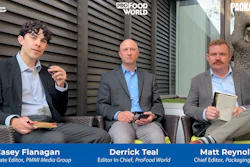
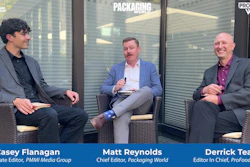
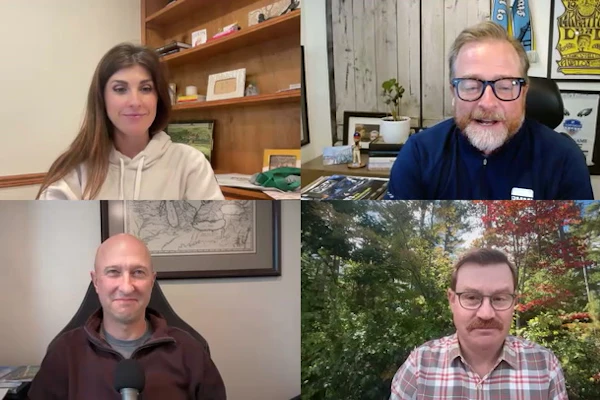
Hey everybody. Welcome to the final installment of Three Guys and two mics here at Interpact 2026. I am Editor In Chief of Prof Food World, Derek Thiel. To my left here, we have the venerable Matt Reynolds, editor. Venerable. Venerable,
Matt Reynolds (00:19):
All right.
Derrick Teal (00:19):
Yeah. Editor of Packaging World. And to my right we have our Jack of all trades editor, Casey Flanagan. And so guys, I mean,
Matt Reynolds (00:29):
How many steps total between the three of us?
Derrick Teal (00:30):
Between the three us? I have no
Matt Reynolds (00:32):
Idea. I was around 15,000 to 20,000 a day for four days. And if we more ize that, I mean we're English majors and literature majors, we're not math majors, but you engineers out there can do the
Casey Flanagan (00:43):
Figure out. We have to have run a marathon at this point, at least between us.
Derrick Teal (00:47):
I just know that yesterday was my downtime or down mileage was at three. Today I was back up to five. So 7, 6, 3, 5.
Matt Reynolds (00:55):
Alright, nice. So we traverse some landscape while we're here. 18 halls, well technically 17 halls. We've covered materials, machinery, smart packaging, all sorts of processing. Food, food, beverage, food safety, ai. It's everywhere, but we don't notice it anymore. I met my first humanoid robot today. I actually shook hands. Yeah.
Derrick Teal (01:19):
He liked him. Tried to kick me, but
Matt Reynolds (01:23):
I got to get in with our overlords.
Casey Flanagan (01:24):
Yeah, right. Yeah. So I think one thing that I noticed today and at a couple other booths throughout the show was combining machinery, getting multiple features into one compact unit, something that can do multiple things at once. So it's in a small footprint, but also easy to kind of focus on, easy to operate for the operator. They don't have to focus on three different machines with all their own unique features and things like that.
Matt Reynolds (01:57):
Well, a lot of these brands are dealing with limited space. They only have so much, they're constrained by brownfield kind of situations. So the more you can do with less square footage, you see that over and over again.
Casey Flanagan (02:08):
Exactly. Yeah. So one of the brands that I saw doing that was Fortress Technology, and they had three in one machine that was pretty cool. They did check weighing x-ray and label inspection all in one unit that was pretty compact for fitting all of that into one thing. And so it was exactly that. It's great for the square footage and it's just right there for the operator
Matt Reynolds (02:36):
I saw in nor. This is one of the Cosia companies, Norton trained case packer for tubes. They're just known for tube filling. That's kind of like a specialty of theirs. But this is basically compacting everything smaller and smaller and smaller and all putting tubes in. And there's actually two separate in feeds. So you've got everything happening in a really, really constrained space. So sometimes these tube filling situations are at the hub of multiple different lines. So to have that hub be able to take and accept a lot of in feeds in such a small space, that's really valuable for a lot of these filling companies that are doing toothpaste or cosmetic tubes, that sort of thing.
Derrick Teal (03:13):
Absolutely. Yeah. And talking about space, one of the things that I saw, I mean I had to take notes because he got pretty technical, but it was a company called OneDrive and it was a magnetic direct drive. And one of the advantages of that is with the magnetic drive is that you could actually put it right there on the line instead of having it off the side. And that saved space. And the person I talked to was talking about how that there have been use cases where that has really helped
(03:39):
Save space and create a more efficient line because you're able to move that around pretty much wherever it's needed. The other advantage of that is because the way it's set up, unlike a typical drive where if you one horsepower drive, if you start it up, it's going to use approximately 400 watts just to start up. And as it goes, it's going to get hot. And he was telling me that this drive, once it starts off, I mean the example I saw, it was lifting a hundred pounds over and over had started at the beginning of the show today, and I'm touching the casing and it's still pretty cold. It's cool to cold, it's a stainless steel casing, and it was only using up to 75 watts
Matt Reynolds (04:18):
And you were telling me this earlier. And there's also another benefit, I think that there's expansion and contraction when it
Derrick Teal (04:24):
Heats up
Matt Reynolds (04:24):
And cools down. So that has to
Derrick Teal (04:26):
Be an advantage. Absolutely. It absolutely is. And especially when you're talking cleaning place, you're spraying it down, you're getting water out there, and as drives contract from the heat, if they're hot, they contract, they suck in that moisture from the cleaning. And as we know, electronics and water don't really mix very well. But because this drive is running as cool as it is, as it does, it doesn't draw in that vapor and it preserves the longevity of that drive. And as we know how, as much as drives can cost if you're not having to replace them constantly and
Matt Reynolds (05:01):
By constantly, it could be like every year, every two years, and these guys, depending
Derrick Teal (05:05):
On the conditions. Yeah,
Matt Reynolds (05:05):
Looking at five possibly.
Derrick Teal (05:07):
Yeah, I believe that. Don't quote me where we can look it up, put it on the screen, but I believe that the warranty said was at least five years.
Matt Reynolds (05:14):
So the more life you can get out of components, the better.
Derrick Teal (05:18):
Absolutely. And obviously if you're drawing less power overall, that's another thing for the sustainability, which we've talked about almost day, like
Matt Reynolds (05:24):
Day it feels like, it feels like there's nothing that I saw just had one benefit. It felt like there were multiple benefits to everything. It wasn't just compostable, but was compostable but had barrier or something like that. So I don't have a specific example, but it just seemed it was like many things were doing many different things. Yeah.
Casey Flanagan (05:44):
It's funny you mentioned that. I noticed that a lot today was the sustainable and recyclable options that also had some kind of value add going on. So it almost seems like these companies are recognizing that recyclability is kind of the standard, and now it's about reaching that next level of, oh, by the way, I can do this or that. So some of them that I noticed that had that, there was a Japanese company called itochu, and they had a mono flexible film, a PE film that it was fully recyclable, but it also was great for heat resistance. So it went up to, I want to say it was like 120 degrees Celsius for that plastic, what you were saying, you said, yeah, it was a hundred Celsius. So it was pretty impressive for its heat resistance. And so that helped it in the manufacturing process. But because it's
Matt Reynolds (06:31):
A mono material, it's
Casey Flanagan (06:33):
Recyclable and its also happens to be recyclable. Yeah. And then Dow had another example kind of like that. They had an ultra high barrier, all P little stick pack you might put a powder into. Sure. Like mass
Matt Reynolds (06:47):
Cafe or something.
Casey Flanagan (06:48):
Yeah, exactly. So if you're looking for that extra high barrier, making sure no moisture gets inside there, it offers that, but it also is a recyclable material. So pretty interesting.
Derrick Teal (06:59):
And just one other thing, talking about the multiple functionality that I went to Erie today and looked at their X-ray machine and it acts as a check wear even though there's no scale on it. And it's able to do that by measuring the density of the pre-programmed product in there. And it's able to say based off of the algorithm that they're using, as to whether or not it's meeting the specs that they have set for, which I thought was pretty neat. Pretty neat.
Matt Reynolds (07:22):
Yeah. Good. Absolutely. I noticed, this is something I'm going to have to, we've been talking about incremental, very specific examples. This is our last day. I'm kind of backing up a little bit because I've got some great articles. So keep an eye on packaging World Magazine and the website for the next couple of weeks. All these kind of matriculate out.
Derrick Teal (07:42):
Same as pro food world, don't forget about us.
Matt Reynolds (07:43):
Yes, all the publications. But there's the two biggest trends other than a lot of the AI and all these things that are ongoing are this balance between, I would say sustainability and using less material using lighter weight material and imbuing packaging. I'm specifically, I packaging, I imbuing packaging with attributes that are basically weighing it down with attributes you might say that make it more robust, that make it smarter, whether it's RFID or putting a lot of information on QR codes. So I didn't realize it until the very end of the day. I saw a great presentation over at tagle, Mars was there. So Mars is doing a lot with experimenting with new materials and compostability. And one of the people there asked a question that I hadn't thought about. It's like how you're trying to make the lightest possible weight compostable package, but you're trying to give it all these attributes, all these smart attributes.
(08:40):
You have to follow it through the supply chain. It has to report back to whether it's EPR in the United States or PPWR in Europe, and it has to report something different. So packaging has to do a lot of stuff, stuff and it has to keep the product inside it intact and can't spoil. But at the same time, they're trying to make it as lightweight as possible. So tensions, I mean packaging is all about trade-offs. The more you lean into one trend, the more that you're neglecting another. So it's optimizing all these different toggle switches that you can turn this lever up and this lever goes down. But that's packaging. That's what packaging has always done. That's how packaging developers and equipment manufacturers have always had to balance multiple different things and keep plates spinning. I don't know if you guys have any big picture takeaways that you want to zoom out and after four days,
Derrick Teal (09:32):
I think we have some big picture takeaways. Obviously, as you said, read about 'em on pro food world.com and we'll also take some of your insights as well and put 'em on profu growth.
Matt Reynolds (09:40):
It
Derrick Teal (09:41):
Goes both ways. It goes both ways, absolutely. But some of the biggest takeaways that I had was the downsizing of equipment just to retain that floor space and the user ease, I guess is the best way to put that. Just because, just make it simpler for people because of the, I mean, we talked about it already, I think on episode one or two about the experience level not being there and
Matt Reynolds (10:07):
They're graduating out or not graduating, they're retiring out.
Derrick Teal (10:10):
Absolutely. And just from a time perspective, even if they are skilled, just making it easier so they're not having to change run film through 32 different rollers. They can run it through just five. So I think those are probably the biggest takeaways. Just ease of use and well and sustainability.
Casey Flanagan (10:26):
Absolutely. And I guess one thing that I really feel like I've noticed here is the focus on sustainability for the sake of PPWR here in Europe, since we're out here, that's the main name that it's being called by, but the same kind of thing is happening in some states with EPR. So it really is just something that the industry is focused on a ton at this inter pack. And so it's definitely something to keep an eye on
Derrick Teal (10:53):
And I'm excited to sit down finally. We had good weather here throughout the show.
Matt Reynolds (10:59):
It changed this morning, hence
Derrick Teal (11:01):
The hat. Yeah,
Matt Reynolds (11:01):
We were hoping to get one. We were hoping to get one good outdoor sunny Conig Valley. But we promise you, we really are in Germany and we're not in Cincinnati or Topeka. I promise this
Derrick Teal (11:11):
Isn't just
Matt Reynolds (11:12):
Some
Derrick Teal (11:12):
Random background. Right.
Casey Flanagan (11:14):
This is a real hotel, a Dusseldorf hotel lobby. Yes.
Matt Reynolds (11:18):
Well, gentlemen, it's been a privilege and an honor serving with you the last couple of days. It's been fun. Welcome to your first pack and now many more for both of you to come. I'm sure. Hope
Derrick Teal (11:28):
So. Hope so.
Casey Flanagan (11:29):
Thank you. Yes. This has been great. Fantastic.
Derrick Teal (11:31):
Thanks
Matt Reynolds (11:31):
To all our viewers for the last few days for putting up with us and our extended commentary.
Casey Flanagan (11:36):
Yep. Thanks everyone. Bye
Matt Reynolds (11:37):
Everyone. All.