Manufacturing success depends not on collecting more data but on delivering the right information to the right people at the moment they can act on it. Context, combined with modern tools like advanced HMIs, manufacturing execution systems, and edge computing, helps operators make better decisions faster and prevents problems before they occur.
- Visibility alone doesn't improve performance — data must be delivered with context at the moment decisions can be made, not after problems occur.
- Context is more valuable than raw data — connecting information across systems helps operators recognize patterns and understand why problems develop.
- Modern HMIs are becoming decision tools — advanced systems now provide trends, diagnostics, guided responses, and historical patterns to strengthen operator judgment.
- Edge computing enables faster responses — processing information locally allows alerts and interventions within seconds, protecting batches before quality is affected.
- Technology success depends on people — the best digital systems are designed around operator and supervisor needs, supported by training and change management.
(Other articles in the Digital Transformation Series: Part 1, Part 2, Part 3)
Many years ago, I worked with a facility that was frustrated by its safety performance. Management carefully tracked lost-time incidents, reviewed the metrics regularly, and communicated safety expectations throughout the organization. Yet the results stubbornly refused to improve.
Eventually, the plant installed a simple electronic sign near the employee entrance. The display showed the number of days since the last lost-time incident and the facility's all-time safety record. Almost immediately, behavior began to change. Employees paid attention to the number. Teams talked about breaking the record. Supervisors referenced it during shift meetings. What had previously been a monthly statistic became a daily point of focus.
 Dr. Bryan Griffen is the President of Griffen Executive Solutions LLC. He was previously Senior Director of Industry Services for PMMI: The Association for Packaging and Processing Technologies, and he held a number of roles for Nestlé during his many years there.Griffen Executive Solutions
The information had not changed. The visibility had.
That experience highlights a lesson many manufacturers are learning as they invest in digital technologies. Data rarely changes behavior on its own. People act when information is visible, relevant, and delivered at a moment when they can do something about it.
Digital transformation has delivered no shortage of data to today's manufacturing organizations. Sensors monitor temperatures, pressures, flow rates, ingredient additions, utility consumption, and equipment performance. Manufacturing execution systems (MES) collect production information. Historians archive years of process data. Dashboards display metrics in real time.
Yet, despite this abundance of information, many plants continue to struggle with the same operational challenges they faced before these systems were installed. Batch variability persists. Process upsets recur. Changeovers take longer than expected. Production targets are missed. Operators and supervisors still spend valuable time reacting to issues rather than preventing them.
The reason is surprisingly simple: Collecting data is relatively easy—helping people make better decisions with that data is much harder.
As digital transformation efforts mature, many manufacturers are discovering that the greatest opportunity is no longer visibility, it’s action. The organizations seeing the strongest returns from their digital investments are those that have learned how to close the loop between information and decision-making.
The problem isn't visibility
Ten years ago, many manufacturers struggled to obtain meaningful process data. Information was often trapped in PLCs, paper records, spreadsheets, or the experience of long-tenured employees.
Today, the situation is very different. Most facilities can tell you what happened yesterday, last week, or even five minutes ago. Process variables are continuously monitored. Production metrics are available on demand. Equipment performance can be analyzed in greater detail than ever before.
Yet visibility alone does not improve performance.
Consider a cooking process where occasional product scorching is affecting quality and yield. The historian may clearly show that affected batches experienced pressure spikes within the heating system. Process engineers may generate reports documenting the events, and quality teams may track the resulting product losses. But if operators do not recognize the developing condition while the batch is running, the information arrives too late to change the outcome.
This illustrates an important distinction: Data explains the past. Decisions influence the future.
The challenge facing many manufacturers today is not collecting more information, it’s delivering the right information to the right people at the moment when they can still act on it. To do that effectively, the information must provide more than visibility. It must provide context.
Why context changes everything
One of the most common mistakes in digital transformation is assuming that more data automatically creates better decisions. In reality, context is often more valuable than the data itself.
Returning to our cooking process, imagine that a pressure spike is recorded and flagged by the system. Viewed in isolation, it is simply another process event. However, what if the operator also sees that similar pressure spikes occurred during the previous three production runs? What if the system indicates that each event occurred shortly after product flow into the heat exchanger was increased? What if maintenance records show recent work on a control valve within the system?
Suddenly, the information becomes meaningful. The operator is no longer looking at a single pressure excursion but instead seeing a pattern that may lead to scorching, reduced yield, or an out-of-specification batch.
This ability to connect information across systems is where modern digital tools begin creating real value. Operators, supervisors, maintenance technicians, and process engineers often need different views of the same event. Effective systems provide the context necessary for each role to make informed decisions quickly.
Data without context creates curiosity. Data with context drives action.
Once organizations understand the importance of context, the next challenge becomes delivering that context to the people making decisions on the floor.
Modern HMIs are becoming decision tools
Historically, human-machine interfaces (HMIs) served a straightforward purpose. They displayed process values, alarm conditions, and equipment status. Operators used them to monitor the process and make manual adjustments when necessary.
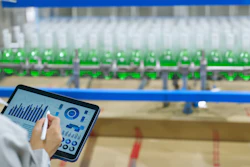
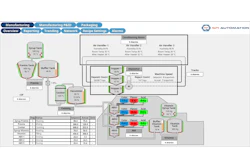
Today's HMIs are evolving into something much more powerful. Modern systems increasingly provide operational context alongside process information. Trends, diagnostic information, guided responses, and performance indicators are becoming part of the operator experience.
In our cooking process example, pressure within the heating system begins trending upward. A traditional HMI may simply display the current pressure and generate an alarm once a threshold is reached. A more advanced system might show the pressure trend over time, identify that product flow rates have increased during the same period, highlight similar occurrences during previous production runs, and present recommended troubleshooting steps based on historical performance.
The difference is significant. Instead of merely informing the operator that a problem exists, the system helps explain why it may be occurring and what actions should be considered. This reduces cognitive load during stressful situations and helps less-experienced operators respond with greater confidence.
The objective is not to replace human judgment—it’s to strengthen it.
Individual decisions are important, but many operational challenges extend beyond a single process area. This is where broader operational context becomes valuable.
MES and the power of operational context
Manufacturing execution systems (MES) often suffer from an image problem. Many operators view MES platforms as management tools designed primarily for reporting, compliance, or production tracking. While those functions remain important, modern MES platforms can provide far greater value when they support frontline decision-making.
The real power of MES lies in its ability to connect operational information that would otherwise remain isolated.
Returning once again to our cooking process, imagine that recurring pressure spikes are affecting product quality. The HMI may help the operator recognize the condition in real time, but MES can provide broader operational context. Recipe versions, ingredient lots, production schedules, operator notes, quality records, and maintenance activities can all be linked together.
Instead of treating each pressure spike as an isolated event, supervisors and process engineers can begin identifying recurring patterns across shifts, products, and production campaigns. The result is not simply better reporting. It is faster problem solving and more confident execution.
The most successful MES implementations are often those that focus first on helping operators perform their jobs more effectively. When frontline personnel benefit directly from the system, management reporting becomes a byproduct rather than the primary objective.
Why edge computing matters
Much of the discussion surrounding digital transformation focuses on enterprise systems and cloud platforms. While these technologies provide tremendous value, some decisions need to happen closer to the process.
This is where edge computing is beginning to play a larger role. By processing information locally, edge devices can respond to changing conditions far more quickly than systems that depend entirely on centralized infrastructure.
In our cooking process example, pressure spikes may develop within seconds when product enters the heat exchanger faster than the system can effectively process it. Waiting for information to travel through multiple enterprise systems may provide valuable historical insight, but it does little to protect the batch in real time.
Edge computing allows local analysis of pressure, flow, and operating conditions directly at the process. When developing conditions indicate an increased risk of scorching, operators can be alerted immediately, giving them time to intervene before quality is affected.
The same principle applies to fermentation processes, ingredient handling systems, utility management, and countless other applications throughout the food and beverage industry. Sometimes the most valuable decision is the one made a few seconds earlier.
Technology doesn't improve performance. People do.
For all the discussion surrounding digital tools, software platforms, and advanced analytics, it’s important not to lose sight of a fundamental truth: Technology doesn’t improve performance—people using technology improves performance.
The best digital systems are not those that generate the most reports or collect the largest amounts of data. They are the systems that help operators recognize problems sooner, help supervisors allocate resources more effectively, and help maintenance teams address issues before failures occur. In other words, they help people make better decisions.
This is why successful digital transformation efforts almost always include investments in training, change management, and workforce development alongside technology deployment. A sophisticated system that nobody trusts or understands will never deliver meaningful value. Conversely, even relatively simple tools can produce significant improvements when they are designed around the needs of the people using them.
From reporting to responding
For years, manufacturing organizations focused on answering a single question: What happened?
Today's digital technologies increasingly help answer a much more valuable question: What should we do next?
That shift represents the true promise of digital transformation. The most valuable data in the plant is not the information stored in a database or displayed on a dashboard. It is the information that helps someone make a better decision before the next batch, the next process upset, or the next production loss occurs.
Closing the loop is ultimately not about technology. It is about turning insight into action, one decision at a time.