Create a free ProFood World account to continue reading
Right-Sizing Your Next Plant: Why Scalability Is Replacing Scale as Manufacturing's Competitive Advantage
The fifth part of our six-part Adaptable Plant series examines why food manufacturers are shifting their focus from building bigger plants to building more adaptable ones, and how scalability, modular design, and flexible production are becoming key competitive advantages.
Manufacturers are shifting from building large, fixed facilities designed for maximum capacity to creating right-sized, scalable operations that can adapt as markets and customer demands change. This transition from scale to scalability represents a fundamental change in how companies approach capital investments and competitive advantage in modern manufacturing.
Scale versus scalability: Scale measures current production capacity, while scalability measures how easily a facility can evolve to meet future business needs without complete redesign.
Modular manufacturing growth: System integrators are increasingly building dedicated business units for modular process skids, reflecting rising manufacturer demand for flexible, expandable systems.
Distributed production strategies: Companies are investing in multiple right-sized facilities closer to regional markets rather than relying on single large plants, improving responsiveness and business continuity.
Workforce adaptation required: Scalable facilities demand flexible teams with cross-training, standardized work practices, and broader responsibilities across multiple process areas.
Risk reduction: Phased capacity investments aligned with actual demand reduce the risk of investing capital in outdated forecasts and allow faster production startup through factory acceptance testing.
Over the past few years, I've noticed something interesting in conversations with equipment suppliers, system integrators, and food manufacturers. Companies that once focused almost exclusively on designing large, permanent processing lines are increasingly talking about modular systems, expandable capacity, and phased investments.
At first, I assumed these were isolated discussions. The more companies I spoke with, however, the more I realized they were all responding to the same challenge. Manufacturers aren't simply looking for more capacity anymore. In many ways, they're looking for scalability rather than simply scale.
That shift says something important about where our industry is headed.
For decades, manufacturers followed a straightforward formula for growth: build bigger plants, increase production capacity, and reduce unit costs through economies of scale. In many industries, it was the right strategy. Larger facilities could spread fixed costs across higher production volumes, justify greater automation, and improve operating efficiency.
Today's manufacturing environment looks very different.
Consumer preferences shift more rapidly. Product portfolios continue to expand. Regional tastes influence purchasing decisions. Supply chains remain vulnerable to disruption, and new product introductions occur more frequently than ever before. Under these conditions, designing for maximum production capacity is no longer the only measure of success.
Manufacturers are beginning to ask a different question. Rather than, "How big should we build?" they are increasingly asking, "How adaptable should we be?"
The answer isn’t necessarily a smaller plant. It’s a right-sized one, designed to meet today's production requirements while providing the flexibility to evolve as markets, products, and customer expectations change.
The conversation is shifting from scale to scalability.
When bigger isn't better
Economies of scale remain an important competitive advantage for many manufacturers. High-volume products with stable demand still benefit from centralized production and large, highly optimized facilities.
The challenge is that many operations no longer fit that model.
SKU proliferation has dramatically increased production complexity. Customers expect greater product variety, shorter lead times, and more frequent innovation. Manufacturers are balancing regional product preferences, seasonal demand, private label production, and shorter product lifecycles—often within the same facility.
Plants designed for maximum efficiency under stable conditions can struggle when asked to accommodate constant change. Long production campaigns become shorter. Changeovers become more frequent. Equipment originally optimized for one product mix must now support many.
In this environment, resilience is no longer measured solely by production capacity, it’s measured by how quickly an operation can adapt when conditions change.
Dr. Bryan Griffen is the President of Griffen Executive Solutions LLC and the author of The Practical AI Partner. He was previously Senior Director of Industry Services for PMMI, and he held a number of roles for Nestlé during his many years there.Griffen Executive SolutionsScale versus scalability
Although the terms are often used interchangeably, scale and scalability represent two very different concepts: Scale describes how much a facility can produce today, while scalability describes how easily that facility can become what the business needs tomorrow. That distinction is becoming increasingly important when making long-term capital investments.
Traditionally, manufacturers often built facilities with significant excess capacity to accommodate anticipated future growth. While this approach can reduce the need for future expansion, it also requires substantial upfront investment and assumes that tomorrow's business will closely resemble today's forecasts.
Increasingly, manufacturers are taking a different approach. Rather than investing in every possible future capability on day one, they’re designing facilities that can expand in logical, predictable stages. Capacity grows alongside demand instead of years ahead of it. This approach also reduces the risk of investing today's capital in assumptions that may no longer be valid 5 or 10 years from now.
The objective is no longer to build the largest plant possible. It is to build a plant that can evolve without requiring a complete redesign every time business conditions change.
Modular manufacturing is changing the equation
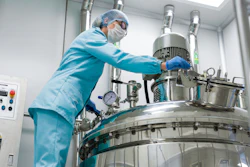
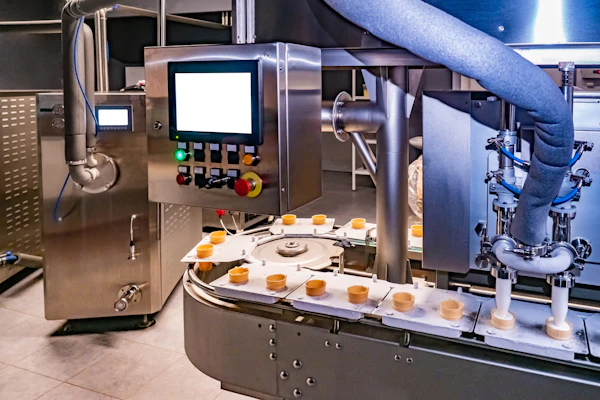
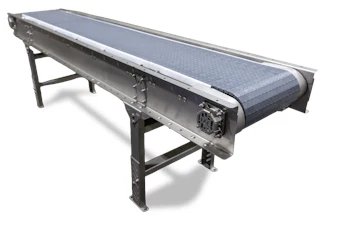
One of the clearest indicators of this shift has come from my own work with several system integration companies over the past year. More than one has either launched or is actively building a dedicated business focused on designing and fabricating modular process skids.
That isn't happening by accident. They're responding to a noticeable increase in demand from food manufacturers looking for processing systems that can be installed, expanded, or even relocated more easily than traditional stick-built installations.
Interestingly, this shift is changing the makeup of these integration companies as well. Organizations that historically consisted primarily of electrical and controls engineers are now hiring process engineers, mechanical engineers, and skid design specialists. They're evolving from automation integrators into providers of complete modular process solutions because that's increasingly what their customers are asking them to deliver.
That evolution reflects changing customer expectations. Manufacturers are no longer asking integrators simply to connect equipment, they’re increasingly looking for scalable process solutions that can be deployed more quickly, expanded more easily, and replicated across multiple facilities.
Modular manufacturing also reduces project risk. Factory acceptance testing can identify many integration issues before equipment ever reaches the plant, shortening startup timelines, reducing commissioning risk, and allowing production to begin sooner. Standardized modules simplify maintenance, operator training, and future expansion because each new installation builds upon a proven design.
To me, this is about far more than skids. It's evidence that manufacturers are beginning to think differently about capital investments. Rather than asking, "How large should this facility be?" they're increasingly asking, "How easily can this facility change?"
Thinking beyond a single facility
Scalability is changing more than equipment design. It’s also influencing where production takes place.
Rather than relying exclusively on a single large manufacturing facility, some organizations are evaluating distributed production strategies that place manufacturing closer to regional markets. Others are investing in smaller satellite operations that complement existing flagship plants rather than replacing them.
These approaches can reduce transportation costs, improve responsiveness to regional demand, and strengthen business continuity by reducing dependence on a single production location.
Distributed manufacturing is not appropriate for every business. High-volume commodity products may continue to benefit from centralized production. However, for products with shorter shelf lives, significant regional variation, or rapidly changing demand, multiple right-sized facilities may provide greater long-term resilience than one exceptionally large operation.
Once again, the objective is not simply to build smaller plants—it’s to build a manufacturing network capable of adapting as business conditions evolve.
People still make scalability work
Designing adaptable facilities is only part of the equation. People remain the critical factor that determines whether scalability delivers meaningful value.
Flexible production systems require flexible teams. Operators often perform a broader range of responsibilities. Maintenance technicians work across multiple process areas. Engineers become responsible for integrating new production modules while maintaining existing operations. Cross-training, standardized work practices, and effective knowledge sharing become increasingly important as facilities evolve over time.
Technology enables scalability, but people make it sustainable.
Organizations that invest in modular equipment without investing in workforce capability often discover that flexibility exists only on paper. The most successful manufacturers develop adaptable systems and adaptable people at the same time.
Building for tomorrow
Manufacturers will always pursue efficiency, that’ll never change. But what is changing is how they achieve it.
Rather than concentrating every investment into one increasingly complex facility, many organizations are creating operations that can expand incrementally, reconfigure more easily, and respond more quickly to changing market conditions. Scale may win today's business, but scalability helps you compete for tomorrow's. That's why the goal is no longer to maximize scale, it’s to maximize scalability.
The plants that thrive over the next decade may not be the largest facilities or the ones producing the highest volumes. Instead, they may be the operations designed with enough flexibility to grow, adapt, and evolve without having to start over each time the market changes.
In an increasingly uncertain world, that may prove to be the greatest competitive advantage of all.
 Dr. Bryan Griffen is the President of Griffen Executive Solutions LLC and the author of The Practical AI Partner. He was previously Senior Director of Industry Services for PMMI, and he held a number of roles for Nestlé during his many years there.Griffen Executive Solutions
 Dr. Bryan Griffen is the President of Griffen Executive Solutions LLC and the author of The Practical AI Partner. He was previously Senior Director of Industry Services for PMMI, and he held a number of roles for Nestlé during his many years there.Griffen Executive Solutions