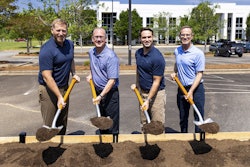
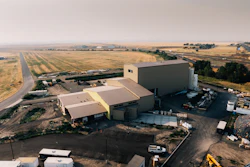
Grillo's Pickles has officially confirmed its plans for a new $54 million food manufacturing operation to meet its growing national demand from a site near Columbus, Ind. The company recently broke ground on a new 155,000-sq-ft production facility along I-65 in Bartholomew County. The new Taylorsville facility in northern Bartholomew County will be adjacent to a previously announced $175 Million King's Hawaiian bakery operation. Both companies are a subsidiary of Irresistable Foods Group.
"When we purchased the Bartholomew County site, we did so with thoughts about building it out in phases," says Joe Leonardo, Vice President of Strategic Operations for Irresistible Foods Group (IFG) and Chief Operating Officer of King's Hawaiian. "Today's announcement for Grillo's Pickles confirms our strategy."
The Grillo's Pickles facility will employ up to 150 persons, and it is adjacent to a previously announced 300,000-sq-ft bakery facility for King's Hawaiian.
"Our pickles use a century-old family recipe and contain no artificial preservatives, Grillo's Pickles are packed, shipped, and sold refrigerated," says Adam Kaufman, President & CEO of Boston-based Grillo's Pickles. "For our new production site, it was important to us to find a central U.S. location with a skilled workforce and supportive business environment, and we are very excited to be in Bartholomew County, Indiana."