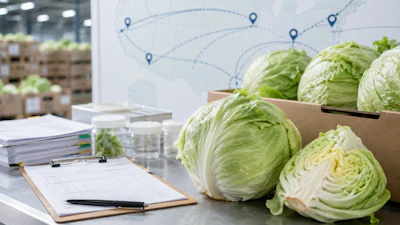
The 2026 Cyclospora outbreak, the largest in U.S. history with over 17,000 confirmed infections linked to iceberg lettuce from Taylor Farms de Mexico, demonstrates that food manufacturers must make critical safety decisions based on epidemiologic evidence and supply chain traceability before contamination mechanisms are fully understood, while emphasizing that effective food safety depends on robust supplier verification, bidirectional traceability systems, and continuous vigilance throughout the entire supply chain.
- The 2026 outbreak resulted in over 17,000 laboratory-confirmed Cyclospora infections nationwide, with 11,458 specifically linked to Taylor Farms de Mexico iceberg lettuce, including 495 hospitalizations and 2 deaths.
- Traceback investigations work in two directions: identifying where contaminated products originated and where they were distributed, enabling faster recalls and preventing unnecessary disruption to unaffected inventory.
- Companies must act decisively under uncertainty—Taylor Farms initiated a voluntary recall on July 17 before investigators identified the exact contamination mechanism or laboratory-confirmed Cyclospora in the product.
- Effective supplier verification for fresh produce extends beyond audits and certifications to evaluate agricultural water quality, employee hygiene, sanitation practices, and harvesting procedures before contamination enters the supply chain.
- The FDA's Food Traceability Rule requires maintaining key data elements for critical tracking events, enabling regulators to reconstruct product movement faster and reduce investigation timelines that directly correlate to preventing additional illnesses.
The largest Cyclospora outbreak in U.S. history is doing more than testing the nation's public health system. It is also demonstrating how food manufacturers, suppliers, importers, and regulators must often make important decisions before every question has been answered. During a major outbreak investigation, epidemiology, traceback records, and supplier information may point investigators toward an implicated product long before they determine exactly how contamination occurred. Companies may therefore find themselves recalling products, communicating with customers, and working with regulators while a root-cause investigation is still unfolding.
That reality has defined the 2026 Cyclospora outbreak linked to iceberg lettuce supplied by Taylor Farms de Mexico. Although investigators continue working to identify the precise contamination mechanism, epidemiologic evidence and extensive traceback activities were sufficient to identify a common supplier, support a voluntary recall, and launch one of the largest foodborne illness investigations involving the parasite in U.S. history.
For food and beverage manufacturers, the outbreak carries lessons that extend well beyond fresh produce. It illustrates the importance of supplier verification, demonstrates the value of strong traceability systems, and reinforces why outbreak response plans must be built around making decisions under uncertainty. It also reminds manufacturers that food safety depends on much more than testing finished products. Preventing contamination begins with suppliers and continues through every stage of the supply chain until food reaches consumers.
As of late August, more than 17,000 laboratory-confirmed, domestically acquired Cyclospora infections had been reported nationwide since May. That total includes illnesses associated with the Taylor Farms de Mexico investigation as well as other clusters of cyclosporiasis that remain under review. The U.S. Food and Drug Administration (FDA) described the Taylor Farms outbreak as "significant and unprecedented compared to prior Cyclospora incidents." Former FDA Deputy Commissioner for Food Policy and Response Frank Yiannas likewise characterized the event as unprecedented and called for an independent review, emphasizing that even one of the world's safest food systems must continue improving as new lessons emerge.

Understanding Cyclospora
Cyclospora cayetanensis presents investigators with a very different challenge than bacterial pathogens that are more familiar to food manufacturers. Unlike bacteria such as Salmonella or Listeria monocytogenes, the parasite doesn’t multiply during food processing or storage. Instead, it requires time outside the human body before becoming infectious, making direct person-to-person transmission unlikely. Most infections occur when consumers eat contaminated food or drink contaminated water, with fresh produce representing the most common vehicle because it is frequently consumed without a pathogen-reduction step such as cooking.
Once ingested, the parasite causes cyclosporiasis, an intestinal illness that is most often associated with watery diarrhea, although abdominal cramping, nausea, fatigue, bloating, and weight loss are also common. Symptoms may persist for weeks without treatment and can lead to serious dehydration, particularly among individuals with underlying health conditions.
One of the greatest challenges facing investigators is the parasite's incubation period. Symptoms generally appear about one week after exposure, but they may take two weeks or longer to develop. By the time patients become ill, the food has often been consumed or discarded, and recalling the details of individual meals can be difficult.

The investigation is further complicated because molecular subtyping tools for Cyclospora continue to evolve and remain less developed than those available for several bacterial pathogens. As a result, investigators often rely more heavily on epidemiology, traceback information, and distribution records to establish links among illnesses.
Previous U.S. outbreaks have been associated with cilantro, basil, raspberries, leafy greens, and other fresh produce. Those recurring events reinforce that prevention begins long before products reach a manufacturing facility. Agricultural water quality, employee hygiene, sanitation practices, and harvesting operations all influence whether contamination enters the food supply, while processors and importers depend on effective supplier verification programs to ensure those risks are being managed.
From isolated illnesses to a nationwide investigation
Like many foodborne illness investigations, the 2026 Cyclospora outbreak did not begin with a single obvious source. Instead, what initially appeared to be scattered cases of gastrointestinal illness gradually evolved into one of the largest and most complex investigations of its kind in the U.S.
Epidemiologists with the Centers for Disease Control and Prevention (CDC), working alongside state and local public health agencies, began identifying common patterns among patients diagnosed with Cyclospora infection. As more interviews were completed and additional illnesses were reported, investigators found repeated exposure to meals containing iceberg lettuce.
While epidemiologists focused on identifying illness patterns, the FDA pursued a parallel investigation through the food supply chain. Inspectors and investigators reviewed distribution records, supplier documentation, invoices, receiving records, and other materials to determine whether products consumed in different locations originated from a common source.
Those efforts are coordinated through the FDA's Coordinated Outbreak Response and Evaluation (CORE) Network, which was established in 2011. In 2024, those responsibilities became part of the Office of Coordinated Outbreak Response, Evaluation & Emergency Preparedness (CORE+EP) within the agency's Human Foods Program. The office works with the CDC as well as state, local, and international public health partners to evaluate outbreak signals, coordinate traceback investigations, support inspections, and assess evidence as it develops.
Although each agency performs a different role, the objective remains the same: determine whether illnesses reported across multiple states can be connected to a common food source and, if so, identify that source quickly enough to protect consumers.
Why case counts require context
The outbreak also illustrates why foodborne illness statistics require careful interpretation. Different agencies often report different numbers because they’re measuring different aspects of an investigation.
As of Aug. 27, the CDC reported 11,458 laboratory-confirmed illnesses in 20 states that were specifically linked to the Taylor Farms de Mexico outbreak. Those illnesses included at least 495 hospitalizations and two deaths in Michigan involving individuals with significant underlying health conditions that officials said may have been adversely affected by cyclosporiasis and dehydration.
That total should not be confused with the broader national count of approximately 17,180 laboratory-confirmed Cyclospora infections reported since May. The larger figure includes illnesses unrelated to the Taylor Farms investigation as well as several additional clusters that remain under review. The CDC is also evaluating thousands of additional reports that either lack laboratory confirmation or require further analysis to determine whether infections were acquired domestically.
State health departments may still report different totals because their surveillance systems often include suspected illnesses alongside laboratory-confirmed infections, and reporting schedules can vary from one jurisdiction to another. Michigan, for example, reported more than 14,000 cyclosporiasis cases during the outbreak period under its broader surveillance criteria. That number is not directly comparable to the CDC's outbreak total because each reflects a different case definition.
The CDC has also cautioned that it may take approximately six weeks to determine whether a recently reported illness belongs to a Cyclospora outbreak. As a result, increases in case counts after Taylor Farms announced its July 17 recall did not necessarily indicate that recalled lettuce remained available in stores or restaurants. Most illnesses associated with the outbreak had already occurred before the recall was initiated.
For manufacturers, this distinction matters because outbreak communications depend on precise terminology. Regulators, companies, and the media should distinguish among suspected illnesses, laboratory-confirmed infections, and cases attributed to a specific outbreak so customers understand what is known, what remains under investigation, and why reported totals may change over time.
Earlier outbreaks provide perspective
Although unprecedented in size, the 2026 outbreak is not the first time Cyclospora has challenged regulators or the produce industry.
In 2018, the CDC recorded what was then the largest increase in domestically acquired Cyclospora illnesses, documenting 2,299 laboratory-confirmed infections across 33 states. Several outbreaks were associated with fresh produce, although investigators could not identify a single source for many of the illnesses.
The current investigation also has historical ties to Taylor Farms de Mexico. In 2013, a multistate Cyclospora outbreak resulted in 631 illnesses linked to more than one food source. Restaurant-associated illnesses in Iowa and Nebraska were traced to a salad mix supplied by Taylor Farms de Mexico, while illnesses in Texas were associated with fresh cilantro imported from Mexico.
Taken together, those outbreaks illustrate that Cyclospora remains a recurring challenge rather than an isolated event. Fresh produce is grown in open environments where contamination risks differ significantly from those inside food manufacturing facilities, and no food safety system can eliminate every hazard. At the same time, repeated outbreaks involving similar commodities reinforce the need to identify root causes, strengthen preventive controls, and improve supplier oversight so lessons from one investigation reduce the likelihood of the next.
Connecting the dots through traceability
Identifying a common food among thousands of meals consumed across dozens of states rarely depends on laboratory testing alone. Instead, investigators assemble a picture over time using patient interviews, epidemiologic evidence, and supply chain records. During the Cyclospora investigation, that combination of information became increasingly important as more illnesses were reported and investigators looked for a common source.
Traceback identifies where the product came from
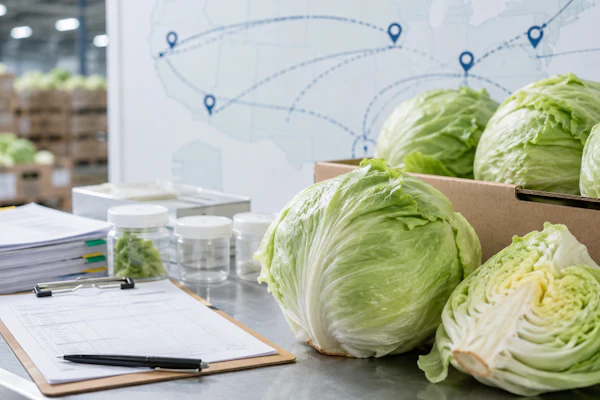
Traceback investigations work backward through the supply chain. Investigators begin with restaurants, retailers, or institutions where patients ate and then work upstream through distributors, processors, and suppliers until they identify growers or production locations that multiple illness clusters have in common. Purchase orders, receiving records, bills of lading, shipping documents, lot information, and supplier records all help investigators determine whether products consumed in different states originated from the same source.
As the investigation progressed, those records increasingly pointed to Taylor Farms de Mexico. Although traceback can establish where products moved through the supply chain, it doesn’t determine where contamination actually occurred. Instead, it narrows the investigation while inspectors continue collecting environmental samples, reviewing production practices, and evaluating other evidence that may explain how contamination entered the product.
For manufacturers, traceback demonstrates why complete and accessible records remain one of the most valuable food safety tools available. During an investigation, regulators may request documentation covering multiple suppliers, facilities, and customers. Companies that can quickly retrieve accurate records not only support the investigation more effectively, but they also help regulators narrow the scope of affected product sooner.
Traceforward completes the picture
Once investigators identify an implicated supplier, they reverse direction. Rather than looking upstream, they begin following product downstream to determine where it was distributed and who may have received it.

The Institute of Food Technologists (IFT) emphasized this point in its analysis of the outbreak, noting that effective traceability answers two equally important questions: Where did the product come from? Where did it go? A company that can answer only one of those questions has only part of the information needed during an outbreak investigation.
For processors, this extends well beyond regulatory compliance. Enterprise resource planning (ERP) systems, warehouse management software, inventory records, supplier documentation, and shipping records all become critical once an investigation begins. The faster those systems produce complete information, the more quickly regulators can identify affected product and limit the size of a recall.
Supply chain visibility becomes an operational advantage
The investigation also illustrates how much today's food system depends on visibility across the supply chain.
Modern food manufacturers rely on global sourcing networks that provide year-round access to ingredients while allowing companies to diversify suppliers and manage costs. Products may pass through multiple growers, cooling facilities, packers, processors, distributors, and warehouses before arriving at a manufacturing plant or retail shelf. While those networks provide flexibility and efficiency, they also make it more difficult to determine where contamination originated when something goes wrong.
Yiannas has frequently described food safety as a shared responsibility, noting that growers, processors, retailers, regulators, and consumers all contribute to reducing risk. No single organization controls every step of the supply chain, and no company can fully protect consumers without reliable information from the businesses around it.
Yiannas has also referred to traceability and transparency as an "Achilles heel" within today's food system because weaknesses in either area can slow an investigation and broaden a recall. The 2026 Cyclospora outbreak reinforces that point. Companies that know where ingredients originated, where products were shipped, and how quickly they can retrieve those records are in a stronger position to support regulators and protect customers.
For food manufacturers, that means traceability should not be viewed solely as a regulatory obligation. It is also a business capability that can reduce uncertainty, improve customer communication, and limit operational disruption during a food safety event.
Voluntary recall prioritized public health
As epidemiologic evidence strengthened and traceback investigations continued, Taylor Farms de Mexico initiated a voluntary recall on July 17 for iceberg lettuce sourced from central Mexico. The recall included Marketside-branded iceberg salad and shredded lettuce sold through select Walmart stores, along with foodservice products distributed to commercial customers.
According to the FDA, recalled foodservice products were distributed across 31 states, and additional distribution may have extended beyond those locations. The agency advised consumers not to eat the recalled products and instructed retailers, restaurants, distributors, and other recipients to remove affected lettuce from commerce. Businesses that handled the recalled product were also directed to clean and sanitize food-contact surfaces and containers that may have come into contact with the lettuce.
By late August, the immediate consumer risk had largely passed because all best-by dates associated with the recalled products had expired. FDA recall audit checks also supported the agency's conclusion that the recalled lettuce was no longer available in commerce. The investigation itself, however, remained active as regulators continued reviewing inspections, traceback information, and other evidence to determine where contamination occurred.
That distinction is important. Removing product from the marketplace protects consumers in the short term, while identifying the contamination mechanism helps prevent similar events in the future. Those objectives often proceed on different timelines.
Why the FDA assigned a Class I recall

The FDA clarified that the Aug. 28 posting did not expand the recall or change its scope. Rather, it reflected completion of the agency's health hazard evaluation. Based on the strength of the epidemiologic evidence, the size of the outbreak, and the seriousness of the illnesses, FDA concluded that the recall met the criteria for a Class I designation.
For manufacturers, the timing demonstrates how FDA recalls typically progress. Companies often initiate voluntary recalls as soon as available evidence indicates consumers may be at risk. The FDA then independently evaluates the available information and assigns the appropriate recall classification after completing its assessment.
Supplier verification requires more than documentation
The outbreak also underscores the importance of supplier verification, particularly for imported foods. Under the FDA's Foreign Supplier Verification Program (FSVP), covered importers must conduct risk-based activities demonstrating that foreign suppliers produce food in a manner consistent with applicable U.S. food safety requirements.
Those responsibilities extend beyond maintaining audit reports or supplier certifications. Companies are expected to evaluate foreseeable hazards, assess supplier performance, determine appropriate verification activities, document corrective actions when necessary, and maintain records supporting those decisions.
For fresh produce, that evaluation begins well before products reach a processing facility. Agricultural water quality, worker hygiene, sanitation practices, environmental conditions, and harvesting procedures can all influence whether contamination enters the supply chain.
Yiannas has argued that recurring summer Cyclospora outbreaks should no longer be accepted as seasonal events. Instead, he has encouraged both industry and regulators to focus on preventing contamination through better agricultural water management, stronger controls during growing and harvesting, more timely reporting, and closer coordination among federal and state agencies.
For manufacturers, the practical question is whether supplier verification programs merely demonstrate compliance or whether they actively identify and reduce risk before contaminated ingredients arrive at the plant.
Traceability under FSMA
The outbreak also arrives as food manufacturers continue preparing for implementation of the FDA's Food Traceability Rule under Section 204 of the Food Safety Modernization Act (FSMA). The rule establishes additional recordkeeping requirements for foods included on the FDA's Food Traceability List and requires covered entities to maintain key data elements associated with critical tracking events so regulators can reconstruct product movement more quickly during an investigation.

Yiannas, who helped lead development of the Food Traceability Rule during his time at the FDA, has expressed similar concerns about delaying implementation. He has argued that stronger traceability shortens investigations, narrows recalls, and helps distinguish affected product from unaffected inventory more quickly.
For manufacturers, the lesson extends well beyond regulatory compliance. Investments in interoperable records and rapid data retrieval can improve communication with regulators, reduce business disruption during an investigation, and help companies respond more confidently when critical decisions must be made before every question has been answered.
Communicating through uncertainty
One of the more challenging aspects of any foodborne illness investigation is communicating with the public while the evidence continues to evolve. Unlike a completed scientific study, an outbreak investigation develops in real time. New patient interviews become available, traceback activities uncover additional information, laboratory testing produces new results, and investigators continually refine their understanding of what occurred.
The 2026 Cyclospora investigation followed that familiar pattern. Throughout the summer, the FDA and CDC updated their public communications as new evidence became available. Early information about a reported positive sample was later revised after additional analysis determined it to be a false positive.
Investigators also expanded their public messaging beyond illnesses initially associated with Taco Bell as epidemiologic evidence linked additional restaurants and foodservice locations to the outbreak. Later, when the FDA assigned the recall a Class I classification, the agency clarified that the action did not expand or elevate the recall but instead reflected completion of its health hazard evaluation.
Although changing information can create confusion, it also reflects how outbreak investigations are intended to work. Regulatory agencies are expected to communicate meaningful findings as evidence develops rather than waiting until every question has been answered. As additional information becomes available, earlier conclusions may be refined or clarified without changing the overall direction of the investigation.
That distinction is important for manufacturers as well. Companies responding to a potential food safety event should expect public messaging to evolve as new facts emerge. Internal communication plans, customer notifications, and media statements should therefore be designed to accommodate new information while remaining transparent about what is known and what remains under investigation.
Surveillance shapes what investigators find
The investigation also illustrates how disease surveillance influences public understanding of food safety.
On Aug. 11, Acting FDA Commissioner Kyle Diamantas stated that the U.S. has "the safest food supply in the world." While acknowledging that the U.S. food system is among the safest globally, Yiannas questioned whether such an absolute statement can be demonstrated conclusively.
"There are simply too many variables," Yiannas wrote in a public post, citing differences in surveillance systems, reporting practices, testing capabilities, population vulnerability, regulatory frameworks, and even the methods countries use to diagnose and attribute foodborne illnesses.
Those differences matter because countries with sophisticated surveillance systems often identify illnesses that might go undetected elsewhere. Increased reporting, therefore, may reflect stronger public health infrastructure rather than weaker food safety performance. Conversely, lower reported illness rates do not necessarily indicate a safer food supply if surveillance systems identify fewer cases.
For manufacturers, that distinction reinforces the importance of interpreting outbreak data carefully. Case counts alone rarely tell the complete story. Understanding how illnesses are identified, investigated, and reported provides a more accurate picture of both public health risk and regulatory response.
Yiannas has also encouraged stronger coordination during major foodborne illness investigations, including consideration of a National Foodborne Outbreak Investigation Board modeled conceptually after the National Transportation Safety Board. Under that approach, significant outbreaks would receive independent reviews designed to identify systemic issues and recommend improvements that extend beyond the immediate response.
Whether such a board is ultimately established, the underlying objective remains the same: ensuring that every major outbreak produces lessons that strengthen prevention efforts throughout the food system.
Lessons from the outbreak
Although investigators continue working to identify the precise contamination mechanism, the 2026 Cyclospora investigation has already produced several practical lessons for manufacturers, importers, and suppliers.
Companies must be prepared to act before every question is answered.
The Taylor Farms de Mexico recall occurred before investigators identified the exact contamination mechanism and before laboratory testing confirmed Cyclospora in the implicated product. Instead, regulatory decisions relied on the totality of epidemiologic evidence, traceback findings, and distribution records. Manufacturers should expect that future investigations may require similar decisions under uncertainty.
Traceability works in two directions.
Companies must be able to identify both where ingredients originated and where finished products were distributed. Rapid access to supplier records and customer information helps investigators narrow affected products while reducing unnecessary disruption to unaffected inventory.
Supplier verification begins long before ingredients reach the plant.
Audits and certifications remain valuable, but they should be supported by programs that evaluate the hazards most likely to affect a particular commodity. For fresh produce, that includes agricultural water, employee hygiene, sanitation, and harvesting practices that influence contamination before products enter processing.
Speed improves both public health and business continuity.
The faster companies can retrieve supplier records and distribution information, the faster investigators can identify affected products and narrow the scope of recalls. Investments in interoperable systems and standardized records therefore support both regulatory compliance and operational resilience.
Case counts require careful interpretation.
National totals, state surveillance figures, and outbreak-specific case counts may all differ because they measure different aspects of an investigation. Manufacturers communicating with customers or business partners should understand those distinctions before citing outbreak statistics.
Prevention and response are inseparable.
Food safety programs often emphasize preventive controls, but the Cyclospora investigation demonstrates that surveillance, epidemiology, laboratory science, and traceability are equally important once an illness cluster emerges. Weakness in any one area can slow the entire response.
Preparedness should be tested before an outbreak occurs.
Manufacturers should periodically evaluate how quickly supplier documentation can be retrieved, who communicates with regulators, how customers will be notified, and whether traceability systems provide the information needed to support an investigation. Those exercises can expose weaknesses before a real event demands immediate action.

Looking ahead
The 2026 Cyclospora outbreak differs from previous investigations primarily because of its scale rather than the nature of the challenge itself. Thirteen years after the 2013 outbreak involving Taylor Farms de Mexico, regulators once again confronted an investigation in which epidemiologic evidence strongly implicated a supplier while the precise contamination mechanism remained unknown.
That uncertainty limits investigators' ability to identify exactly how contamination occurred, but it does not prevent meaningful improvements. Continued inspections, additional sampling, and a thorough review of growing, harvesting, and distribution practices can still strengthen preventive controls while improving future investigations.
For manufacturers, perhaps the most important takeaway is that the effectiveness of a food safety system should not be measured solely by whether outbreaks occur. Fresh produce is grown in open environments where some hazards can’t be completely eliminated, particularly when products are consumed raw. The more meaningful measure is how effectively the system prevents contamination where possible, detects unusual illness patterns quickly, traces implicated products through the supply chain, and applies the lessons learned to reduce future risk.
Throughout the investigation, Yiannas has emphasized that maintaining a strong food safety system requires continuous vigilance rather than assuming existing programs are sufficient. As he wrote, "Vigilance matters."
That simple observation captures the broader lesson of the 2026 Cyclospora outbreak. Prevention, detection, traceability, and response are not independent activities. Together, they form a continuous system that protects consumers while helping keep the U.S. food supply among the safest in the world.
This investigation remains ongoing. Information presented in this article reflects FDA and CDC updates available through Aug. 28, 2026. Case counts, traceback findings, inspection results, and regulatory actions may change as additional information becomes available.