See What’s Possible in Food Packaging & Processing—Register Now & Save!
Explore tech from 2,600 exhibitors & gain insights from 150+ free educational sessions—all at North America’s largest packaging & processing event.
REGISTER NOW & SAVE

Intrinsically Safe Sensors

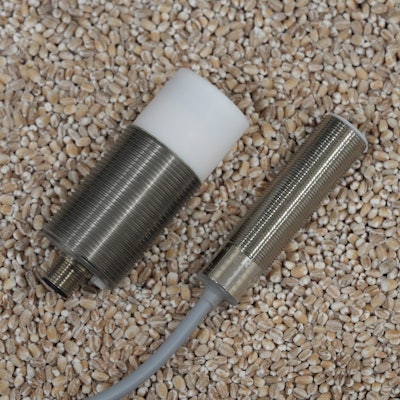
Rechner's KAS-40 and IAS-30 series intrinsically safe sensors have achieved cETLus certification from Intertek, supplementing their existing ATEX and IECEx approvals for use in explosive gas and dust environments.

Ka1638 And Ia0110 (custom)

This content was written and submitted by the supplier. It has only been modified to comply with this publication’s space and style.

The Rechner Intrinsically Safe Sensors KAS-40 series and IAS-30 series have ATEX and IECEx and are now cETLus Certified by Intertek.  

Rechner provides AEx marked intrinsically safe capacitive sensors for explosive atmospheres, approved for Class I, Div. 1 (Zone 0) gas and Class II, Div. 1 (Zone 20) dust environments. More than 150 Inductive (IAS-30) and Capacitive (KAS-40) sensor series are cETLus certified by Intertek. Documentation is available. Housings are available in PTFE, PEEK, stainless steel, or chrome plated brass. Temperature rating from -20°C to + 70°C (-4°F to +158°F). There are models with a temperature rating up to +90°C/+194°F. For easy installation, the sensors are available in tri clamp, G1”, and 4mm diameter up to M32 diameter. Sensors are prewired or M12 connector style.
Fill out the form below to request more information about Intrinsically Safe Sensors
See What’s Possible in Food Manufacturing at PACK EXPO International
Explore new machinery & materials from 2,600 exhibitors. Gain insights from 150+ free educational sessions. Find solutions to enhance quality & protect your brand at North America’s largest packaging & processing event for food, beverage & beyond.
Text (32 characters max) REGISTER NOW & SAVE
See What’s Possible in Food Manufacturing at PACK EXPO International
The future of food plant maintenance is remote
Remote monitoring and access are reshaping how plants prevent downtime and protect food safety. See how.
Read More
The future of food plant maintenance is remote