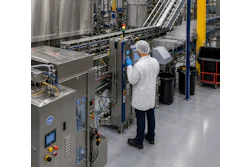
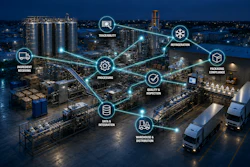
Plant resilience means absorbing change and evolving through disruptions rather than just recovering from setbacks. Building resilience starts with adaptable teams through cross-training, empowerment, connection, and trust in experimentation.
Resilience redefined: Modern plant resilience isn't reactive recovery from disruptions—it's the ability to adapt systems, shift roles, and navigate complexity proactively while maintaining forward momentum.
People are the foundation: Equipment and data matter, but adaptable teams are the true core of resilience. Frontline employees who think flexibly and learn fast drive real adaptability.
Four key characteristics: Resilient teams are cross-trained and future-focused, empowered to act on what they see, connected beyond their tasks, and trusted to experiment and share improvements.
Real-world results: Plants implementing these practices see measurable gains—one dairy facility cut downtime by 50% after empowering operators; a candy plant reduced overtime by 20% through cross-departmental walks.
Starts with people, not capital: Building resilience doesn't require major projects—it requires investing in cross-functional training, empowerment, workflow connection, and safe-to-try culture.
The manufacturing world isn’t just shifting—it’s accelerating. Today’s leaders face evolving consumer demands, fractured supply chains, tighter regulations, and relentless pressure to do more with less. These pressures aren’t new, but they’re no longer occasional disruptions. They’re the new normal. That’s why this new column series, The Adaptable Plant, will explore how food and beverage manufacturers can thrive amid change. From workforce strategies to digital tools to operational flexibility, each article will unpack real-world lessons and pragmatic steps companies are taking to build plants that bounce back, think ahead, and adapt with confidence. If you’re looking to future-proof your operations—this is your playbook.
The moment that changed everything
A few years ago, I was walking through a legacy facility, one of those classic food processing plants with a patchwork of upgrades, handwritten notes on old control panels, and operators who could diagnose an issue by sound alone. I asked the plant manager what their biggest risk was.
“Honestly?” he said, “Losing Ed.”
Ed was a shift supervisor, technician, and historian all rolled into one. He knew how to finesse the temperamental filler, where the spare parts were tucked away, and how to read between the lines when the ERP system spit out strange numbers. He was retiring in six months.
The real risk wasn’t just the loss of technical know-how. It was the loss of resilience. And that moment crystallized a lesson I’ve seen repeated across the industry: We’ve misunderstood what makes a plant truly adaptable.
Dr. Bryan Griffen is the President of Griffen Executive Solutions LLC. He was previously Senior Director of Industry Services for PMMI: The Association for Packaging and Processing Technologies, and he held a number of roles for Nestlé during his many years there.Griffen Executive SolutionsThe myth of predictability
In the past, many plants thrived on consistency. Stable schedules, long production runs, minimal product changeovers—all hallmarks of efficiency. But modern manufacturing doesn’t live in that world anymore.
Retailers expect fast turnaround on new SKUs. Ingredients are often sourced from across the globe. Customer demands shift overnight. And even the best-run plants face supply chain hiccups, labor shortages, and unexpected compliance changes.
In this environment, rigid systems and brittle processes don’t hold up. The plants that win are the ones that adapt fast, smart, and often quietly behind the scenes—plants that are resilient.
In the past, we typically defined resilience in manufacturing as the ability to recover from setbacks: reacting quickly when equipment fails, suppliers falter, or storms hit. That’s important. But it’s reactive.
Today, real resilience looks different. It’s not about bracing for impact. It’s about absorbing change and still moving forward. It’s the ability to adapt systems, shift roles, update workflows, and navigate complexity without waiting for permission.
Resilient plants don’t just endure disruptions. They evolve through them.
Adaptable teams are the root of plant resilience
Let’s be clear: equipment matters, data matters, systems matter. But none of those things adapt themselves.
People do.
The core of the adaptable plant is the adaptable team—groups of frontline employees, leads, techs, and support staff who know how to think, flex, learn, and act under uncertainty. These teams don’t wait for the perfect plan. They work the problem with what they’ve got, learn fast, and share better ways as they go.
It’s not magic. It’s built through culture, structure, and leadership.
Here are four characteristics I see consistently in truly adaptable teams:
1. Cross-trained and future-focused
Adaptable plants invest in cross-training, but not just for backfill. They treat it as a path to resilience. That means teaching team members not only what to do, but also why it matters and how it connects to the broader process.
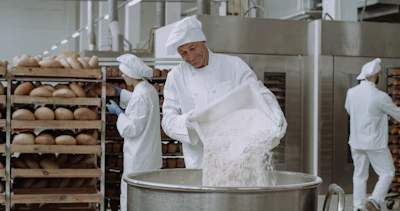
One bakery I worked with paired veteran operators with new hires on a rotating basis. The veterans weren’t just showing how to run the line, they were explaining how upstream changes affect dough hydration, why ambient humidity matters, and how to troubleshoot in real-time. That plant didn’t slow down when someone was out. It maintained output without even a bump.
Cross-training creates adaptability in people. And adaptable people create resilience in systems.
2. Empowered to act on what they see
I’ve been in too many plants where operators are expected to identify problems but not solve them.
In one dairy facility, a line operator noticed a pattern: jams were happening more frequently right after sanitation. She had a theory—it had to do with the way the belts were being re-tensioned—but she wasn’t authorized to suggest changes to the SOP.
That plant lost hours each week until a new supervisor flipped the script: “If you see it, own it.” The plant restructured its suggestion process, gave small improvement budgets to each shift, and created a “quick fix” fund for trial changes. Within a month, jam-related downtime dropped by more than half.
Empowerment isn’t about slogans. It’s about giving people permission, tools, and support to act on what they know.
3. Connected beyond their own tasks
In resilient plants, people don’t just do their jobs—they understand how their jobs affect others.
One of the most effective practices I’ve seen is the “process pulse walk.” In a candy plant, every department lead spent one hour each week walking upstream and downstream with a counterpart—mixing walked with packaging, maintenance with sanitation, QA with warehouse, and so on. Each walk included one question: “What’s one thing we’re doing that makes your job harder?”
The result wasn’t just empathy, it was improvement. Packaging learned to request batch splits before mid-shift rewraps. Maintenance adjusted lubrication schedules to avoid clashing with sanitation cycles. The plant cut overtime by nearly 20% in two quarters.
Connected teams don’t just tolerate each other. They optimize together.
4. Trusted to experiment and share what works
Resilient teams know how to adapt because they’re used to trying things. That requires trust from leaders, peers, and the system itself.
At one plant I visited, the phrase “that’s not your job” was effectively banned. If you saw something broken and had a better way, you were expected to pilot it on a small scale with simple documentation and in full view of your team. Every improvement was shared on a wallboard, and every Friday shift huddle included a “bright spot” walkthrough.
Not every idea worked. But every idea was respected. And that built a culture of "safe-to-try" where resilience wasn’t a project—it was a mindset.
A new playbook for uncertainty
The food and beverage industry has always faced uncertainty—from seasonal demand swings to regulatory shifts to aging infrastructure. But in the last few years, the pace and complexity of that uncertainty has changed.
Supply chains are more volatile. Workforce expectations have shifted. Equipment is smarter but often more fragile. And the market rewards those who can respond in real time.
That’s why building an adaptable plant isn’t a luxury. It’s a necessity.
But it doesn’t start with capital projects. It starts with people—investing in cross-functional training, empowering frontline teams, connecting workflows, and building trust around small experiments. It’s something we build.
We build it when we invest in people, not just equipment.
We build it when we make flexibility a feature, not a fallback.
We build it when we test our systems before they’re strained.
We build it when we treat every disruption as a chance to improve.
And the good news is: resilience isn’t just about surviving—it’s about unlocking new capabilities.
That’s the new resilience.
Let’s keep building it.
In The Adaptable Plant series, we’ll explore specific strategies and case studies that show how real manufacturers are putting these ideas into action:
How to build modular training programs that grow resilience across teams
How one facility reduced changeover losses by 30% through flexible staffing
How maintenance teams are becoming reliability accelerators, not just fixers
How to redesign line-side communication for adaptability instead of control
How plants are using low-code tools to localize solutions
How to lead when there is no script
If you’ve got a story to share, or want to explore how your team can grow its adaptability, I’d love to hear from you.
Because the future doesn’t belong to the biggest plants or the fastest lines. It belongs to the ones that adapt best.
See What’s Possible in Food Manufacturing at PACK EXPO International
Explore new machinery & materials from 2,600 exhibitors. Gain insights from 150+ free educational sessions. Find solutions to enhance quality & protect your brand at North America’s largest packaging & processing event for food, beverage & beyond.
 Dr. Bryan Griffen is the President of Griffen Executive Solutions LLC. He was previously Senior Director of Industry Services for PMMI: The Association for Packaging and Processing Technologies, and he held a number of roles for Nestlé during his many years there.Griffen Executive Solutions
 Dr. Bryan Griffen is the President of Griffen Executive Solutions LLC. He was previously Senior Director of Industry Services for PMMI: The Association for Packaging and Processing Technologies, and he held a number of roles for Nestlé during his many years there.Griffen Executive Solutions