Create a free ProFood World account to continue reading
Connected, Not Fragile: The Balance Between Connectivity and Resilience
Even if a plant is connected, that doesn't mean it's too advanced to fail. Learn why connectivity alone isn't enough and how modular design, standardization, and human-centered systems prevent operational fragility.
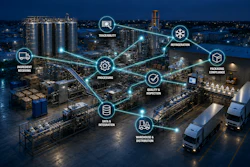
Plant connectivity can support traceability and greater efficiency, but they can make operations fragile without the right implementation strategy.
Nitat Termmee via Getty Images
Modern food and beverage plants benefit from connectivity but must balance it with resilience through modular design, clear system boundaries, and human-centered data visibility. The strongest operations combine technology with operational discipline to support adaptability and graceful degradation during disruptions, rather than creating dependency that makes small issues cascade into major failures.
Connectivity alone doesn't create resilience: Poorly designed integration can make operations more fragile by creating tight coupling and cascading failure risks across interconnected systems.
Modularity prevents operational paralysis: Subsystems should evolve independently without forcing wholesale redesigns, allowing equipment upgrades without destabilizing the entire operation.
Data-rich doesn't mean context-rich: Plants must prioritize meaningful data visibility and human decision-support over raw data accumulation to improve situational awareness during abnormal conditions.
Alarm design reveals system health: Excessive alarm floods indicate poor architecture; resilient systems provide prioritized, actionable alerts that support operator clarity instead of cognitive overload.
Standardization improves resilience: Frameworks like ISA S88 and PackML create predictable operational behavior, clearer system structure, and easier troubleshooting across integrated manufacturing environments.
Modern food and beverage plants are more connected than ever before. Processing systems exchange information with historians, MES platforms, maintenance systems, warehouse software, utility monitoring platforms, and increasingly, cloud-based analytics tools. Sensors monitor everything from motor loads and steam usage to refrigeration demand and ingredient flow rates. Data now moves continuously across the organization in ways that would have seemed extraordinary only a generation ago.
In many ways, this connectivity has transformed manufacturing for the better. Plants can identify developing equipment issues earlier, coordinate production more effectively, improve traceability, and respond faster to operational changes. In an industry where margins are tight and variability is constant, these capabilities matter.
Yet many organizations are discovering an uncomfortable reality. Connectivity alone does not create resilience. In some cases, poorly designed integration can actually make operations more fragile.
This distinction matters.
The goal of digital integration should not be to connect everything to everything else. The goal should be to create systems that share information intelligently, support human decision-making, and continue functioning effectively when disruptions occur.
In other words, the objective is not simply to build connected plants. It is to build plants that bend instead of break.
Dr. Bryan Griffen is the President of Griffen Executive Solutions LLC. He was previously Senior Director of Industry Services for PMMI: The Association for Packaging and Processing Technologies, and he held a number of roles for Nestlé during his many years there.Griffen Executive SolutionsThe Promise and Pressure of Connected Operations
Food and beverage manufacturing has always involved complexity. Ingredient variability, sanitation requirements, utility demands, production scheduling, maintenance coordination, and regulatory expectations all interact continuously inside the operation. What has changed is the scale and speed at which information now moves across those systems.
Today’s facilities increasingly operate as “systems of systems.” Production equipment no longer functions as isolated islands. Batch systems exchange information with enterprise platforms. Utility monitoring systems communicate with production scheduling tools. Maintenance teams rely on real-time equipment data. Warehouses coordinate directly with processing and packaging operations.
In this environment, integration creates tremendous opportunities. A well-connected plant can respond faster to changing conditions, identify operational risks earlier, and coordinate decisions across departments far more effectively than disconnected operations ever could.
At the same time, increasing integration also introduces new forms of operational pressure. The more tightly systems become coupled, the greater the risk that disruptions in one area can affect others. A network interruption may impact production visibility. A software issue may affect multiple departments simultaneously. A poorly designed alarm structure may overwhelm operators during disturbances rather than helping them respond.
The reality is that connected operations require intentional architecture. Without it, organizations can unintentionally create dependency instead of resilience.
Designing for Modularity Instead of Dependency
One of the most important principles in resilient manufacturing systems is modularity.
Adaptable plants allow subsystems to evolve without forcing wholesale redesigns across the entire operation. In processing environments, this might involve upgrading a batch mixer, replacing inline ingredient metering scales, or integrating enhanced sensing capabilities without rebuilding the surrounding MES structure, historian architecture, or reporting systems.
That flexibility matters more than many organizations realize.
Poorly designed integration often creates operational paralysis. Small equipment upgrades become large-scale validation exercises because every system is tightly interconnected. Engineering teams hesitate to modernize aging equipment because the operational risk of unintended consequences becomes too high. What initially appeared to be highly integrated architecture slowly becomes difficult to maintain, difficult to troubleshoot, and difficult to change.
Adaptable plants isolate complexity rather than spreading it.
This concept mirrors what many organizations have already learned in physical process design. Modular processing systems, repeatable skids, standardized valve clusters, and clearly defined sanitation zones help facilities adapt without destabilizing the operation. The same philosophy applies digitally. Systems should communicate effectively, but they should also maintain clear boundaries and predictable behavior.
The goal is not maximum integration. It is manageable integration.
Visibility, Context, and the Human Side of Data
Modern manufacturing facilities collect enormous amounts of data. Yet many organizations still struggle to answer relatively simple operational questions quickly and confidently.
In some cases, plants have become data-rich but context-poor.
Historians, spreadsheets, maintenance systems, quality records, SCADA platforms, and production databases often contain valuable information, but not always in forms that support fast operational understanding. Inconsistent naming conventions, disconnected reporting structures, fragmented ownership, and duplicated data sources can make it difficult to align information across departments.
Simply accumulating data does not improve resilience. Data becomes valuable when it helps people make better decisions at the right time.
This human-centered aspect of digital integration is often overlooked. Technology should reduce cognitive burden, not increase it. Operators, technicians, supervisors, and engineers still make the plant function. The best systems support situational awareness rather than overwhelming it with noise.
That distinction becomes especially important during abnormal conditions.
Most operations run reasonably well during steady-state production. The true test of connected systems occurs when conditions change unexpectedly. A utility fluctuation, process upset, equipment fault, or production disruption quickly reveals whether information systems are helping people respond or making the situation more difficult to manage.
When Connectivity Creates Fragility
One of the clearest examples of digital fragility appears during alarm floods.
Many manufacturing facilities have experienced situations where dozens, or even hundreds, of alarms trigger within a short period of time. During these events, critical alarms become buried beneath secondary notifications. Operators lose prioritization and visibility. Alarm screens scroll faster than anyone can reasonably process the information.
Eventually, many operators begin using “Acknowledge All” simply to regain control of the screen.
That is usually not an operator problem. It is a system design problem.
Alarm systems are intended to support decision-making during abnormal conditions. When integration creates excessive alarm noise without meaningful prioritization, the system stops serving its intended purpose. Instead of improving operational awareness, it increases cognitive overload at exactly the moment clarity matters most.
The same pattern appears in other forms as well. Overly dependent architectures can allow relatively small issues to cascade through the operation. Troubleshooting becomes more difficult because system interactions are no longer obvious. Frontline personnel lose visibility into root causes because the process itself has become hidden behind layers of interconnected automation and software logic.
In these situations, technology unintentionally becomes a contributor to operational instability.
This does not mean organizations should avoid integration. It means integration must be designed thoughtfully, with resilience in mind.
Resilient systems are capable of graceful degradation. They continue functioning effectively even when portions of the broader system experience disruption.
Utility Monitoring and Coordinated Response
Some of the strongest examples of resilient connectivity can be found in utility and infrastructure monitoring.
Many food and beverage plants now use connected systems to monitor refrigeration demand, compressed air consumption, steam loads, electrical usage, chilled water performance, and other critical utilities in real time. When implemented effectively, these systems provide operational teams with early visibility into developing instability.
For example, a facility may detect abnormal compressed air demand before pressure drops begin affecting production equipment. Refrigeration systems may identify load spikes during simultaneous startup events. Electrical demand monitoring may reveal conditions that could threaten infrastructure stability during peak production periods.
In these situations, connected systems help organizations coordinate operational response before disruptions spread across the plant.
Startup sequences can be staggered. Equipment loading can be balanced. Maintenance teams can investigate abnormal utility consumption patterns before failures occur. Operations teams gain time to respond deliberately rather than reactively.
Importantly, the technology itself is not the solution. The value comes from combining visibility with coordinated operational decision-making.
That distinction is critical.
The strongest connected systems are not the ones generating the most data. They are the ones helping people understand the operation more clearly.
Standards, Structure, and Shared Understanding
As manufacturing systems become increasingly interconnected, standardization becomes even more important.
Within processing environments, ISA S88 provides a framework for modular batch control, procedural flexibility, and reusable process structures. On the packaging and discrete automation side, S88-TR88.00.02, commonly known as PackML, applies many of those same foundational concepts to high-speed, batch-size-of-one style machine operation.
Both approaches improve resilience because they create more predictable operational behavior, clearer system structure, and easier troubleshooting across integrated environments.
Standardization does not eliminate complexity. It makes complexity more understandable and manageable.
That shared understanding becomes increasingly valuable as operations, maintenance, engineering, IT, OT, and quality teams rely more heavily on one another to maintain stable operations.
The Resilient Plant Is Not a Perfect Plant
As manufacturing continues evolving, connectivity will remain essential. Modern food and beverage plants cannot compete effectively without integrated information systems and coordinated operational visibility.
But resilience requires more than connectivity alone.
The most adaptable plants are not necessarily the most automated or the most technologically complex. They are the ones that combine technology, architecture, operational discipline, and human understanding in balanced ways.
Real manufacturing environments will always involve variability, equipment failures, utility fluctuations, demand changes, unexpected conditions emerging. The objective is not to eliminate disruption entirely. The objective is to design systems that continue functioning effectively when disruption inevitably occurs.
Connected plants should support clarity, coordination, and adaptability, not dependency and overload.
The future of resilient manufacturing is not about building perfectly synchronized systems that never experience stress. It is about building operations capable of responding, adapting, and recovering without losing stability along the way.
The strongest plants are not the ones that never bend. They are the ones that bend without breaking.
See What’s Possible in Food Manufacturing at PACK EXPO International
Explore new machinery & materials from 2,600 exhibitors. Gain insights from 150+ free educational sessions. Find solutions to enhance quality & protect your brand at North America’s largest packaging & processing event for food, beverage & beyond.

 Dr. Bryan Griffen is the President of Griffen Executive Solutions LLC. He was previously Senior Director of Industry Services for PMMI: The Association for Packaging and Processing Technologies, and he held a number of roles for Nestlé during his many years there.Griffen Executive Solutions
 Dr. Bryan Griffen is the President of Griffen Executive Solutions LLC. He was previously Senior Director of Industry Services for PMMI: The Association for Packaging and Processing Technologies, and he held a number of roles for Nestlé during his many years there.Griffen Executive Solutions