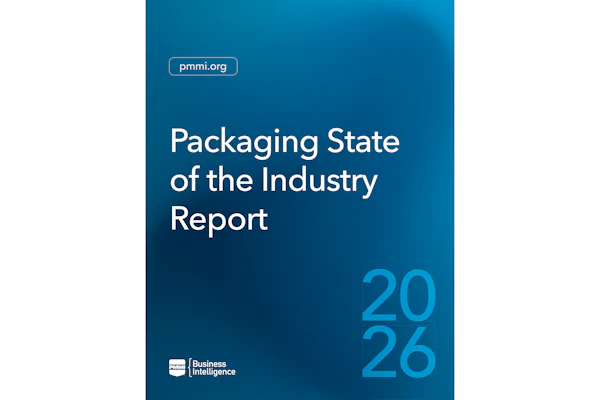
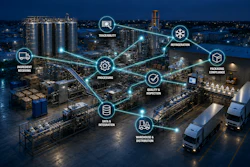
PMMI, The Association for Packaging and Processing Technologies, announced the release of its 2026 Packaging State of the Industry Report and accompanying infographic, which finds the U.S. packaging machinery market reached an estimated $11.7 billion in shipment value in 2025, with food accounting for approximately 44% of the total. The report also finds Canadian domestic packaging machinery shipments reachedapproximately $1.2 billion in 2025, up 3.6% from 2024, underscoring continued opportunities across the North American packaging machinery market.
Key Findings from the 2026 Packaging State of the Industry Report
- U.S. packaging machinery shipment value reached an estimated $11.7 billion in 2025.
- Food remained the largest U.S. end market at approximately 44% of the total, with food machinery shipments estimated at $5.1 billion in 2025 and projected to reach approximately $7.1 billion by 2031.
- Canadian domestic packaging machinery shipments reached approximately $1.2 billion in 2025, up 3.6% from 2024, and are expected to approach $1.4 billion in 2027.
- The U.S. was Canada’s largest source of packaging machinery imports in 2025, accounting for 30%, while 91% of Canadian packaging machinery exports were destined for the United States.
- SKU proliferation, emerging AI applications, workforce constraints, sustainability and regulatory requirements, and rising input costs are among the forces influencing equipment decisions.
The report finds the U.S. packaging machinery market reached an estimated $11.7 billion in shipment value in 2025, with food remaining the largest end market at approximately 44% of the total. Food machinery shipments alone totaled an estimated $5.1 billion and are projected to reach approximately $7.1 billion by 2031. Beverage, pharmaceutical, and other key end markets are also expected to continue generating opportunities for packaging machinery suppliers.
At the same time, the industry is being transformed by changing consumer behavior and manufacturing priorities. Interviews conducted for the study point to SKU proliferation, emerging AI applications, workforce constraints, tighter capital discipline, sustainability and regulatory requirements, and rising input costs as some of the most important forces influencing equipment decisions. Social-media-driven demand and changing consumer preferences are accelerating the need formachinery capable of frequent changeovers and handling a greater variety of package formats, including single-serve and grab-and-go options.
“Packaging and processing companies are being asked to do more SKUs, more formats and more automation; all while maintaining productivity and making every capital investment count,” says Jorge Izquierdo, vice president, market development, PMMI. “The Packaging State of the Industry Report provides the data and market intelligence companies need to understand where the industry is headed and where the strongest opportunities are emerging.”
How Fast Is the Canadian Packaging Machinery Market Growing?
The report provides a complete view of equipment demand and market dynamics across North America. Canadian domestic packaging machinery shipments reached approximately $1.2 billion in 2025, up 3.6% from 2024, and are expected to approach $1.3 billion in 2026 and $1.4 billion in 2027. Food represents the largest Canadian end market, accounting for 43.6% of 2025 machinery value.
The data underscores the deeply connected nature of the North American market. Canada imported approximately $504 million in packaging machinery in 2025, with the U.S. representing its largest source at 30% of imports. Canada exported approximately $550 million in machinery, with 91% of those exports destined for the United States.
What Is Driving Packaging Machinery Investment?
One of the clearest themes in the report is manufacturers’ growing need for flexible, adaptable automation. More SKUs, shorter runs, changing package formats, and greater product variety are pushing manufacturers away from dedicated equipment toward systems designed for faster changeovers and greater operational flexibility. At the end of the line, case erecting, packing, and sealing are increasingly converging into integrated systems, while robotic palletizing is gaining traction in applications with frequently changing SKUs, case sizes, and pallet configurations.
Persistent labor challenges are adding urgency to automation investments. Palletizing, for example, remains a prime target because of the repetitive and physically demanding nature of the work. Robotic systems and cobots are providing manufacturers with a broader range of options to improve throughput, ergonomics, and workforce utilization, although cost, speed, and integration requirements continue to determine which technologies are best suited to individual applications.
How Is AI Being Used in Packaging and Processing?
Artificial intelligence is also beginning to move from concept to practical application. Early use cases identified in the report include capturing institutional knowledge from retiring employees, developing specifications using previous projects, assisting with real-time troubleshooting, and generating content. Rather than replacing technical expertise, these applications are emerging as tools to augment an increasingly constrained workforce.
How Are Sustainability and Regulation Affecting Packaging Machinery?
Sustainability and regulation are creating another layer of complexity. Extended Producer Responsibility policies and restrictions on single-use plastics are influencing material choices and packaging design, increasing demand for machinery capable of accommodating a broader range of substrates and formats. Manufacturers are also showing greater interest in modular and upgradeable systems that allow operations to adapt as regulations and material requirements evolve.
Where Can Manufacturers See These Packaging Trends in Action?
The trends identified in the 2026 Packaging State of the Industry Report will move from data points to working solutions at PACK EXPO International 2026 (Oct. 18–21; McCormick Place, Chicago), where packaging and processing professionals can see firsthand how equipment suppliers are responding to the industry’s most pressing challenges.
From flexible machinery built for high-SKU environments to robotics and end-of-line automation, AI-enabled technologies, inspection systems, sustainable packaging solutions, and equipment engineered for new materials and formats, PACK EXPO International gives attendees an opportunity to evaluate the technologies shaping the next generation of manufacturing.
The Packaging State of the Industry Report highlights the growing convergence between packaging operations and broader factory and warehouse automation, including integrated case packing, robotic palletizing, autonomous mobile robots, and automated guided vehicles. Those developments, along with solutions addressing labor availability, changeover efficiency, material reduction, and production flexibility, make PACK EXPO International an essential destination for manufacturers translating today’s market trends into tomorrow’s capital investment strategies.
“The State of the Industry tells you what is changing; PACK EXPO International lets you see how the industry is responding,” Izquierdo says. “There is no substitute for seeing equipment run, comparing technologies side by side, and having conversations with the suppliers developing solutions for these challenges.”
Bringing together more than 2,600 exhibitors showcasing technologies over 1.3 million square feet of exhibit space with 48,000 attendees representing 40-plus vertical markets, PACK EXPO International is the industry’s most comprehensive and influential packaging and processing event in North America. It provides the most efficient way for attendees to find solutions, explore innovations, and move business forward. Registration is $30 through Sept. 25.
Register and plan your visit at packexpointernational.com.