The global market for AI-powered visual inspection is projected to grow. In 2024, the market was valued at $2.1 billion and is expected to reach $4.2 billion by 2031, growing at a CAGR of 10.5% during the forecast period.
Growth in the AI-powered visual inspection solution market is being driven by zero-defect manufacturing mandates and increasingly stringent regulatory requirements in high-precision industries, according to Valuates Reports.
In response, manufacturers are integrating AI-driven inspection systems across production lines to reduce manual checks and improve traceability. Additionally, the growing complexity of miniaturized components, multilayer assemblies, and high-speed production lines is increasing demand for AI systems capable of adaptive, context-aware anomaly detection.
To support these needs, supply chains are adopting scalable quality intelligence platforms that integrate with enterprise systems and enable predictive defect control and operational continuity. As a result, AI-powered visual inspection is shifting from a supplementary automation tool to a foundational element of modern industrial quality infrastructure.
Despite the rapid adoption of AI-based inspection, limitations remain. ProFood World previously reported that some constraints may include reliance on quality training data, potential challenges in detecting novel defects, and the need for ongoing model updates to handle changing product variations.
Applying AI-based inspection in food
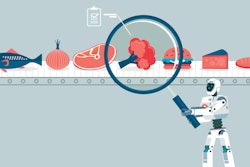
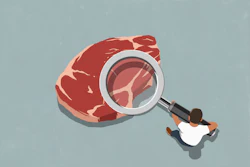
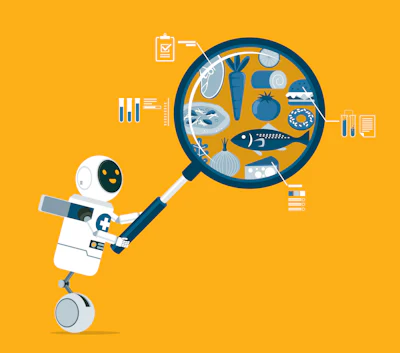
When it comes to food inspection, AI-based inspection relies on training data with accurate label images. High resolution imaging and defect free images are essential.
“Effective AI models require defect-free images to establish what a normal product looks like, examples of contaminants to accurately detect foreign material, defective product samples to identify quality issues, and variations in shape, packaging, and rare edge cases to handle real-world production,” Jeff Youngs, President and CEO, ProSpection Solutions said.