What does it take to build a great aseptic operation?
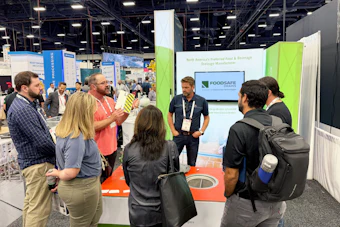
That's the question the Beverage Operations & Processing Technical Committee of the International Society of Beverage Technologists (ISBT) tackled at BevTech 2026—just some of the key work that later earned the group ISBT's Technical Committee of the Year award.
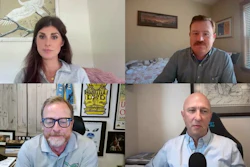
Committee chair Mat Goldman, Principal Engineer for Aseptic Filling at Nestlé, and David Blackwell, Principal Liquid Process Engineer at Nestlé, sat down to talk through the gist of their technical presentation—what they call the myth of the aseptic operator—and the model they've built at Nestlé to replace it.
In your committee presentation, you called the aseptic operator a myth. Why is it a myth?
Mat Goldman: There's a traditional model where the person that sees the alarm, what's the first thing they do? Reset and restart. But then it won't go away. So what do they do? They call somebody, usually a mechanic.
The mechanic sees the problem, says they've got a broken spring on a gripper, they're going to have to open the sterile zone. Does the operator or the mechanic at a traditional plant have the authority to open that filler requiring a new sterilization cycle? No way.
So now what do they have to do? Call somebody else, usually the supervisor. Can the supervisor make that call? Sometimes. But usually the quality or the production manager needs to get involved. And in some cases—sorry to say it, but I think we all know it—the higher up the chain you go, the less knowledge they have about the equipment.
So all of these things that are happening today in beverage processing—it doesn't make sense. Just the waiting time alone to get from one person to the next, and you've already paid for the extra salary that you're paying that highly skilled person.
Ten minutes in a high-performing facility
What shaped your perspective on this?
Goldman: I had a very profound experience last January. I was taking a new project team to benchmark one of our best factories. They run an indirect ultra-high temperature processing (UHT) line for coffee products with an aseptic PET bottle filler.
 Mat Goldman, Principal Engineer for Aseptic Filling at Nestlé.Mat Goldman
So we're standing there in the filling room and we see how there's one person who runs the filler. In the next room, there's one person who runs the UHT. They were working together on their PM plan the next time their line went down. So not only do they run the line, they maintain their own equipment themselves.
During active production, they're talking to each other, and all of a sudden I see them stand up and walk over due to a repetitive noise they both heard. He says, "Oh, the gripper spring broke in the bottle transfer to the filler."
Immediately, he stops the machine before it even alarms because I think it's five or six revolutions before any alarm knows what the problem is. Since the UHT person is right next door, he says he will have to break sterility to fix this and then resterilize. Communication happened instantly.
He puts his gloves on, finds the part—which they store locally to the machine— gets the part off, sanitizes it, sanitizes his tools, puts his sleeves on, puts his mask on—because he's going into the sterile zone—makes the repair. That whole time from the moment he stopped the machine to the moment he finished was 10 minutes. From there he starts to re-sterilize and starts the external sterilization, because this machine has that capability built in. In total, they were down less than one hour for an entry into the sterile zone.
How rare is that, compared to a typical plant?
Goldman: If you think about the plants most of us have been in, especially aseptic plants, there's no way that's running in cycles of less than an hour. No way.
Does speed alone make it a success story? What about the quality of the fix itself?
Goldman: That's the other half of it. In some cases, the mechanic who shows up is the guy who came from the case packer, working on glue pots, with greasy glue all over the wrench he uses to replace the gripper. Now you've got a bad bottle coming out, because it's a general mechanic who hasn't been trained on that equipment. I call that a crying bottle. In our best factories, the technician knows he needs to sanitize the tool, wear the right PPE before going into the sterile zone, do all of it in the right order. So he's not just down for less than an hour. He knows he's going to get good bottles coming out the other side.
Ownership before training
David, you've framed this as more than a training problem. Where does it actually start?
David Blackwell: The question is: How do you make sure you make the right hires and train them the right way?
It starts with belief in TPM and the uptime impact. Somebody who really understands the value of their line running well, and what they personally can do to affect that. But that only comes with ownership. They have to feel that line is theirs. Once they feel that, they have the discipline to do the behaviors that matter: the cleaning, inspection, and lubrication (CILs), the maintenance discipline, knowing where stuff is, knowing who to contact when it's beyond them.
 David Blackwell, Principal Liquid Process Engineer at Nestlé.David Blackwell
So what does that ownership look like in the day-to-day?
Blackwell: Once you have that foundation, you start talking about the information that comes to that person and what they do with it. That's digital dashboards, data in the cloud or in Edge devices, combined with the discipline to actually walk the line and understand what's happening. From there, they build a model in their head of the aseptic zone.
Think of the aseptic zone like a fortress, something you have to protect, and you already know where the weak points are. That mental model is what lets someone detect when something's out of the norm as part of their daily routine: that doesn't sound the way it usually sounds, that doesn't look the way it usually looks. From there, they can reason about what's wrong, do the risk modeling, and recover quickly.
Four pillars of capability
In your presentation at BevTech, you broke this down into four categories: performance, risk awareness, knowledge/capability, and culture. How do those fit together?
Blackwell: Everything it takes to produce a person capable of what we saw in that high-performing factory falls into those four buckets. Performance is straightforward: It's making sure the line runs—preferably well. Risk awareness is different from that; it's the ongoing habit of thinking about what could go wrong. Knowledge and capability are the technical side: upskilling technicians and skilled trades together. And culture is where people internalize all of it alongside a sense of ownership.
You want people synthesizing solutions based on an internal ecosystem of knowledge, belief, and capability—all within the same person. Only then do you get someone who becomes a resource, a knowledge center who can train others, and that's the best-case scenario for how you run your equipment.
Practically, where does a plant start?
Blackwell: You assess where you are against your principles of operation. Most of us aren't starting from zero; we already have a base to measure against. From there you establish your base condition, make sure your work instructions, SOPs, CILs, and maintenance plans are actually in place, and then revise your maintenance plans around performance. Once those tools exist, you can move from base condition to best in class.
On the culture side, there's an important shift: moving from a cost model that you optimize for performance to a performance model that you then optimize for cost.
Could you tell us a little more about that approach, David?
Blackwell: A lot of us run the first one. We all know about cost optimization as a means of removing the "fat" or inefficiencies, but what sometimes happens is we overdo it and go into metaphorical "muscle," which itself would start to limit physical movement as an analog for line performance.
When you define budgets without considering performance at all, forget just compromising the muscle; you've likely already cut into the bone—the foundational or fundamental aspects of why we are even in this business—before you realize you're missing the key things that drive performance results. And, if somebody doesn't have the tools they need, they're never going to feel like they own that line.
From there, it's about managing incentives: linking to job success profiles, revising hiring programs, and piloting changes with HR before rolling them out plant-wide.
On the knowledge side, it's an upskilling program for technicians and skilled trades working together, the way Mat described in that earlier factory. And the last piece is formalizing and tracking problem solving. What goes wrong isn't a problem for that day, it's an opportunity you can learn from for however many days into the future. Track it, and you start building an army of people who protect the line at all costs.
 Goldman challenged BevTech 2026 attendees to rethink the "myth of the aseptic operator" and reimagine beverage processing from the ground up.Joseph Derr
Keeping your experts
Talent retention is a challenge right now across the industry. How can the industry address this challenge?
Goldman: Retention is difficult in our field. The biggest problem we see globally is losing people to other industries. So how do we get people to stay? We build into our culture and processes things that enable and require them to train others. Our experts are the people that get called when there's a problem, but the real expert is the person who trains everybody else on what they know, and we incentivize that.
At Nestlé, we're creating specialist and master's-level recognition programs, so those people are recognized regionally or globally, and they know that recognition means they can grow their technical careers as an alternative to moving into a manager role.
Blackwell: Yes, exactly, Mat. Building the conditions for success requires recognizing your resources. When you then add to it personal, visible impact within the organization, you take a major step in fostering a healthy, internal culture of ownership which can grow freely.