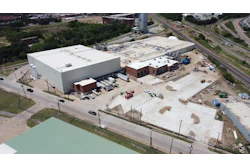
Standard Meat Company renovated a historic 1950s facility in Fort Worth's stockyards and designed it around high-capacity sous vide technology to meet modern foodservice demands for ready-to-eat solutions, flexibility, and efficiency.
- Standard Meat prioritized sous vide technology first, then found a building to fit the equipment rather than the traditional approach of designing a plant and selecting equipment afterward.
- The facility features 14 sous vide tanks capable of processing thousands of pounds per batch, with cooking and chilling completed in the same tank to eliminate transfer steps.
- The plant revived meat processing in Fort Worth's historic stockyards, where 5 million head of cattle were harvested annually in 1950 but zero processing occurred in recent years.
- Automation handles repetitive tasks to improve ergonomics and address labor challenges, while human craftsmanship remains essential for quality and customization.
- The facility includes expansion space and modular design to enable rapid scaling and adapt to changing market needs without major renovations.
Read the full article: How Standard Meat Company Built a Future-Ready Plant in Fort Worth’s Historic Stockyards
Derrick Teal: Hey, everyone. I am in Fort Worth, Texas, visiting Standard Meat Company. They have a brand new plant and have graciously allowed us to take a tour. So, let's take a look.
Renovating an existing plant is a lot like that famous line from Forrest Gump about life in a box of chocolates. You never know what you're going to get. For Standard Meat Company, that uncertainty was part of the journey. One that led them back to Fort Worth's historic Stock Yards where their business first began.
Ben Rosenthal: There are 5 million head of cattle harvested a year here back in 1950, when, really when this facility was built, and there were zero last year. There was zero meat processing in the stockyards. And that was really important to us to bring that back into the stockyards and make sure that there continues to be at least some of that legacy.
Derrick Teal: But this wasn't just about history. It was about the future of protein processing and building a facility that could keep up with rapidly changing customer needs. The project started with a simple problem: no more room to grow. At the same time, the market was shifting. Labor shortages and operational complexity were pushing foodservice operators toward ready to eat solutions.
Standard Meat saw the opportunity and made a bold move. Instead of designing a plant and then selecting equipment, they flipped the model. With lead time stretching nearly two years, the company committed early to a technology that would define the plant, high-capacity sous vide production, and then set out to find a building that could support it.
Adam Speirs: So this was the first piece of equipment purchased for a facility. We knew we were going to put it in a new plant. We just didn't know where. So therefore, once we prepped the PO on this piece of equipment, we went on the hunt to find a facility that would fit our needs. And the size of this equipment blocked us from several locations, because it just simply wouldn't fit.
Derrick Teal: But building the future inside a facility from the 1950s came with surprises.
Adam Speirs: At surface you saw one thing, but when we started peeling back the layers, we got deeper into the skeleton and figured out that we need to fix some things.
Derrick Teal: From century old sewer lines to hidden structural elements, the team faced constant unknowns.
Despite the challenges, the focus never changed. Build a plant around customer needs. Every process in the facility is designed for flexibility and customization, from par frying and flame searing to precision grinding and sweet cooking. The plant enables a wide range of product formats.
Ashli Rosenthal Blumenfeld: We're not a transactional type of provider of proteins. For us, you want to be doing really innovative things, lots of new product development, and you want to work closely with your partner and create long term partnerships that you know are many, many years.
Derrick Teal: That means helping customers reduce labor, improve consistency and bring products to market faster.
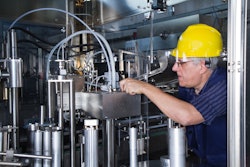
At the center of it all is the sous vide system. 14 tanks, thousands of pounds per batch, and a process designed for efficiency.
Adam Speirs: And within those tanks, once the batch is loaded, the cooking and chilling are done within the same tank.
Derrick Teal: By eliminating transfer steps and enabling overnight cycles. The system maximizes throughput while maintaining precise control.
Adam Speirs: You know, where everybody else goes home at 5:00, we can start cooks at 5:00 and let those cook overnight.
Derrick Teal: Automation plays a role, but only where it adds value. Heavy lifting and repetitive tasks are automated, improving ergonomics and addressing labor challenges. But craftsmanship remains human.
Adam Speirs: You can't replace the human interaction, the human interface, because, you know, you left and you see two or three different cuts running down simultaneously. And every piece is unique.
Derrick Teal: Perhaps the most important feature of the plant is what hasn't been built yet. Expansion space, preinstalled infrastructure and modular design allow standard meat to scale quickly, because in today's market, flexibility isn't optional. It's essential. In the end, the Stock Yards facility is more than a renovation; it's a platform for growth, innovation and partnership.
Ben Rosenthal: The way I would summarize it is we we always want to be able to be responsive for our customers.
Derrick Teal: And now with the space, technology, and vision in place, Standard Meat is ready to do exactly that.