Create a free ProFood World account to continue reading
How Standard Meat Company Built a Future-Ready Plant in Fort Worth’s Historic Stockyards
By anchoring its new facility around sous vide technology—even before securing a site—Standard Meat Company transformed a historic renovation into a flexible, high-capability processing hub built to meet the evolving demands of modern customers.
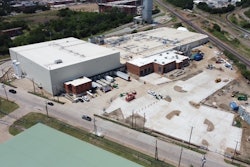
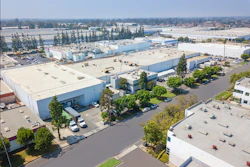
Site constraints include active rail lines that made construction challenging and define the site's footprint.
Standard Meat Company
Renovating an existing plant is a lot like that famous line from Forrest Gump about life and a box of chocolates: You never know what you’re going to get. For Standard Meat Company, the reward of having a manufacturing plant in Fort Worth’s historic Stockyards was worth the risk of whatever mysteries were revealed while renovating a facility from the 1950s.
Location:
Fort Worth, Texas
Owner:
Standard Meat Company
Size:
Approx. 190,000 sq ft (including adjacent structures)
Production:
Prepared protein
Opened:
September 2025
That uncertainty ultimately shaped not just the construction process, but the philosophy behind the finished plant. What began as a capacity expansion evolved into a highly flexible, customer-driven processing facility—one designed as much around future product innovation as current production needs.
Capacity was the catalyst, customers were the driver
The project began with a clear operational constraint: Standard Meat had run out of room to grow.
“I’ll never forget when someone from our commercial team came to us and said, ‘I’m running out of things to sell because we don’t have space,’” says Standard Meat Company CEO and Co-President Ben Rosenthal, adding that operating at capacity isn’t ideal for the company to properly address customers’ future plans.
But simply adding square footage wasn’t enough. The company recognized that customer needs were changing—particularly in foodservice. Labor shortages, high turnover, and operational complexity in quick-service and fast-casual restaurants were creating demand for more consistent, labor-saving protein solutions.
“If you don't grow and evolve and change in reaction to what's happening around you, then you're not going to stay around,” says Standard Meat Company Co-President Ashli Rosenthal Blumenfeld. “So, it's been really important to us to diversify.”
Instead of reacting to that shift later, Standard Meat made a bold move early. That’s where ready-to-eat and sous vide really came into focus.
The sous vide system was ordered before the site was even selected.Derrick Teal/ProFood WorldDesigning around sous vide… before securing the site
In a decision that underscores how central processing capability was to the project, Standard Meat committed to its core technology before it even had a building.
“We ordered the sous vide equipment before we bought the facility,” says Blumenfeld. “The lead time was about 24 months, so we knew if we didn’t act, we’d miss the window.”
That decision effectively reversed the traditional plant design process. Rather than selecting equipment to fit a facility, the company had to find—or create—a facility to fit the equipment.
“This was the first piece of equipment purchased for the plant,” says Adam Speirs, Standard Meat Company’s Plant Manager at the Fort Worth location. “Once we committed to it, it ruled out several locations because it simply wouldn’t fit.”
The size, infrastructure demands, and layout requirements of the sous vide system dictated everything from building selection to production flow. Ultimately, the team identified an aging cold storage facility in the Stockyards that could be transformed to meet those needs.There's currently one sous vide line, but there is enough space for a second unit. Connections are already in place, so all that's needed is the machine.Derrick Teal/ProFood World
Unknowns at every turn
Transforming a mid-century facility into a modern processing plant proved far more complex than anticipated.
“The biggest thing we underestimated was the process,” says Rosenthal. “Not just permitting, but everything involved in bringing a building like this up to modern standards.”
Adjustable platforms on the line allow workers to choose the height that best suits them ergonomically.Derrick Teal/ProFood WorldOnce construction began, the building revealed its age in unexpected ways.
“When we tied into the sewer, we found lines from the early 1900s that didn’t match any of the drawings,” says Speirs. He adds that not only were the blueprints hand drawn, “[The sewer lines] weren’t where they were supposed to be, and they ended up being 23 feet further away.”
In another case, excavation uncovered a previously unknown basement.
“We dug down to install a grease trap and found a basement that wasn’t on any plans,” explains Blumenfeld.
“Things like that you just can’t plan for,” adds Speirs.
These discoveries reinforced a central lesson, that renovation requires adaptability.
“A remodel takes a whole different kind of patience,” says Speirs. “You have to be ready for surprises and be willing to adjust.”
Built for flexibility
Despite the challenges, the team approached the facility design with a clear goal: create a platform that could evolve with customer needs.
The plant isn’t built around a single product; it’s built around the idea that customers will continue to change, and Standard Meat plans to change with them. That philosophy is reflected in the plant’s modular design, open floor space, and pre-installed infrastructure for expansion.
Throughout the facility, production lines are configured to allow rapid reconfiguration. Equipment is arranged to support multiple product flows, and future capacity has been engineered into the layout.
“We’ve already done the design work for expansion,” Speirs says. This means that the infrastructure is in place to easily integrate new equipment.
Consistency and scale at the core
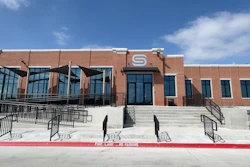
All employees and guests enter at the same doors at the front of the building. This was an intentional design element to foster interaction.Derrick Teal/ProFood WorldAt the center of the operation is the large-scale sous vide system—designed to deliver consistent, ready-to-eat products at high volumes.
The system includes 14 cooking tanks, each capable of handling approximately 8,000 pounds of product per cycle. Baskets are loaded via overhead cranes, with each tank holding up to 54 baskets. But the system’s real advantage lies in its integrated design.
“Cooking and chilling happen in the same tank,” says Speirs. “Once the cook cycle is complete, the system immediately switches to chilled water.”
This eliminates the need for product transfer, reducing handling, improving food safety, and increasing throughput. It also enables extended production cycles.
“We can start a cook at the end of the day and let it run overnight,” Speirs adds. “That way, the system is working even when the plant isn’t staffed.”
For customers, this translates into consistent product quality and reliable supply—two critical factors in foodservice.
Building capabilities around customer needs
While sous vide is the centerpiece, the facility’s broader capabilities are what enable Standard Meat to serve a wide range of customer requirements.
Custom Product Development
The plant is designed to support highly customized production.
“All of our processes are built specifically for our customer partners. Everything we do is 100% custom,” Speirs says. “I think there's a lot to be said about that because we can dial into exactly what the line's purpose-built for.”
Employees are encouraged to provide feedback on processes and ergonomics, and adjustments are made accordingly.Derrick Teal/ProFood World
This includes tailored cuts, marinades, cooking profiles, and packaging formats. The integration of an R&D test kitchen within the facility allows for rapid prototyping and scaling. “We can develop a product in the kitchen and then move it directly to the production floor,” says Speirs.
Multi-Step Processing
The facility incorporates multiple processing technologies upstream of sous vide, including:
Par frying for texture and partial cooking
Flame searing for surface color and flavor development
Liquid nitrogen chilling to rapidly halt cooking processes
“Everything still goes into sous vide to finish,” says Speirs. “But these steps allow us to customize the product before it gets there.”
This layered approach gives customers greater control over final product attributes, whether they’re targeting a specific eating experience or operational requirement.
Grind and Formulation Capabilities
The plant also includes a high-capacity grind line capable of producing up to 10,000 pounds per hour.
The system is designed for precision formulation, incorporating:
Multiple grinders and bowl choppers
Real-time fat analysis via X-ray systems
Automated blending and batching
“We can make live adjustments to the formulation as we’re producing,” Speirs explains. “That allows us to hit very tight specifications.”
For customers, this means consistent product quality across large production runs—an essential requirement for national foodservice brands.
Packaging and Throughput Optimization
Packaging systems are designed to support both flexibility and efficiency.
“We built everything to keep the product moving,” Speirs says. “The goal is to minimize stops and reduce handling.”
Lines feed directly into packaging machines, with ergonomic design reducing strain on workers. In some cases, automation replaces manual lifting entirely.
The plant also supports multiple SKUs and rapid changeovers, allowing customers to run diverse product portfolios without sacrificing efficiency.
A partner, not just a supplier
Underlying all these capabilities is a broader strategic shift: Standard Meat is positioning itself as a partner in product development and problem-solving.
“We’re not a transactional-type provider of proteins,” says Blumenfeld. “We want to work with our customers to do really innovative things and lots of new product development. We work closely with our partners and create long-term relationships. The plan is to be together for years.”
Helping customers to take on challenges that often center on labor, consistency, and speed to market is one of Standard Meat’s strategies with the new plant. By delivering ready-to-eat or easy-to-prepare products, Standard Meat enables customers to simplify operations while maintaining quality.
Automation where it matters
Incorporating daylight in common areas of the building was important to make the plant a more appealing place to work.Derrick Teal/ProFood WorldThe facility incorporates automation strategically, focusing on areas that improve safety and efficiency without compromising product quality. For example, robotics are used for tasks such as palletizing and heavy lifting.
“We had people lifting 40-pound boxes all day,” Speirs says. “Now we can eliminate that strain and move those employees into higher-skill roles.”
Future plans include autonomous guided vehicles (AGVs) to handle internal logistics, further reducing manual handling. At the same time, the company has deliberately avoided automating tasks that require human expertise.
“You can’t replace the human interface,” adds Speirs, “because every piece is unique. We rely on our personnel to make decisions and trim everything into spec.”
Designing for continuous improvement
Another key feature of the facility is its emphasis on continuous improvement. Employees are encouraged to provide feedback on processes and ergonomics, and adjustments are made accordingly. This mindset extends to quality control, where multiple checkpoints and employee involvement help ensure product integrity.
“If someone sees something, they’re empowered to stop the line and address it,” explains Speirs.
Lessons from the project
Looking back, the team identified several lessons that will inform future projects:
Renovations require more flexibility and contingency planning
Early investment in infrastructure pays off in long-term scalability
Designing for customers—not just production—creates greater value
Perhaps most importantly, the project reinforced the importance of adaptability.
“We expected challenges,” says Speirs. “We knew that things were going to change over the course of the project from that first design, but our first drawings and our last set of blueprints were worlds apart.”
“Overall, when you take on hard things like this, it's amazing at the end,” says Rosenthal. “You're that much prouder because it was difficult and it brings everybody together.”
A facility built for what’s next
Today, the Stockyards facility stands as a bridge between Standard Meat’s past and its future.
It reconnects the company with its historical roots while enabling new capabilities that align with modern foodservice demands. With its combination of scalable infrastructure, advanced processing technologies, and customer-focused design, the plant positions Standard Meat to continue evolving alongside its customers.
“We knew we needed to add capacity, and we wanted to do it in a big way, where not only did we add capacity to meet the current conversations that we were having, but also to give us plenty of future space,” says Rosenthal. “And that's what this does. This is the right place for us.”
See What’s Possible in Food Manufacturing at PACK EXPO International
Explore new machinery & materials from 2,600 exhibitors. Gain insights from 150+ free educational sessions. Find solutions to enhance quality & protect your brand at North America’s largest packaging & processing event for food, beverage & beyond.

 The sous vide system was ordered before the site was even selected.Derrick Teal/ProFood World
 The sous vide system was ordered before the site was even selected.Derrick Teal/ProFood World
 There's currently one sous vide line, but there is enough space for a second unit. Connections are already in place, so all that's needed is the machine.Derrick Teal/ProFood World
 Adjustable platforms on the line allow workers to choose the height that best suits them ergonomically.Derrick Teal/ProFood World
 All employees and guests enter at the same doors at the front of the building. This was an intentional design element to foster interaction.Derrick Teal/ProFood World
 Employees are encouraged to provide feedback on processes and ergonomics, and adjustments are made accordingly.Derrick Teal/ProFood World
 Incorporating daylight in common areas of the building was important to make the plant a more appealing place to work.Derrick Teal/ProFood World