Artificial intelligence is rapidly transforming food safety through faster pathogen detection, smarter inspection systems, and improved regulatory workflows, but experts emphasize that AI works best when combined with human expertise, oversight, and validation rather than as an autonomous replacement for trained personnel.
- Machine learning can identify harmful bacteria in dairy and meat in less than two hours with 98% accuracy, compared to traditional methods requiring one to three days.
- AI-enabled computer vision systems adapt in real time to product variations and can detect subtle defects and contaminants that rule-based systems would miss.
- The FDA launched Elsa, a generative AI tool, in June 2025 to help employees summarize information and identify high-priority inspection targets more efficiently.
- Food safety success with AI depends on high-quality training data, human oversight, and validation rather than fully autonomous systems that operate without human involvement.
- Approximately 48 million Americans get foodborne illness annually, with 128,000 hospitalizations and 3,000 deaths, creating urgent demand for faster detection methods.
Food safety has always been a numbers game: illnesses prevented, recalls avoided, risks detected before they reach consumers. But the scale of the challenge remains enormous.
The Centers for Disease Control and Prevention estimates that 48 million Americans get sick from foodborne illness every year, with about 128,000 hospitalizations and 3,000 deaths. The USDA Economic Research Service cited the annual cost of that burden as $74.7 billion in 2023 dollars.
The events behind those figures bring real-world consequences for both consumers and manufacturers. The U.S. Public Interest Research Group’s Food for Thought 2026 report highlights 28 foodborne illness outbreaks announced by U.S. food regulators in 2025. Just 11 of those outbreaks triggered a recall, compared to 17 that didn’t result in a product being taken off the market, the report says. As of the release of that report in February 2026, those 28 outbreaks had been linked to 1,003 illnesses, 235 hospitalizations, and 22 deaths.
PIRG notes that while 1,003 illnesses may seem low compared to the U.S. population, foodborne Salmonella alone can cause 29 illnesses for each one detected per CDC estimates. About one in six people in the U.S. get foodborne illness each year, according to the U.S. Department of Health and Human Services.
Against that backdrop, artificial intelligence is rapidly growing in popularity in the food and beverage industry.
During the Binsted Lecture 2026, “Leveraging AI in New Product Development and Ensuring Food Safety and Quality,” Peggy Poole, PhD, President at IFT, described AI as being tested widely across the food and beverage industry today. In 2025 alone, the technology’s market valuation for the industry was about $16 billion, and its yearly market growth rate is over 39%, Poole said. AI is becoming a core technology in food and beverage operations, with a market value of about $16 billion in 2025 and a strong growth projection, Poole said.Slide Courtesy of IFT / Binsted Lecture
“That growth rate is not a casual encounter; that’s not a simple trend. That is a core technology that’s being tested and is working, and is being used across the food system,” she said.
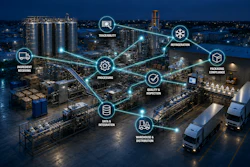
Driving this growth are machine learning, computer vision and predictive analytics being woven into how plants operate to improve contaminant detection and food safety.
Detecting pathogens faster and cheaper
The turnaround time and cost of traditional microbial testing is one of the longstanding challenges of food safety testing, Poole explained. She pointed to testing turnaround time before the advent of ATP testing to illustrate the potential efficiency gains from AI-enabled food safety tools. Traditional microbiological methods would often require one to three days to identify a pathogen, she said.
“It takes a long time. If your production plant's waiting to run that line, do you think they want to sit around waiting for three days for the lab to say, 'it's good, run it'?" Poole said.
That type of latency is exactly where machine learning is making inroads.
One example highlighted by Poole was from the University of Connecticut, where she said researchers combined a 96-well plate and 12-sensor array with machine learning to speed the identification of foodborne pathogens and spoilage organisms in dairy and meat.
"That machine learning was able to identify bacteria based on that characteristic interaction of the 12 different sensors, and they were able to detect eight of those harmful bacteria or spoilage organisms in less than two hours with 98% accuracy," Poole explained. "That is progress. It may not be perfect, it was only in dairy and meat, but that's a pretty good stretch for starters." The UConn study demonstrated how machine learning could identify food safety risks accurately and at high speeds.Slide Courtesy of IFT / Binsted Lecture
UConn is not alone. A study published in the Springer Nature journal npj Science of Food in late 2025, titled “Deep Learning Enabled rapid Detection of Live Bacteria in the Presence of Food Debris,” demonstrated deep learning models that can detect live bacteria such as E. coli and Listeria monocytogenes in microscopy images even when food debris from spinach, cheese and chicken would otherwise interfere with detection. The model trained only on bacteria generated 24.2% false positives, but the model trained on both bacteria and food debris reach 0% false positives, 100% precision, and 94.4% recall. It demonstrated reliable bacterial detection in complex foods within three hours.
The research targets a practical obstacle that has limited automated microbial imaging: the messy reality of actual food rather than clean laboratory samples.
Computer vision on the line
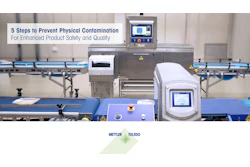
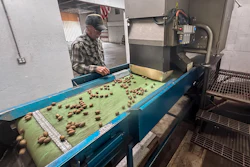
If pathogen detection is the headline application, computer vision is the one already running in plants today. Unlike traditional rule-based machine vision systems, AI-enabled inspection systems can be trained on large image datasets and improve their ability to distinguish acceptable product from defects, contaminants and foreign material.
In ProFood World's 2025 report, "The Real Role of AI in Food Inspection," suppliers described AI not as a replacement for existing inspection technologies, but as a tool that expands what automated inspection systems can recognize. The technology is particularly useful in varying or less predictable food applications.
Jeff Youngs, President and CEO at ProSpection Solutions, said in the report as his company actively uses AI in X-ray and inspection, "These onboard AI systems adapt in real time, learning from product variations to improve safety and quality." ProSpection's IP69K ai X-Ray SystemImage courtesy of ProSpection Solutions
AI models can be trained to identify subtle defects and contamination events that would be difficult to define through traditional rules-based programming alone. Rather than relying exclusively on predetermined thresholds, the systems learn from large data pools provided by the user.
"Critical training data includes both defect-free images for baseline comparison and diverse examples of known contaminants and defects to teach the model," Ian Scott-Mance, Digital Marketing Manager at Mettler Toledo, said in the report. "Ensuring good data quality involves representative sampling, accurate labeling and continuous validation."
The suppliers also emphasized that successful deployments depend on training data quality and human oversight.
"The biggest misconception is that inspection systems are now 'fully AI-driven,' and can manage themselves without human involvement. In practice, most so-called AI systems depend on significant upfront training and curated datasets. Results often take months to reach full effectiveness," said Norbert Hartwig, Head of R&D at Eagle Product Inspection in the report. "Human oversight remains essential, and processors should view AI as a powerful tool to enhance proven inspection methods, not as a replacement for them."
That distinction mirrors a broader theme emerging across food safety applications: AI is proving most valuable when it accelerates and strengthens decision-making, while trained personnel remain responsible for validation, oversight, and corrective action.
AI moves into regulatory workflows
The use of AI in food safety is not limited to processors and technology suppliers. The FDA is also building AI into its own internal workflows, exploring the same broad promise manufacturers are: faster analysis, better targeting and more efficient decision support.
In June 2025, the FDA launched Elsa, a generative AI tool available agency-wide to help employees, including scientific reviewers and investigators, read, write and summarize information more efficiently. The FDA said the tool was already being used to shorten scientific evaluations and identify high-priority inspection targets. The agency emphasized that Elsa was built in a secure GovCloud environment and that its models do not train on data submitted by regulated industry.
The FDA expanded that effort in December 2025 with agentic AI capabilities for all agency employees. Unlike a basic chatbot, agentic AI can plan, reason and execute multi-step workflows toward a specific goal. The agency said the deployment could assist staff with complex tasks including post-market surveillance, inspections and compliance, while incorporating built-in guidelines, including human oversight.
The agency continued to iterate and expand on Elsa's capabilities, and in May 2026, it announced Elsa 4.0 along with a new data platform called HALO, or Harmonized AI & Lifecycle Operations for Data. It consolidates more than 40 application and submission data sources, systems and portals across FDA centers. The agency said the integration would allow staff to query data and build workflows without manually uploading documents into each chat. New Elsa features include custom agents, document generation, quantitative data analysis and visualization, OCR for scanned documents and optimized search across large document repositories.
While this technology is in the hands of regulators and not a plant-level tool, the FDA’s rollout shows that AI is moving into the regulatory infrastructure around food and other FDA-regulated products, including inspections and compliance.
A tool, not a turnkey
The enthusiasm around AI in food safety comes with important considerations for implementation. Many of the most promising laboratory results, including UConn's, are not yet commercialized at line speed. AI systems are only as effective as the data used to train them, and food manufacturers still bear responsibility for validating results before acting on them.
Poole repeatedly emphasized that point during her lecture.
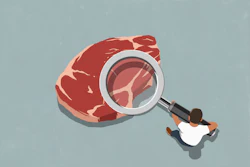
 Machine learning can accelerate pathogen detection and defect identification, but human judgement remains essential in food safety.sorbetto via Getty Images
She also cautioned against viewing AI as a substitute for expertise.
“What it can't provide you is human experience, human judgment, ethics, accountability. You need the two to come together. We are not fighting AI, we are not being replaced by AI,” Poole said. “It's not AI versus humans. It's [AI] plus [humans].”
Still, the trajectory is unmistakable. The applications that looked experimental a few years ago are now generating measurable returns in detection speed, inspection accuracy and decision support. For processors weighing where to invest, the relevant question is no longer whether AI belongs in food safety, but which application addresses their specific needs best.