Liz Cuneo:
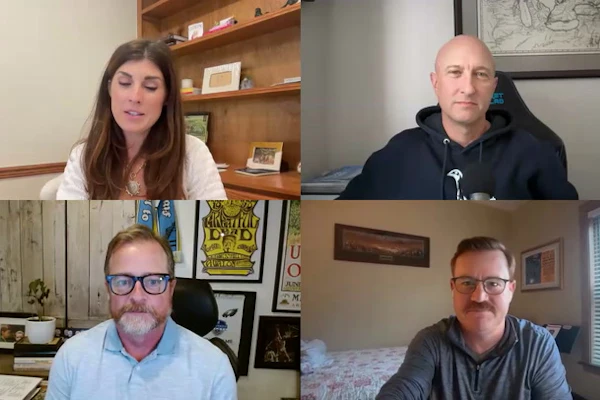
Hello everyone and welcome to another end of line video podcast. I'm joined with fellow PMG editors, a new mix today, which is always fun to have new people. On the video podcast, we have Matt Reynolds from Packaging World. We have Anne Marie Mohan from Packaging World and Casey Flanagan representing kind of both Packaging world and Prof Food World, Casey. So thank you for being here. And I of course, am Liz Kunio from Healthcare Packaging. So our company had a big event last week, so we thought we would kind of kick off and how the event went, the event being Packaging, recycling Summit, all three of you guys were there, which is cool and have a fresh perspective from the event. So I guess we'll start with you, Matt, of high level. How'd it go?
Matt Reynolds:
Everything seemed to go well. It was similar to the duck where the duck is on the pond and it looks somewhat majestic, but underneath the feet are furiously swimming away. So between the stage and the green room behind it, there was organized chaos, but it was great. I think everybody, we didn't lose anybody every once in, even with travel and the weather and everything like that, we had, I think every single person, just about every single person who was committed and on our agenda was there. The great interactions, I think they were learning from one another. I heard that over and over again that even some of the titles that you would expect would be doing only teaching, were actually learning from one another, which is really the intention of the event. So it was great.
Liz Cuneo:
That's great. Anne Marie, I know you saw some cool stuff reported on some stuff at the show. Anything that really stood out to you?
Anne Marie Mohan:
Well, thanks Liz, and thank you for having me today. I just want to reiterate what Matt said in that I thought it was an excellent conference, as it always is. We had some really stellar speakers and panelists and the audience was really engaged. I sat in on breakouts and on the main stage presentations and there was engagement throughout. So it was really, I felt a really valuable event. But if you ask me what some of my main takeaways were in considering all the information that I heard, the one thing that sticks out at me, and I think it's something I see over and over but has to be reemphasized, is that when we're talking about recycling and more sustainable packaging at the brand level, so much of it is driven by economics. And we want to say that we're altruistic, and I'm not cynical. I believe that brands and other organizations really are committed to making more eco-friendly packaging, but it really has to make economic sense.
And even more so when you talk about recycling and about the Murphs, I always thought of them, or I guess I didn't give them a lot of thought when I saw 'em going down the street and picking up my recycling, but they're a business and they need to make money. So if we're talking about whatever type of packaging goes into that curbside bin, if they can't sell that material at the end of the day after they sort it, then it doesn't have any value. And we had panels on small format packaging, flexible film rigids, and I was surprised to hear that in the case of small format and flexibles, that there are technologies available to sort these materials, but the Murphs haven't made those investments because they can't sell the material. So it's about the end markets. So that was a big takeaway for me
Matt Reynolds:
And Annmarie, that was exactly it. It was Jim Marcinko on the stage who was saying that they have the availability. I mean they could do this, but if they can't sell it, what's the point? Which is where things like U-S-F-F-I come in, they're trying to build end marketing itself, but also end markets to be able to make sure it's a circular system and not necessarily a linear one. So there might be a bridge for some period of time where they're selling some of these material into end markets that might be railroad ties or it might be decking or something like that. But at the same time, the end goal is going to be complete circularity. I know Casey, you were thinking about it more from sort of a systems point of view, weren't you?
Casey Flanagan:
Exactly. But I think you kind of hit the nail on the head there where it's the companies and these initiatives are helping to build out the ability and the infrastructure for these hard to recycle materials to start getting recycled and for the circularity to get propped up in the area so that economic sense starts to, starts to clear up as Annemarie was kind mentioning. And there was a similar point, speaking of circularity, but not quite recyclability. BPI also spoke in a session at the summit, and so they were focused on compostability and in a similar kind of note, they highlighted how major venues that have a high volume of food waste and packaging going through them in a closed system, whether it's a stadium or a hospital or a convention center, they can lead the charge in not only proving that this, there's a case where this can work, where compostability can work, but also building out that infrastructure. So you'd start with, they mentioned the San Diego Padres stadium, Petco Park as one of the examples, and they said starting in a venue like that, you can prove it but also start a relationship with the local composter and kind of hopefully eventually start building out curbside compostability. So you really start getting those systems in place to make more of an incentive for companies to check out circularity options like compostability or recyclability.
Matt Reynolds:
And with the recyclability portion, it's like you have to start somewhere. It's a chicken in the egg, it's a catch 22. So that's what some of these systems, cognizant programs, U-S-F-F-I are doing Ignite, they need to start the flywheel somehow. So even though there's no end market, they're trying to build the end market to create the end market, to create the back pressure to make these materials more valuable even though they don't hold any intrinsic value now. So it's systems building. Casey, I thought that was a very interesting way of looking at it that I didn't pick up because I was dancing back and forth from stage, but I'm glad that I had two of the best journalists that we have with Anne-Marie and Casey out there picking up on all the things that I was missing.
Anne Marie Mohan:
We talk about when we talk about infrastructure as well, I think we have to acknowledge how prevalent EPR is in the conversation now at every sustainability event I've been at. And that's really an economic driver as well, and a lever to get these companies to be thinking more about more sustainable packaging. They're going to be paying a fee for a per pound or per ton of material, and if there's eco modulation in place in that specific state and legislation, then they'll save money if they make it more recyclable or use greater recycled content. And then those funds hopefully will go to creating greater infrastructure. And I think we're seeing that in Oregon with some of the initiatives and infrastructure that they've built so far. So that's pretty exciting.
Matt Reynolds:
The infrastructure piece is interesting, but also down to the brand owner decisions. This is again, part of that systems approach. States like New Jersey now have, let's say this isn't quite EPR, but it's related minimum PCR content laws. Meanwhile, the federal government or FDA at least tries to advise against using PCR in food contact applications. So you have, let's say a whole delays who has their own private label for Food Lion for a giant, some of these grocery stores that have some food contact and some not. So they're kind of basically shifting things around, moving deck chairs around to be able to concentrate their minimum content requirements in areas where it makes a lot of sense. That might not be food contact because it's basically a portfolio wide, a certain percentage needs to be PCRA minimum content of PCR. So where do you do that? So it's funny, actually getting down to the S skew level, and this is an own brand private label type of situation where they've got 20,000 SKUs.
So where do you put your chips on the minimum content? If the minimum content has to average 50%, well, maybe you do a hundred percent our pet because there's no mechanical recycling problems for using our pet with food contact. Or maybe you use our recycled polypropylene for non-food contact because you should not have food contact after mechanical recycling. So when you get down to the nitty gritty of how they move the chips around and you pull one toggle and another one goes up, it's all about trade-offs. And these brand owners and these retailers with their own private label brands are reacting to the carrots and the sticks that are legislation EPR minimum mandates, and they're optimizing their packaging around that. It's really kind of a funny dance to watch.
Casey Flanagan:
Absolutely. And I did notice a speaker from Campbell's talked about a similar, basically on that same topic. And one thing that I noticed from their insights was that it's going to take a seriously strategic look at a packaging portfolio to really achieve that. For states like New Jersey where it's that average amount of packaging changing one or two packages just won't cut it, it's going to take kind of a cross categorical look at the entire portfolio. And I thought that was an interesting, interesting take. So yeah.
Matt Reynolds:
Yeah, Molly Campbell at Campbell's mentioned that she was going to have to have some tough conversations with some of her product pillars and so on, because you're going to have to go all into 100% recycled material even though it might not, I don't know, let's say perform as well, or there might be issues, you're going to have to do that to counterbalance or countervail against the inability to use our recycled material and food contact. So she's going to be giving out some, I think Christmas bonuses to help keep those product brand managers happy, considering they're going to have to take one for the team. And that's just how it works. Yeah,
Liz Cuneo:
Yeah. Interesting. A lot of topics got covered. It sounds like at PRS really from the package itself, it sounds like all the way to the infrastructure, the full life cycle really, those ramifications of EPR and I'm sure that's something you guys will be covering in the future and ongoing.
Matt Reynolds:
Yeah, I look for quite a bit of coverage from Annemarie Mohan and also existing from Casey and Brie that's up on LinkedIn and so on. But that September issue, the Pack Expo issue is going to be replete with packaging, recycling summit content. So look for that.
Casey Flanagan:
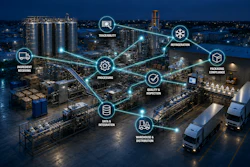
Absolutely. And if you guys don't mind if I put my prof food world hat on for a minute, something that kind of caught my eye in our recent coverage that feels like it stems a little bit off of companies focusing on these EPR regulations and PPWR has to do with traceability. And so the FSMA 2 0 4, it's kind of a regulation that focuses on food traceability. It's been delayed by 30 months as of, I think it was in 2025. But the article explains how food manufacturers are still investing in traceability technology even if that requirement is not in place yet. So the timing of it may be uncertain, but the companies like Walmart and Sam's Club are putting in their own requirements for products that are going into their stores. And so in the private sector, there's still a push happening for it. And so companies are still moving forward on that, and I think that's pretty interesting. They're not really waiting for the regulation, but instead for its own sake of making sure your food safety is in order and kind of avoiding recalls and being in the good graces of a company like Walmart and Sam's Club. And so I thought that was pretty interesting. And OEMs are responding too with innovations in that space.
Matt Reynolds:
Yeah, it's the price of doing business with the big boys like Walmart and Costco is you got to get your ducks in a row. And that is the second mention of ducks for some reason on this podcast. So we'll see if we can make it a trio next week because it's something to shoot for. Right.
Liz Cuneo:
It's funny. Well, at least we haven't had a meat story yet. But speaking of more Prof, food world stories, Casey, I know you saw, I did a recent interview for Prof Food World with Prospector Popcorn and it was a pretty cool article. It's more of a human interest story about their popcorn, about the company and how it got started. So it used to be a theater and they made popcorn, and it's one of those success stories of like, you guys should sell this popcorn. They sold it at farmer's markets, they'd had people taste it. And at this point, they're really known for all the unique flavors. So pistachio cream and chocolate drizzle and all these great really indulgent flavors. So long story short, it's now a popcorn brand operating in the same area as the theater. I believe it's northeast part of the country, Connecticut, maybe. That sounds right. What's kind of even more special is they employ people with special needs. So it's a interesting story of how they hire and who's working for them and really the mission behind the brand. So it's a really fun interview.
Casey Flanagan:
Absolutely. I thought that was a great story, especially the idea that they started with the theater company with the intent of bringing meaningful employment for people with special needs, and they've kept that value as they've grown. They went from, I think I remember it was a 300 square foot facility to a 5,000 square foot. And even through all of that, they've kept that value and they're continuing to hire lots of, a big percentage of their workforce is people with disabilities. And so I think that's a great story.
Liz Cuneo:
Yeah, it's really neat. And actually speaking of that facility, she said it's already starting to feel small, so they're growing exponentially, which is cool to hear.
Matt Reynolds:
I did speak to the prospector people, and one interesting part about that too is as they're automating, they have to be careful because they're growing by leaps and bounds, but they have to be careful not to automate away their purpose. And their purpose is to help employ folks. And so what they're doing is they're upskilling that employee base, whether it's folks with special needs to be able to grow with the equipment as opposed to have equipment replace them. So a very unique situation. Pretty cool story.
Liz Cuneo:
Yeah, totally. Well, thank you everyone for joining today. It's Friday, so everyone have a great weekend and hopefully Casey and Anne Marie, you can join us for another end of line video podcast in the future.
Matt Reynolds:
Yeah, glad we could have guests. We've been talking about guests for a long time, Liz, and we've got our guests.
Liz Cuneo:
Yay.
Casey Flanagan:
Yeah, thanks for having me on. This is really fun. I'd love to do it again. Cool. Yes, thanks everyone. Thanks
Matt Reynolds:
Everybody. Bye.