These innovations highlight the significant progress being made in adopting paper-based solutions, driven by both functionality and sustainability.
Learn more about ThePackHub's Innovation Zone here.
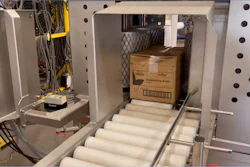
Coca-Cola's corrugated handle replaces shrink wrap for PET bottle multipacks
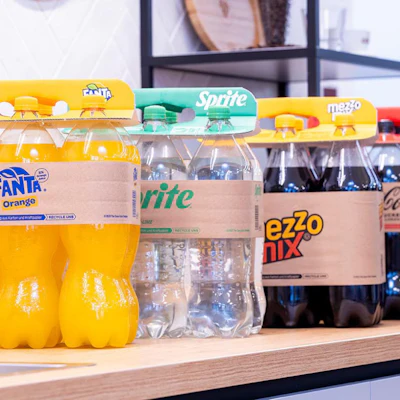
Coca-Cola HBC Austria has partnered with packaging manufacturer DS Smith and machinery provider Krones to launch a corrugated board-based multipack handle, aiming to eliminate plastic shrink wrap in the packaging of 1.5 L PET bottles. Known as DS Smith Lift Up, the new solution comprises a corrugated clip with a soft-grip integrated carrier handle and a kraft paper band. It is fully recyclable and is designed to reduce the use of plastic, with Coca-Cola HBC estimating an annual saving of around 200 tons of plastic shrink film. The packaging was designed using DS Smith’s Circular Design Metrics, which evaluate sustainability aspects such as carbon footprint, material efficiency, and recyclability. A third-party life cycle assessment (LCA) indicates that the Lift Up solution reduces CO₂ emissions by 42% compared to conventional shrink wrap multipacks. Additionally, production on Krones’ Variopac machinery reportedly reduces energy consumption during packaging by 58%. The design is also in line with the EU’s Packaging and Packaging Waste Regulation (PPWR), which mandates increased recycled content in plastic packaging, a requirement that can be difficult to meet due to limited recyclate availability.
 The new packaging is FSC-certified, recyclable in standard paper waste streams, and has undergone recyclability testing under the Cepi Recyclability Laboratory Test Method V2, achieving certification from the Papiertechnische Stiftung (PTS).ThePackHub
UPM Adhesive Materials replaces plastic with transparent paper in sticky note packaging
UPM Adhesive Materials, in collaboration with German materials innovation company One.Five, has introduced a transparent, paper-based packaging solution for its UPM Notes stationery range. The development replaces conventional plastic packaging, specifically oriented polypropylene (OPP), with a fully recyclable alternative based on One.Five’s Glassleaf material. The new packaging is FSC-certified, recyclable in standard paper waste streams, and has undergone recyclability testing under the Cepi Recyclability Laboratory Test Method V2, achieving certification from the Papiertechnische Stiftung (PTS). The transparent paper aims to provide similar visibility benefits to clear plastic while supporting reductions in environmental impact. Its lightweight structure, combined with transparency and recyclability, enables both shelf appeal and transport efficiency. The paper meets required protection standards for transit and handling, maintaining the functionality of the packaging without additional layers or coatings. This innovation supports UPM’s aim to lower the carbon footprint of its adhesive products, which use solvent-free adhesives.
 The coating’s adaptability allows it to run effectively across various cup-forming technologies, including ultrasonic, servo-driven, and high-speed systems. ThePackHub
Michelman launches water-based coating to enhance recyclability of paper cups
Michelman, headquartered in Cincinnati, United States, has launched Michem Coat 9250, a water-based coating designed to improve the recyclability of paper cups used for hot beverages. The coating aims to support converters and brand owners in meeting regional recyclability and functional performance requirements. It is formulated to offer enhanced resistance to aggressive beverage contents, such as certain coffees and creamers, while delivering high solids and cleaner organoleptic properties. The coating’s adaptability allows it to run effectively across various cup-forming technologies, including ultrasonic, servo-driven, and high-speed systems. Notably, it delivers strong heat seal performance and fiber tear outcomes even on equipment with short dwell times. Independent testing has validated that the coating does not hinder the recyclability of the paper cups, with positive evaluations reported under European, Chinese, and U.S. recyclability standards Compared to cups lined with polyethylene (PE) or polylactic acid (PLA), the Michem Coat 9250-coated alternatives are reported to use less plastic, generate fewer microplastics, and are more energy efficient to recycle.
Learn more about ThePackHub's Innovation Zone here.