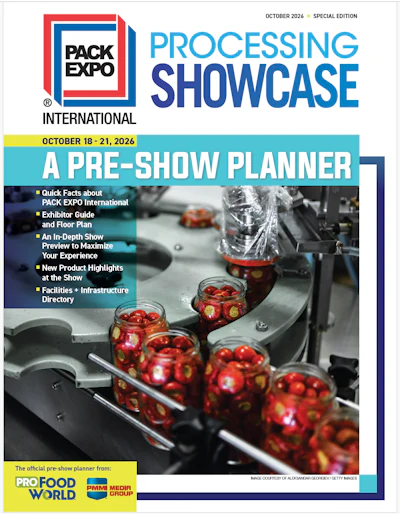
Until the new line was designed, Lipton was purchasing nine different glass jar specifications, plus two colors, flint and amber. In total, says Wayne Larkin, manager of packaging development, "we had twelve different specs before. Now we have three glass specs and one color, flint." And one glass vendor, Ball Foster Glass (Muncie, IN), from several in the past. Iced tea mixes packed in glass are Lipton's unsweetened and diet products. "Our diet products had been packed in amber glass that we felt gave them a 'chemical' appearance," says Bruce Belowich, director of packaging development. "We found we really didn't need the light protection of amber glass. That was just a longstanding myth. So we're going totally to flint glass and upgrading the image." The process of consolidation even involved Lipton's food scientists. "First, we looked for commonality in product volume to combine sizes," says Larkin. "When we were close, we did some reformulating to fit the new jars. We chose the three sizes that would fit the broadest spectrum of our products." The new sleeker glass jars have capacities of 20, 30 and 40 fl oz, although Lipton's products are labeled by net weight. "Almost all of our products fit into one of the new jars," Larkin says. "Now our plant runs about half its total production in the same jar. We've taken complexity out of the system. We're minimizing changeover. Not just for the filling line, but throughout distribution." At the same time, the screw caps were redesigned by Kerr Plastic Products (Los Angeles, CA) in two sizes, 68 and 77 mm. Lipton has also consolidated the number of colors used, moving from color-by-flavor to color-by-category (i.e., one color for all diet, another color for all saccharin flavors). Although early jar models were completely clear and smooth, says Ball's Phil Barbetta, Lipton chose to use very fine stippling up in the shoulder and heel area. As well, the new jars have straight sidewalls because Lipton preferred that appearance and didn't feel scuffing of labels would be a problem. "There were a lot of parameters at the outset, but Lipton never lost focus on the cost savings of consolidation," Barbetta states. "The consolidation affects pallet patterns and corrugated sizes. We've gone from nine to three box sizes," says Larkin. "So this results in major increases in productivity, which was a major objective."