Derrick Teal: Welcome to the ProFood World Video Interview series. I'm Editor in Chief Derrick Teal. This series explores the latest and greatest in food manufacturing by talking to industry leaders to know the ins and outs of what's important and what you need to know now in food processing operations. Whether you're here for some fresh insights or just curious about what's important for your operations, you're in the right place. This episode is hosted by Bryan Griffen of Griffen Executive Solutions. Let's jump in.
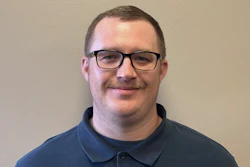
Bryan Griffen: Welcome to the ProFood World Video Interview series. I'm Bryan Griffen. Today we're going to go beyond the buzzwords to uncover the real world impact of Industry 4.0 in food and beverage manufacturing. So with over 30 years of engineering, including global roles at Nestlé, I've watched firsthand as we've moved from clipboards to connected lines. But today's factories, they're not just connected, they're intelligent. So joining me is someone that I've worked alongside and deeply respect. It's Tom Annett, Director of Engineering and Automation Controls and Power for ConAgra. He's helping lead the charge into a smarter and faster, more adaptable future for ConAgra. So buckle up, because we're going to go on a guided tour of tomorrow. Tom has over 30 years of experience in the CPG industry. He's performed multiple roles throughout his career that involve client management and business development, industrial automation and network design, and data acquisition and analysis. He is currently the director of engineering for ConAgra brands, supporting capital project execution and plant floor data architecture and development, while also leading the efforts on the connected shop floor initiative through Industry 4.0 tools for over 40 manufacturing and warehousing facilities in North America. His experience has encompassed several major food companies, including Nabisco, Kraft Foods, General Mills, Mars Wrigley, and Mars Petcare. His mission at ConAgra is to manufacture quality food safely and reliably. So Tom, thanks for joining us today.
Tom Annett: Well, thanks Bryan. Glad to be here. It's a little chilly by me, but it's winter, so you might as well embrace it, Right?
Bryan Griffen: Well, I'm sitting just north of Vegas, so for me it's a nice spring day.
Tom Annett: Yeah.
Bryan Griffen: Well, let's open up the doors to our future factory. We've heard the buzzwords for a long time, things like Industry 4.0 or "factory of the future," but what's really behind these terms? Is Industry 4.0 real or is it just a buzzword?
Tom Annett: Well, that's a good question. For me, industry 4.0 really means the next step, I think, in the maturation of our plant floor control systems. I mean, think of all the advances that have been made since the advent of relay logic, right? For decades, our focus has been automating our systems and machines, both process and packaging, right, to improve our productivity. That's our primary goal. In the past, even though there was a desire to integrate plant floor systems into business management systems, it often required custom solutions where the complexity and capital investment needed to do it really didn't provide an acceptable return.
But today, the advances really in technology have made integration much easier. It's more standardized and therefore less capital intensive. To accomplish. Our instrumentation today provides us with more information, giving us the opportunity to better diagnose or anticipate issues making us more resilient. After all, our mission, really, our mission is to manufacture high quality, safe food as efficiently as possible. We're not an automation company, and we're certainly not an IT company. Our goal is to make food. So for us, every capital project that we have today has to run through our connected shop floor filter so that all of our systems and machines, new project, new machines coming in, have to be able to interact seamlessly with higher level systems or ERP systems. And to do things to automate the delivery, for example, do things to automate delivery of raw materials to a production lines autonomously at the proper time and location. This is definitely, in my opinion, something new for the food industry, being able to do those types of things. So I think Industry 4.0, it is a good name, but it is really the continuing maturation of what we've already started decades ago.
Bryan Griffen: Right. I've said before, one of the things for me is that Industry 4.0 is just the new MES, and before that, we called it CIM, computer integrated manufacturing. It's, we've used different terms to mean the same thing as the technology's improved and gotten us to where we can take that next step forward, but it's really that same goal that we've had for decades. So let's get real with this. Walk us through what this actually looks like in the field, not theory, but in actual day-to-day changes that happen on the plant floor as you start to implement these techniques and these new ideas or revisioned ideas about Industry 4.0.
Tom Annett: Yeah. So on a daily basis, we deal with this. Really the first thing that we have, first challenge that we have is having a reliable, a network that's reliably connected to all of our devices. It's essential, otherwise, we don't have the information that we need.
Does your OT network currently have the bandwidth needed to support the ever increasing data needs? It's not slowing down. It's not going to be less, it's going to be more. We are going through a number of initiatives right now, and every one of those is, "how do we get more data off of our plan floor?" So the design and the proper management of the data, of the network and the data, is crucial. Gone are the days of flat networks using unmanaged network switches and hubs for communication needs. They just can't handle the volume of data, and you certainly don't want to create islands of automation where things like remote technical support is difficult or not an option at all.
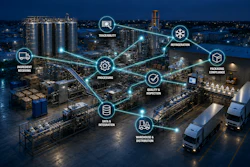
Second piece of this is sensorization. I think sensorization is really an important aspect that's quickly changing. From monitoring things like vibration for maintenance, quality measurements, verifying process variables like cook times and material replenishment levels, to automate operations, autonomous mobile robots, being able is essential. It's essential in keeping our critical systems running. Some of the questions you have to ask is, where does this sensor information reside? Is it within the sensor or is it in the PLC? Right? How is this information shared? Is it either, is it integrating into our ERP system or made available to other groups like continuous improvement, our research and development group, and operations? Other examples include predictive maintenance monitoring, packaging label validation and verification, traceability of our finished products, and most importantly, our food safety. As another example, AI can provide some insight into certain situations. For example, with predictive maintenance, it can be a valuable tool to monitor, predict, and issue a work order before an item does fail. But without those external systems, it becomes very challenging. This requires individuals to do it, to predict. We can issue - we can monitor and we can issue work orders, but to predict when something's going to fail, you run a fine line between throwing away or getting rid of good equipment and putting in new equipment. Right?
So without external systems to do this, all that intimate knowledge needs to be acquired and held by individuals. It's both difficult and time consuming. To me, applied appropriately, this can be a valuable solution in part of the equation, AI. And finally, I think improving yield, which is always, in the food industry, improving yield is always the highest focus that we have.
So, if we're continually monitoring product quality, looking at check weighers, identifying under- and over-weights of conditions, and feeding this back to line operators to make real time corrections, it's really crucial to both ConAgra and our customers.
Bryan Griffen: Okay. Very good. Yeah, I really liked one of the things that you said about the labeling and verification of the labeling in the product. It reminds me of a time in an ice cream factory I was working with where it was an overnight graveyard shift and someone just wasn't paying enough attention, and they started putting chocolate ice cream in vanilla containers, and nobody noticed it for nearly the entire shift. Thousands of gallons of ice cream that had to be thrown away simply because somebody wasn't paying attention. So we went in and we did just what you said. We put in a label reader and we put in a camera that looked at the ice cream and could determine what it was and make sure that the two match. Simple as that, and it would've saved the entire run of ice cream. So I think there's just some really good ideas of how we're already seeing this happening in real life. So every look into the future has some sort of plot twist. Something doesn't happen the way that we thought it would, or we run into roadblocks that we didn't know were there beforehand. It's never as clean and as straightforward as we'd like it to be. That just isn't.
So right now, what's holding back companies such as ConAgra or other food and beverage manufacturers from scaling these tools and really taking full advantage of the technology that's available?
Tom Annett: Yeah. Well, I think first and foremost is the quantity and quality of legacy hardware that we have on our plant floors.
Internally, we have an obsolescence program where we actively seek out and replace equipment that either doesn't have the capability connect to the ethernet network, or is obsolete, or it doesn't function to the level that we need the communication to, right? So updating PLC hardware can be very challenging from both a financial and a time perspective. Finding the downtime to be able to do this is crucial and really replacing the equipment, there's not a lot of ROI that's involved in that, right? And so for this piece alone, it's executive leadership support is crucial. You do not have that support with the goal in mind of we're going to connect our shop floor, our production, our plant floor, it doesn't work, right? You can't do it halfway. You can't do it sporadically. It needs to be upgraded. It is a major investment by any business to bring that up to snuff to be able to have the communication that you want, right?
Bryan Griffen: Yeah, absolutely. Yep.
Tom Annett: Yep. And second, like I mentioned previously, is the current state of the OT network. This could involve re-architecting the entire OT network to support that increased volume of traffic, and establishing the communication methods that you want to use and protocols to be implemented. Do you want it to be hardwired? Do you want information to be communicated via a wifi network that you may have in the factory? Or, do you have devices on your plant floor that are wireless that are either Bluetooth or LoRaWAN, Right? So there's definitely some activity on that piece of it. And then I think third is really the data itself. What information is needed? How should it be contextualized? In what format should it be stored? So when I ask individuals, what do you need? What data do you need? Many times they'll tell me, give me everything, and I'll figure it out later.
Bryan Griffen: Sure, All of it.
Tom Annett: A couple challenges. There's a couple challenges... First, it's pretty nebulous. Everything is a lot can, be very expensive, and I'll be honest and tell you, I don't know what everything is. So we really were challenged with reframing the question to our quality people, our operations, our maintenance, and really we're reframing that question to say, "Hey, listen, instead of what do you want?" We're asking the questions, "What are the biggest challenges you've faced?"
So, we're able to at least have the conversation, talk about those challenges, and then actually try to identify the data points that each one of these different groups in the organization meet. Every group in the organization can and will have different needs, but without dependable, consistent data from the plant floor, our systems can't function. And it's important the entire organization work from the same playbook. I like to call it the data dictionary.
How are you contextualizing how you contextualizing the information? I work in an organization that has 40 factories, so how do I know where this data point is coming from? So it's extremely important to do that. Lastly, I said, I think I would say the interface between the plant floor and either the MES or ERP system. It is another roadblock. Over the years, systems and applications have come and gone and have been rolled out solving specific needs. This has created silos of information requiring custom applications, APIs to be developed to get to the data. And many times that data needs to be massaged into a format acceptable to the ERP system. So again, this can be both costly and time consuming. Add to this, the support and maintenance of all those varied systems can add significantly to the total cost of ownership with the entire ecosystem. It's really a challenge, and we're actively consolidating those applications in our organization.
Bryan Griffen: If there's one thing we know for certain there, there's always a demand for more and more data. But unless we contextualize it, unless we can put meaning around it, numbers don't really mean anything for the operation.
I can see all those roadblocks as things that manufacturers have to figure out answers to in order to move this concept of industry 4.0 forward. So let's see if we can zoom in on one mission that's already underway for ConAgra. Can you share a project where Industry 4.0 has made a meaningful impact for you guys?
Tom Annett: Sure. I think one project comes to mind. What we had done is in this situation, we used a digital twin emulation software to help us validate the design by pretesting the operation and throughput. It also helped us assist us in operator training with virtual reality technology. So this application specifically was a packaging pick and place design using delta robots to orient finished product prior to inserting in the cartons. Previously, the product was inserted by hand. It was important to us to validate the number of robots that we needed to accommodate the product flow and the production rates, but more importantly, to validate the design to handle disruptions. Things like varying flow rates, missing production - spaces that are taken in the production, bad picks, those types of scenarios. Today, we're currently considering using this technology to improve equipment layouts, identify accumulation areas, locating reject, and quality testing stations, in addition to identifying measurement locations to improve food safety. So cameras at the exits of ovens to ensure the product is at temperature prior to packaging. We feel this is going to be a valuable tool for the right applications. It can be expensive and it can be challenging, but for the right applications, this is one example. I think when we talk about Industry 4.0, I think it's really one of the applications that we're utilizing to say, how can we design a line prior to even building the line? Right?
Bryan Griffen: Yep. Okay. Very good. Some of that comes back to that old adage, you have to spend money to make money. And some of these things cost, but the value of the other side, the output consistency and quality and efficiency ends up much greater than the initial cost if we do it right. So if we pick a little bit further down the road, what do you see coming next? Is there some area where manufacturers should be focusing right now? Is there some big thing that you see coming that's going to make a huge difference? What do you perceive as our next steps?
Tom Annett: Yeah, really another great question. How do you prepare yourself for the future?
I've already alluded to having the needed infrastructure in place, right? It's both hardware and software. It's really the key to success. Unlocking that data that's on the plant forest is critical, but there's a lot of work that needs to be done to get there. Having the needed connectivity to all or most of the unit operations in your plant floor is critical. So new equipment coming in, having standards and providing those standards to your equipment suppliers to make sure that you have this standard, so it's easily connected. So this includes both the PLCs on the plant floor, having the capability and the networking, and the networking hardware, the cabling, and network switching. That's just imperative for design.
With the increased traffic, it's really important that it's managed appropriately through segmentation and VLANs, for example. This is extending the capabilities of the capacity of the OT network. It's also important to consider the scalability of the network. As the needs increase, the network needs to be easily expanded, following the same design principles without major changes. In many cases, legacy networking was an afterthought.
And in many cases, I would say that networks were made to work. There were no considerations for wider implications or future design. It was, soon as I was connected between two points, I was done. On the software side of things, establishing really an enterprise wide SCADA design and platform is as important. What data is needed? How will it flow? Where will it be stored, and who will be accessing it? Right? This pool of data that you want to be able to pull to have a consistent data set to utilize. So using industry standards such as the ISA 95, the Purdue model, with open communication protocols such as ethernet IP, OPC UA, MQTT, it really provides more options. Tying yourself and accepting solutions in which vendors funnel you into their applications, their cloud solutions, their siloed data, limits your options and complicates your ability to share the data with other groups within the organization. So it also restricts your ability to incorporate future innovative solutions as the offerings and innovation continue to expand. Having the capacity to pivot quickly to approve solutions without major modifications to your ecosystem is essential, and it is not being in a position to react quickly, and with minimal disruption or downtime places companies at a significant disadvantage. To me, it's imperative that those open standards, you maintain an ecosystem that is as open as possible to be able to accommodate changes in the future.
Bryan Griffen: Yeah, that makes sense. So it sounds like really the next steps then that you are promoting is getting the infrastructure in place and getting it right so that you can handle what is coming down the line. Because yeah, none of us know what exactly that is, but we do know from experience, if the infrastructure is not there, it's going to be a lot more difficult to get it implemented.
Tom Annett: It's the foundation of all of it. It is really the foundation. We have a number of initiatives today that we're considering and we're piloting and we're looking at. That would never have been possible without having that foundation already be close. Right,
Bryan Griffen: Right. Yeah, that makes sense.
Tom Annett: Yeah, absolutely.
Bryan Griffen: All right. Well, it's time for my favorite part of the show. So it's the lightning round. So this goes quick. The idea is I'm going to throw out a buzzword and you're going to tell me is it hype, is it real or is it, oh, let's wait and see. All right, so we're going to go through this, first one: digital twin.
Tom Annett: Digital twin. Well, I would say it depends on the industry and project. It has a place, and as I mentioned before, we've actually utilized it, but it can be expensive and time consuming. And in the food industry, things move very fast.
So, how do you take the time to actually use a digital twin in the food industry without slowing down the process of the changes that you're going to make anyhow. So it makes more sense today for high-capital intensive type efforts to do things like improve vertical startups for those big projects. That's what I see.
Bryan Griffen: Next one, machine learning.
Tom Annett: Well, I think it's real. First of all, I think it's real, but it needs to be applied to applications in which significant improvements are anticipated. It is another expensive proposition, but it also requires, when you start thinking about this, it also requires retraining and acceptance of plant for operators and personnel to make the adjustments that may be counterintuitive. So an operator may have been doing this for 15, 20 years, and that's what they're used to, and now I've got this machine learning application telling them to do something different. And it might be right. I'm not saying everything that AI and machine learning does is correct, but it may be right. But if you don't do that, it's impossible to know. And so you have to get some buy-in from the operators to be able to do that.
Bryan Griffen: Yes. Alright, next one. Smart sensor.
Tom Annett: Yes, it's real. I think it's very real, right? I'm still trying to understand how to effectively implement like IIoT sensors and how it can be applied. And especially without overwhelming our data systems. There's a lot of information and we addressed the, "give me everything and then I'll figure it out later." So there's plenty of information out there to do this. It has to be done with, I think it has to be done with some restraint. You have to have a goal in mind before you actually say, "yep, this is what I want." You have to know what you want out of it before you start using it.
Bryan Griffen: Yep. All right. Here's a fun one. The metaverse for manufacturing.
Tom Annett: Oh boy. I'm going to say it's probably real. I think it's aspirational for many manufacturers due to the cost and the education and the ROI. I don't want to say this, but I've been around for a long time. I'm an advanced age and I'm going, "ah, we'll see how this one rolls out." Right? I could be totally wrong and it's going to be the greatest thing since sliced pie, right? But we'll see.
Bryan Griffen: Alright, and the last one, plug and play interoperability
Tom Annett: Is absolutely real, but it requires the proper infrastructure and ecosystem to support it, and it needs to be in place with regular version maintenance.
So, keeping things consistent and at the same levels is challenging. It's very challenging. Trying to keep updating all of your systems to make everything work together. Things come out so fast anymore and technology improves so fast anymore, that things become obsolete very quickly. And so that's the challenge I think, with the plug and play interoperability.
Bryan Griffen: Yeah, I would agree. We've gone from controls equipment, having the same lifecycle as the mechanical equipment of 25 years to, if your control system lasts five years, you're jumping for joy. Today, it's moving so fast. Well, thank you. That was fun. I certainly learned some great lessons today and thoroughly enjoyed having you on the show. Well, thank you, Bryan, with your current endeavors. And thanks to all of our viewers for joining us on our Tour of Tomorrow. Industry 4.0 isn't about replacing people. That's one thing I want to be clear about. It's about empowering people to do more with better tools, better insights. We've talked about this contextual data, understanding your manufacturing better and letting the technology then handle the efficiencies and the consistency as you learn better insights. So a huge thanks to Tom for sharing his experience and to you for watching. So until next time, keep building smarter. Alright, take care.