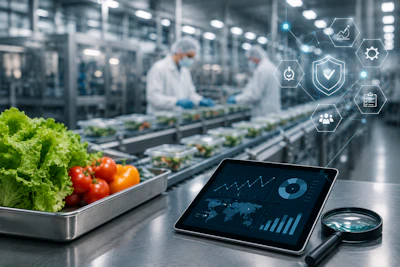
Food manufacturers are shifting from managing recalls after they occur to preventing them through integrated preventive control systems that include environmental monitoring, supplier verification, traceability, and data analytics. This proactive approach reduces the likelihood of food safety events reaching consumers by identifying and addressing risks earlier in the production process.
- In 2025, approximately 320 food recalls and public health alerts were issued, with undeclared allergens (39%) and microbiological contamination (34%) as leading causes.
- A single recall can cost manufacturers far more than product value: one USDA analysis found that ground beef recall indirect losses exceeded $97 million in industry losses from reduced consumer purchases.
- Preventive control systems integrate environmental monitoring, supplier verification, traceability data, and predictive analytics to detect risks before products reach consumers.
- Environmental monitoring programs now use zone-based sampling strategies and trend analysis to identify recurring contamination sites and target corrective actions proactively.
- Food safety culture and employee engagement remain foundational—technology enhances detection and decision-making, but effective prevention depends on people, processes, and organizational commitment.
Food recalls have long been treated as an unavoidable reality in food manufacturing. When they occur, companies activate established recall plans, coordinate with regulators, notify customers, and remove affected products from distribution. However, that response-only mindset is shifting across the U.S. food industry.
Recalls are increasingly viewed as indicators of deeper system vulnerabilities, including gaps in supplier oversight, environmental monitoring, process validation, or data visibility. They also carry significant financial and operational consequences that extend well beyond product removal from the market.
As these pressures continue, manufacturers are placing greater emphasis on preventing recalls rather than simply managing them after they occur.
2025 U.S. food recall landscape
According to U.S. Food and Drug Administration (FDA) and U.S. Department of Agriculture (USDA) data compiled from federal enforcement reports and agency announcements, approximately 320 food recall and public health alert announcements were issued in 2025 across regulated food categories. Of these, about 253 involved FDA-regulated foods, and approximately 71 involved USDA Food Safety and Inspection Service (FSIS)-regulated meat, poultry, and egg products, including recalls and public health alerts. Because the agencies use different reporting systems and categories, totals may not align precisely.
The leading causes of recall and alert activity were undeclared allergens (about 39%), followed by microbiological contamination (about 34%), foreign material contamination (about 9%), and chemical contamination, such as lead (about 4%). The remaining actions involved other issues, including labeling, formulation, and process deviations.
Among undeclared allergens, soy, milk, tree nuts, wheat, egg, and sesame were the most frequently identified, with milk consistently appearing as the leading single allergen in recall activity.
Listeria monocytogenes remained the most frequently cited pathogen in microbiological contamination events and was often associated with ready-to-eat products and more severe health outcomes. It was followed by Salmonella and Escherichia coli, with fewer recalls linked to Clostridium botulinum and other pathogens.
Operational and financial impact of food recalls
The financial impact of a recall extends well beyond product recovery. Direct costs typically include product retrieval and disposal, production downtime and schedule disruption, testing and laboratory analysis, overtime labor, operational adjustments, and regulatory reporting and documentation requirements.
The scale of USDA FSIS-regulated recalls illustrates the potential economic exposure for processors. A recent Journal of Food Protection analysis of USDA FSIS recall activity found that 1,001 recall incidents occurred from 2012 through 2023, involving 205.2 million pounds of recalled product.
A USDA Economic Research Service (ERS) analysis has also shown that indirect market effects can exceed the value of recalled products themselves. In an analysis of FSIS ground beef recalls, ERS found that the median amount recalled was approximately 98,000 pounds, with an estimated retail value of $223,220, while reduced consumer purchases following recalls were estimated to have resulted in more than $97 million in industry losses in 2005. The study remains one of USDA’s most detailed economic analyses of the broader financial effects associated with food recalls.
Indirect consequences can be more difficult to quantify. Manufacturers may face retail delisting or reduced shelf placement, contractual penalties and lost business, increased regulatory scrutiny following an event, legal claims and insurance exposure, and long-term brand and reputation impacts. Lost sales and product destruction are among the major cost drivers associated with recalls, particularly when affected products cannot be precisely identified.
As systems continue to advance, improved product tracking may help companies and regulators identify affected products more precisely, potentially reducing recall scope and limiting unnecessary market disruptions.
From end-product testing to preventive control systems
Modern food safety strategies are increasingly built around prevention rather than detection at the end of production. While finished-product testing remains an important verification tool, it’s not sufficient by itself to manage today’s complex risk environment.
Instead, FDA and USDA regulatory approaches emphasize identifying hazards earlier in the process and applying controls to prevent or reduce food safety risks before products reach consumers.
Integrated preventive control systems include:
- Environmental monitoring data
- Supplier verification records
- Sanitation and hygiene performance data
- Process monitoring
- Laboratory testing outcomes
- Maintenance and equipment performance logs
- Production records
- Consumer complaint trends
When evaluated together, these inputs provide a more complete view of operational performance and allow quality teams to identify emerging patterns that may not be visible through individual data sources.
 AI generated by Christine Tervo
Environmental monitoring as an early warning system
Environmental monitoring programs have evolved from compliance-focused activities into proactive tools for identifying potential contamination risks.
FDA and USDA recall and alert data continue to show that microbiological contamination remains a significant driver of food safety events, reinforcing the importance of managing risks within the production environment.
Leading facilities are relying more on zone-based sampling strategies, trending environmental results over time, identifying recurring contamination sites, and conducting drain, equipment, and air sampling programs. The resulting data can help manufacturers target corrective actions based on trends rather than isolated findings.
Supplier risk as a front-end control point
Ingredient and supplier-related issues continue to contribute to food safety events, making supplier management a critical part of preventive programs. As supply chains become more complex, supplier oversight has evolved from a procurement function into a core component of food safety management.
Modern supplier verification programs typically involve:
- Risk-based supplier approval systems
- Ongoing supplier performance monitoring
- Ingredient testing strategies based on risk level
- Audit and documentation verification
- Traceability validation exercises
- Supplier food safety culture assessments
Digital supplier management platforms further improve coordination by centralizing compliance records and enabling manufacturers to monitor supplier status, documentation, and performance trends.
Data integration and predictive risk detection
Manufacturers are connecting operational and quality systems to identify potential issues before they become failures. Linking environmental monitoring, production parameters, maintenance data, and quality assurance records allows teams to recognize patterns that may signal emerging problems.
Current applications focus on:
- Statistical process monitoring for deviation detection
- Automated alerts when parameters approach control limits
- Correlation of process conditions with historical quality events
- Multi-line or multi-site trend comparisons
- Anomaly detection and early warning tools
These technologies do not replace expert judgment; instead, they provide additional information that helps quality teams make faster, more informed decisions.
Traceability as a preventive capability
Traceability is often associated with recall response, but its value extends beyond product recovery.
Robust traceability systems enable manufacturers to isolate affected ingredients or production lots more quickly, improve root-cause investigations, and identify recurring supplier or process issues. By improving the precision of product tracking, traceability can help reduce the scope of corrective actions and minimize unnecessary disruptions.
When integrated with enterprise resource planning and warehouse management systems, traceability becomes a continuous risk management tool rather than simply a response mechanism during a recall.
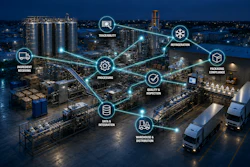
 Linking environmental monitoring, production parameters, maintenance data, and quality assurance records allows teams to recognize patterns that may signal emerging problems.AI generated by Christine Tervo
Food safety culture as a foundation
Despite advances in technology and data systems, regulatory agencies continue to emphasize the importance of organizational behavior in food safety performance.
Facilities with strong food safety outcomes typically demonstrate employee engagement in identifying potential issues, clear escalation pathways, leadership commitment, cross-functional communication between operations and quality teams, ongoing training, and accountability embedded into daily operations.
Technology can improve detection and decision-making, but effective food safety performance still depends on people, processes, and a culture that encourages early action.
From recall readiness to preventive control
Preparedness remains essential. Mock recall exercises are commonly used to validate traceability systems, test internal communication processes, assess record accessibility and accuracy, and identify gaps in documentation or system integration. These exercises are also being used to evaluate the effectiveness of broader food safety programs and strengthen response readiness.
FDA and USDA regulatory frameworks continue to emphasize hazard identification, preventive controls, and verification activities as the foundation of food safety compliance.
Under the Food Safety Modernization Act (FSMA) and related FDA oversight programs, manufacturers of covered foods are expected to implement hazard analysis, preventive controls, supplier controls, corrective actions, and verification activities. For FSIS-regulated meat, poultry, and egg products, establishments operate under Hazard Analysis and Critical Control Point (HACCP)-based systems supported by sanitation procedures, testing programs, and agency verification activities.
Inspection and regulatory oversight focus on whether food safety systems are effectively implemented and maintained, reinforcing the importance of continuous verification and operational effectiveness.
The future of food safety
The food manufacturing industry continues to shift how food safety performance is defined. While preventive programs have become more advanced, FDA and USDA recall and alert data show that food safety events remain an ongoing operational challenge.
Undeclared allergens and microbiological contamination continue to drive a significant share of recall and alert activity, reinforcing the need for stronger safeguards across supplier networks, production environments, and quality systems.
By integrating environmental monitoring, supplier verification, traceability, analytics, and food safety culture into coordinated risk management programs, manufacturers are moving toward a more proactive approach that emphasizes early detection and mitigation of potential hazards. The objective is not to respond faster when a problem occurs, but to reduce the likelihood that those problems ever reach consumers.
Moving beyond recall response means building systems designed to detect risks earlier, address them sooner, and prevent disruptions. The future of food safety will be defined not by how quickly companies respond to recalls, but by how effectively they prevent them.