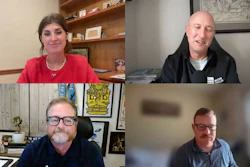
We took this month's processing news roundup outside the usual format, literally.
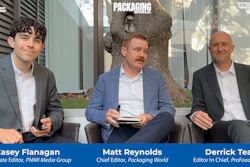
Learn about the latest food safety news in this video chat as ProFood World's Casey Flanagan takes a stroll outdoors and Derrick Teal works through a puzzle. Click the links below to learn more about each topic:
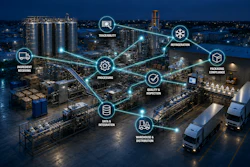
🗞️ Story One: How AI is reshaping food safety.
🗞️ Story Two: FSIS's pilot to measure salmonella in raw poultry products.
🗞️ Story Three: Mixing and blending's impact on food safety.
🗞️ Story Four: How ammonia, CO₂, and nitrogen are reshaping food and beverage cooling.
Transcript is AI generated and may contain errors.
Casey Flanagan (00:00):
Hi, I'm Casey Flanagan with ProFood World. I'm here with my colleague, Derrick Teal, editor-in-chief of ProFood World. And it is a scorching hot day in Chicago today, so I thought I'd take a walk and do a little walk and talk with you. And I see you're doing a puzzle, so tell me about that. What are you making right now?
Derrick Teal (00:16):
Well, I'm smart because I'm staying indoors where it's nice and cool because... But yeah, just doing a puzzle. It's one of my favorite hobbies to do, believe it or not. If I get going on a puzzle, I can sit here for hours just working on one of these things. So yeah, I guess you'd better focus a little bit, otherwise you're going to lose me to the puzzle.
Casey Flanagan (00:37):
Absolutely. Yeah, I do love a good puzzle too. So yeah, so I guess speaking of heat, we should talk about one of the hottest topics at ProFood World in the past month or so, which has been food safety. Let's
Derrick Teal (00:48):
Do
Casey Flanagan (00:49):
It. Yeah, so I wrote an article not too long ago about how AI is reshaping food safety. And a big part of that article is covering what was said at the Binstead lecture, the IFT Binstead lecture 2026. And Dr. Peggy Poole, the president at IFT spoke at that and she was talking about the market valuation first of AI and food safety and AI and food and beverage specifically. That was evaluated at about 16 billion in 2025 and it had a 39% yearly growth projection, which might be the highest yearly growth projection I've seen in any statistic at Pro Food World. Yeah,
Derrick Teal (01:30):
That's a lot.
Casey Flanagan (01:31):
Yeah. So I think that really tells that this is not some fad, this is really an industry changing technology and you really see it in how much money is going into investments in this. And the article, it was fun to write because they went into some really interesting technologies in it, some experimental stuff with pathogen detection as well as some real examples of it of AI in food safety today in the industry. But I think the big takeaway was it had to do with Dr. Peggy Poole's insights on the human element in all of this and how important it is to keep humans in the equation. So I think it's really worth reading the full article to see what they had to say about that.
Derrick Teal (02:15):
Yeah, there's a lot of technology that's going on in terms of food safety, like you just mentioned AI. FSIS just introduced a new pilot measure to a pilot program to measure salmonella in raw poultry plants. And the whole point of it is to try to get the window down. Right now there's a standard of 52 weeks that has to be followed, but in this pilot program, they're letting manufacturers use biomapping or they can implement what's called a validated critical control point CCP in their HACCP plans. And the data that they're collecting from this, like I said, they're trying to reduce the window, the regulatory window, and it's going to be used, the pilot program info from the pilot program is going to be used to inform future regulatory changes in poultry standards. And I thought it was just an interesting use of technology because we talk about the regulatory burden all the time and that how things could be challenging for manufacturers.
(03:24):
And I thought that this was an interesting step by the FSIS to allow technology to be used to reduce that window so that, okay, yeah, we're showing that we don't have salmonella in our plants and it's not a 52-week process, but potentially a 13-week process because the window isn't just 13 weeks, but it goes up to 52 weeks if necessary. So they're not eliminating it. They're not just saying it's going to happen in 13 days if there are problems and it can stretch out. But I just thought that was interesting. Our audience, I think, thought that was pretty interesting too, to see how that tech is being used and to see that there are changes happening in terms of regulatory environment and food safety.
Casey Flanagan (04:13):
Absolutely. It's exciting to see pilot programs happening like that and seeing the technology moving forward there.
(04:20):
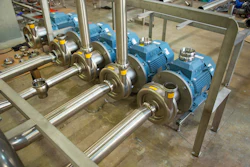
And another one that I though was really interesting from ProFood World was, and this is not solely food safety, there are a few other elements to this, but mixing and blending. I think there's a food safety element to that that it's really a sticking point for manufacturers and making sure their food safety is on point. And whether it is quick changeovers or allergen management, combining those two, or just generally making sure that your sanitation is in order without really slowing down or stopping your uptime. I think the right equipment and what the article mentioned was how the right equipment can be a real game changer in making sure that you're staying flexible while still mitigating risk. And so the article really goes into a lot of different equipment solutions that cover that, that can strike that balance. So I think that was another really cool food safety item to check out with Pro Food World.
(05:18):
Yeah,
Derrick Teal (05:19):
And it's interesting that you talked about the right equipment for an application because I wrote an article in June that appeared in the June issue that was about refrigeration and freezing and how the advancements there are changing it where it used to be ammonia sort of covered the entire plant. Well, it's still doing that, but there are other options coming in. CO2 is being used a lot in plants to cover the whole plant's cooling needs. But CO2 helps with some regulatory hurdles since it's not nearly as noxious or dangerous a chemical as ammonia can be. But it's only really going to appear in new construction. You can't really do that in a renovation or anything like that just because the piping size is different piping sizes and stuff like that. So it's going to be a challenge. You're not going to rip out all your pipes.
(06:16):
It's going to be more cost-effective to stick with the amonia than it is to switch over to CO2. But again, there are many safety regulations. We're talking about regulations again that are not going to have to necessarily meet with CO2 versus ammonia. There's some steps that you don't run into. But it's also interesting that how nitrogen is being used, particularly talking about chicken, there's one manufacturer that what they show with their nitrogen blast freezers is the use of chicken or how it uses chicken, how it can reduce the juices I guess from it can reduce that as it sits, gets put into a bin with other methods. It might thaw more quickly than if you use nitrogen. But it was interesting that they're switching based off of application and need that it's not just one size fits all solution. There are multiple different solutions based off of different needs like you were talking about with mixing and blending.
Casey Flanagan (07:21):
Absolutely. Yeah, I though that was a great article seeing the pros and cons of each of those options and why a manufacturer might pick each of those. So I think that's a great one to check out. And speaking of refrigeration, maybe it's a good time for me to get back inside. I hear a helicopter going overhead too, so it seems like it's a good time to wrap up. So I think
Derrick Teal (07:42):
This is
Casey Flanagan (07:43):
Great. Make sure to check out all of these articles in the links that we include in this post and make sure to follow Pro Food World for any further content in food safety or otherwise food processing. So thanks Derrick. And thanks everyone for watching.
Derrick Teal (07:57):
Thanks Casey. See you all later guys.