CJ Foods is building a land-based seaweed cultivation facility in South Korea that will open in 2027, enabling year-round gim production and addressing supply challenges from climate change and rising global demand for Korean seaweed products.
- Construction begins in August on the facility in Cheonan, South Korea, with completion scheduled for first half of 2027
- The facility will produce gim year-round instead of only during winter ocean farming seasons, improving supply consistency
- CJ Foods developed proprietary technology including a patented seaweed variety, life-cycle control systems, and specialized nutrient media optimized for land-based cultivation
- The controlled indoor environment reduces risks from rising sea temperatures and environmental variability while improving taste and quality
- Company plans partnerships with local governments and fishing communities to expand land-based cultivation models across South Korea
CJ Foods plans to begin construction in August on a commercial-scale land-based gim (Korean seaweed) cultivation facility in Cheonan, South Korea, a move the company says will support year-round production and help address supply challenges linked to climate change and rising global demand for seaweed products.
The facility, scheduled for completion in the first half of 2027, marks the commercialization phase of a research effort that began in 2018. CJ Foods says the site will produce gim for global markets, including the U.S., and supply products under its bibigo brand.
Gim, commonly consumed as a roasted snack and used in dishes such as gimbap, has benefited from growing worldwide interest in Korean cuisine. At the same time, conventional ocean-based cultivation faces pressure from rising sea temperatures and other environmental challenges, according to the company.
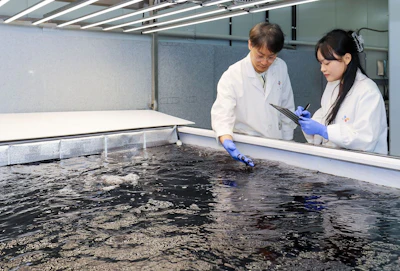
The new facility will feature multiple cultivation tanks and production systems designed to scale technologies developed at CJ Foods’ pilot operation. The company said its proprietary platform includes a patented seaweed variety optimized for land-based cultivation, life-cycle control technology, specialized nutrient media, and integrated quality-control systems.
By moving production indoors, CJ Foods expects to harvest gim throughout the year rather than only during the winter growing season typical of ocean farming. The controlled environment is also intended to improve consistency in taste, quality, and supply while reducing risks associated with environmental variability.
The company says it has also developed technologies aimed at preventing heavy metal accumulation, reducing waste, and improving production efficiency. Looking ahead, CJ Foods plans to explore partnerships with local governments and fishing communities in South Korea to expand land-based cultivation models.
Says Adam Ricciardone, Global CTO of CJ Foods: “This facility will serve as a testing ground for applying CJ’s more than decade-long land-based gim cultivation technology at an industrial scale, while also becoming an outpost for the sustainable future of K-Food.”