Michigan State University biosystems engineering students helped a major dairy facility stabilize its wastewater treatment system by diagnosing microbial instability issues and developing practical solutions through a capstone project collaboration.
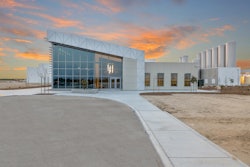
- MWC dairy facility processes 2.9 billion pounds of milk annually and operates its $25 million wastewater treatment system 24/7
- Students identified fluctuating pH levels and declining aerobic sludge activity as root causes of treatment instability
- The collaboration between MSU's ADREC and undergraduate engineers created real-world solutions that stabilized operations
- MWC achieved its 10% city water usage reduction goal by end of 2025 and already sources two-thirds of water from milk processing
- Future plans include developing a circular water system with reverse osmosis technology to achieve water-neutral operations
A Michigan dairy facility processing 2.9 billion lbs of milk per year grappled with instability in its wastewater treatment, so it turned to academia for help.
MWC, a cheese and whey protein plant created in 2020 as a joint venture between Glanbia, Dairy Farmers of America, and Select Milk Producers, faced compounding issues soon after opening, an article from Michigan State University AgBioResearch explains.
The company uses a $25 million wastewater treatment system to help offset its environmental footprint as a large dairy processor, reclaiming water from cheese production and helping to protect water resources in the area. Once the facility was up and running though, the company faced fluctuating pH levels, a decline in aerobic sludge activity, and inconsistent operation.
“We fundamentally weren’t tracking the correct key performance indicators,” David Holmberg Jr., maintenance director at Glanbia, says in the article. “Multiple issues were occurring simultaneously, creating instability in the wastewater treatment operation.”
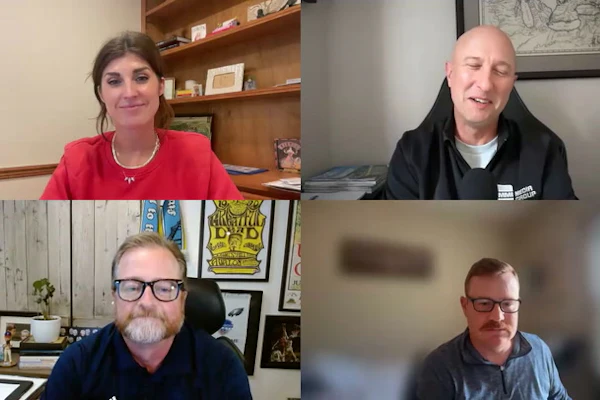
Operating 24/7 year-round and accounting for about 25% of milk produced in Michigan, the company couldn’t afford downtime from this instability, as the cows wouldn’t stop producing milk to process, explains Matt Vanic, Site Director at MWC, in an MSU AgBioResearch podcast on the project.
“If you have an issue, whether it’s wastewater or in the cheese plant, there’s always a lot of pressure, sometimes quite literally,” Vanic says. “Some of that milk would have to go and get disposed at a lesser price, so then unfortunately, you don’t have that return for the farmers.”
A student-driven collaboration
The company connected with MSU’s Anaerobic Digestion Research and Extension Center (ADREC) for help finding a solution for those inconsistencies. Professor Wei Liao, leader of ADREC, reached beyond a simple consultation to turn the collaboration into a capstone project for undergraduate biosystems engineering students.
The company worked with Dr. Liao at first to get a better understanding of specific challenges, then brought in the students to center their capstone projects around targeted issues, explains Vanic in the podcast.
The students and MWC operators worked together to analyze performance and diagnose issues with microbial instability, ultimately creating a strategy to remedy the issues. Together, they stabilized the wastewater treatment process to enable consistent operation at the plant.
“The people at MWC were incredibly open and collaborative,” Carter Monson, the student team leader for the project, says in the article. Monson was a senior at the time and is now a master’s student at MSU. “They gave us access to data, samples, and operations, which allowed us to develop solutions that actually worked in practice, and gave us firsthand experience tackling real-world challenges in agricultural and food processing systems.”
MWC has found its own value in the collaboration, bringing fresh eyes onsite and supporting student engineers.
“We only ever have so many resources, and being able to have that new resource and let [the students] bird dog this for us was a really cool thing,” Vanic says. “Another great part of the collaboration was marrying the theory and practice from college and giving them that real-world experience to test those different theories and hone some new ones as well.”
Continuous improvement for MWC
MWC’s work with MSU AgBioResearch isn’t stopping with this one solution. The company plans to continue optimizing its operation with the help of the university.
“This wasn’t about checking a box or solving one isolated issue,” Vanic says in the article. “MSU brought a level of systems thinking and technical depth that helped us stabilize critical infrastructure and build a stronger foundation for long-term, sustainable operation. At the same time, we’re helping train the next generation of the workforce who understand what it takes to operate complex food processing facilities at scale.”
Moving forward after the initial stabilization of operations, the company and university are looking to develop a circular water system at the facility, improving water use optimization.
“MWC could become the example for what a fully circular water system looks like in Michigan,” Liao says in the article. “This is next level, and MSU has the expertise and capacity to help make that vision a reality.”
Glanbia set a goal to decrease city water usage across its plants by 10% by the end of 2025, and Vanic says his plant was able to hit that target. As the plant was built, it already sources two thirds of its water from the milk it processes. But there’s always room for further improvement, and an MSU ADREC analysis suggests opportunities for significantly more reuse.
“Dr. Liao has already had one of his students out with a reverse osmosis membrane, collecting data to see if we can take that water and clean it up yet again for some ability to reuse,” Vanic says. “That’s really exciting. If we could get to water neutral or be a water generator even, it’s definitely a cool thing.”