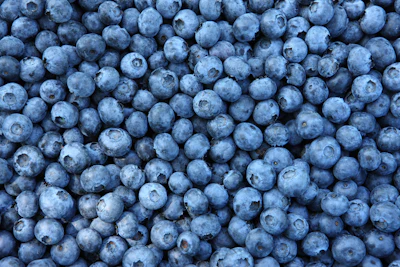
H&A Farms automated its blueberry inspection process using optical sorting technology, allowing the company to double throughput from 300,000 lbs daily while maintaining quality standards and reducing reliance on manual labor. The 360Tek optical sorter captures 16 images per berry to detect defects, size fruit, and remove debris, enabling H&A to process more fruit with fewer employees while meeting rising retailer quality demands.
- H&A Farms processes up to 300,000 lbs of blueberries per day across seven fresh-pack lines using optical sorting equipment
- The 360Tek optical sorter captures 16 images per berry and can process up to 8,000 lbs/hr, detecting defects like scars, splits, and stems
- Automation doubled throughput while allowing H&A to eliminate the manual inspection table and reassign six employees to other plant operations
- Machine-learning algorithms evaluate color, size, and shape in real-time, applying consistent inspection criteria throughout long production runs
- Operators can adjust size thresholds digitally without mechanical changeovers, enabling quick customization for different retail customers
At peak season, H&A Farms can pack as much as 300,000 lbs of blueberries per day. Its seven fresh-pack lines may run around the clock, handling fruit from the company’s own operations as well as domestic and international growers. At that scale, a missed defect is a quality problem—but an inspection bottleneck is a capacity problem.
Those pressures are converging as retailers and consumers ask for greater consistency in color, size, and appearance. Meanwhile, rising labor costs are pushing suppliers toward more machine-harvested fruit, which can mean more leaves, stems, and cosmetically damaged berries at the packing house. H&A needed to intensify inspection without adding people to an already difficult-to-staff process.
The company’s response has been to expand optical sorting across its operation. All seven fresh-pack lines now use WECO equipment, and two are built around the supplier’s modular Sortivator platform. On one of those lines, a newer 360Tek optical sorter, now performs the final inspection and diverts jumbo fruit. H&A Farms uses WECO cleaning and sorting equipment across all seven of its fresh-pack blueberry lines. Two lines are configured around WECO’s modular Sortivator platform.WECO
Quality pressure meets labor pressure
H&A Farms President Michael Hill says the fresh-market quality bar has continued to rise while the labor available to clear it has remained constrained. Says Hill, “We needed a way to keep pace with rising quality expectations while doing more with the people we already have.”
The Sortivator approach lets a packer combine cleaning and inspection modules for a specific application instead of relying on one fixed machine. Each of H&A’s two Sortivator lines includes a blower that removes lightweight debris such as leaves and small stems, a BerryTek color sorter that rejects green or discolored fruit, and an Impulse soft sorter that removes soft or overripe berries.
H&A placed the 360Tek at the end of one line to make a finer final sort. WECO rates the machine for up to 8,000 lbs/hr. It can detect surface defects such as scars, splits, and rubs, remove extraneous vegetable material including stems and flowers, and direct large berries into a separate stream.
Seeing every side of the berry
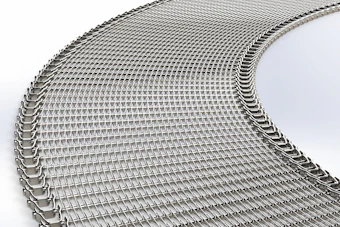
Blueberries arrive at the 360Tek on a series of hourglass-shaped rollers. The geometry rotates and separates the fruit as it advances, presenting a 360-degree view to digital color cameras. According to WECO, the system can capture as many as 16 images of each berry. Machine-learning algorithms evaluate color, size, and shape, then trigger air nozzles between the rollers to deflect selected material.
The machine divides the incoming product into three programmable streams. In H&A’s configuration, one stream advances accepted berries to packaging, another collects defective fruit and extraneous vegetable material, and the third captures jumbo berries. If a packer doesn’t need a separate jumbo grade, WECO says the two reject streams can instead be assigned to different defect or material categories. Hourglass-shaped rollers rotate and present blueberries to the 360Tek’s digital color cameras. Machine-learning algorithms evaluate each object before air nozzles divert selected fruit or material.WECO
More capacity, fewer inspection bottlenecks
Before the upgrade, H&A could assign as many as six employees to the line’s manual inspection table. Even an experienced inspector, however, has limited time to see fine defects in fruit moving at production speed.
“The 360Tek improved defect removal while more than doubling our throughput,” says Hill. “At the same time, it allowed us to eliminate the inspection table on that line and move those employees to other parts of our operation.”
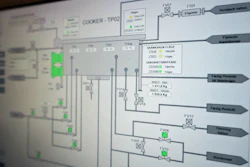
The result was not simply fewer inspection positions. By removing that manual choke point, H&A increased the amount of fruit the line could process and reassigned employees to work elsewhere in the plant. The system also applies the same programmed inspection criteria through long runs, giving operators a repeatable baseline for the final sort. Installed at the end of a Sortivator line, the 360Tek separates accepted berries, defective fruit or extraneous vegetable material, and jumbo berries into customizable streams. The sorter’s control system also records quality and packout data.WECO
Digital sizing and better process data
The separate jumbo stream gives H&A another way to respond to retail programs without stopping for a mechanical changeover. An operator can change the size threshold in the control system—18 mm and larger for one customer, for example, or 20 mm and larger for another—without replacing parts.
H&A also uses data from its sorting systems to compare varieties, growing blocks, defect patterns, and packout characteristics over the course of a season. The information can help the company estimate how much saleable product a lot will yield, identify changes in incoming fruit, and inform decisions for future seasons.
For Hill, those capabilities make inspection automation part of a broader operating strategy: Protect finished-product quality, keep high-volume lines moving, use a scarce workforce where it adds the most value, and learn more from every crop that passes through the plant.
Says Hill, “Technology that helps us sort more accurately, increase throughput and better understand our fruit has become a very important part of our business.”