The USDA is restructuring its food safety operations by establishing a National Food Safety Center in Iowa and strengthening scientific capabilities in Georgia while relocating thousands of administrative positions to five regional hubs, maintaining unchanged inspection requirements but improving coordination between field inspectors, laboratories, and technical support.
- USDA is creating a National Food Safety Center in Urbandale, Iowa with approximately 200 employees to consolidate FSIS administrative, technical, and support operations.
- The agency is strengthening scientific and laboratory capabilities in Athens, Georgia, expanding microbiology, chemistry, and epidemiology functions outside Washington, D.C.
- Approximately 2,600 USDA staff positions are relocating from Washington, D.C., to five regional hubs in Raleigh, Kansas City, Indianapolis, Fort Collins, and Salt Lake City.
- FSIS will maintain a smaller Washington presence of approximately 100 positions focused on policy development, congressional liaison, and strategic oversight.
- Regulatory requirements and daily inspection activities remain unchanged; the reorganization affects administrative processes and coordination rather than compliance standards at federally regulated facilities.
One of the most significant changes in federal food safety oversight today is occurring through organizational restructuring rather than regulatory policy. The U.S. Department of Agriculture’s (USDA) Food Safety and Inspection Service (FSIS) is implementing a geographic realignment that redistributes responsibilities across designated hubs and mission-critical locations. This includes establishing new centers of responsibility, transferring existing functions across locations, and expanding support in key states. While day-to-day inspection activities remain the same, the shift is a broader effort to move core FSIS capabilities closer to livestock and agricultural production areas.
New National Food Safety Center in Iowa
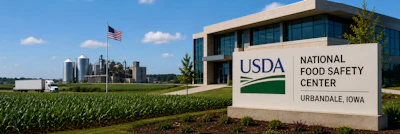
At the center of the USDA’s restructuring is the National Food Safety Center in Urbandale, Iowa. The facility will bring together FSIS administrative, technical, and support operations while receiving personnel and responsibilities from the Washington, D.C., headquarters.
These functions include resource management, training, food safety education, financial operations, information technology, administrative services, and technical support. USDA has said the Urbandale center will be FSIS’ largest U.S. office, with approximately 200 employees.
Iowa’s existing role within USDA food safety programs provides a logical location for this expansion.
Strengthening scientific capabilities in Georgia
In parallel with the Iowa realignment, USDA is strengthening its scientific and laboratory capabilities in Athens, Ga. The Science Center will build on the existing Eastern Field Services Laboratory and expand FSIS capabilities in microbiology, chemistry, epidemiology, and broader analytical work supporting regulatory programs.
The Athens center is intended to enhance coordination between laboratory science and compliance, with an emphasis on research collaboration and technical assistance for inspection activities. This development also reflects the effort to extend FSIS scientific capacity outside the Washington, D.C., headquarters.
Broader USDA realignment
Beyond FSIS-specific changes, USDA is relocating approximately 2,600 staff positions from the Washington, D.C., area to five regional hubs as part of its broader workforce realignment initiative. The designated USDA hubs are:
- Raleigh, N.C.
- Kansas City, Mo.
- Indianapolis, Ind.
- Fort Collins, Col.
- Salt Lake City, Utah
These moves primarily involve administrative and program roles, including functions such as human resources, information technology, and financial management. Although administrative, scientific, and technical systems are not part of daily inspections, they underpin the FSIS regulatory framework.
Training programs help inspection personnel apply regulatory standards consistently across facilities. Information technology platforms support electronic inspection records, laboratory data management, and agencywide communication. Financial and procurement processes sustain laboratories, contracting, and workforce management. Laboratory testing and scientific analysis provide the evidentiary foundation for enforcement decisions, while technical assistance helps inspectors with regulatory interpretation and operational guidance.
These behind-the-scenes support functions are essential to how inspection standards are implemented, documented, and evaluated nationwide. Their realignment into designated hubs is intended to improve alignment and consistency across FSIS programs, reducing reliance on Washington-based coordination while maintaining centralized service delivery at a regional level.
Washington headquarters presence and role
Following the USDA-wide relocation of approximately 2,600 staff positions from Washington, D.C., to regional hubs, the department expects to retain no more than approximately 2,000 employees in the National Capital Region. FSIS would maintain a smaller Washington presence of approximately 100 positions focused on policy development, congressional liaison duties, interagency coordination, strategic program oversight, and guidance on agencywide initiatives.
While those functions remain centered in the capital, operational and technical program responsibilities are increasingly being positioned near the industry sectors they support. This is consistent with the shift in how FSIS aligns resources with field execution while maintaining centralized authority for national policy and regulatory direction.
Existing FSIS footprint
FSIS remains a field-based public health agency. According to USDA, frontline inspection personnel represent 85% of FSIS employees and operate across more than 6,800 regulated establishments. The agency’s Office of Field Operations is organized into nine district offices nationwide, and FSIS also operates three regional laboratories that support microbiological, chemical, and pathology testing.
The field-based inspection model remains the core of FSIS regulatory oversight and is unchanged under the current restructuring, with most of the workforce composed of frontline inspectors responsible for day-to-day verification of food safety compliance.
The Midwest has long been central to this network due to its concentration of livestock and food manufacturing. Iowa, in particular, already hosts USDA and FSIS-related operations tied to pork, beef, and grain processing sectors. The state’s expanded role through the National Food Safety Center in Urbandale builds on this footprint rather than replacing existing capabilities.
FSIS by the numbers
This consolidated summary illustrates the scale of the FSIS workforce and the broader USDA infrastructure realignment, based on USDA announcements, budget documents, and publicly available reporting:
- National Food Safety Center (Urbandale) expected staffing: approximately 200 employees
- FSIS positions relocating from Washington, D.C.: approximately 200
- FSIS positions to remain in Washington, D.C.: approximately 100
- USDA employees relocating from the Washington, D.C., area: approximately 2,600
- USDA regional hubs receiving staff: 5
- FSIS employees in frontline inspection roles: 85%
- Federally regulated establishments supported by FSIS inspection personnel: more than 6,800
These figures underscore that the vast majority of FSIS regulatory activities remain field-based, even as administrative capacity is redistributed.
Budget considerations
The USDA FY 2027 budget request includes $55 million for department-wide relocation costs and facility transitions tied to its overall workforce and facility realignment efforts. According to USDA budget materials, these funds are intended to manage staff relocations, prepare buildings for closure, and support the transition of staff into regional hubs as part of ongoing reorganization initiatives.
Regulatory oversight continuity
From a regulatory standpoint, FSIS inspection requirements at federally regulated facilities remain intact. Inspectors continue to enforce federal statutes and implement regulations that govern meat, poultry, Siluriformes, and egg product safety and labeling, including:
- Federal Meat Inspection Act (FMIA) — defines inspection requirements, sanitation standards, and adulteration provisions for meat and Siluriformes products
- Poultry Products Inspection Act (PPIA) — provides inspection authority and safety standards for poultry products, including continuous inspection requirements
- Egg Products Inspection Act (EPIA) — governs inspection and processing standards for egg products to prevent adulteration and ensure safety
- Title 9 of the Code of Federal Regulations (9 CFR) — contains FSIS regulations that implement statutory requirements across inspection, sanitation, labeling, and enforcement
It is important to emphasize that the primary change involves how administrative and technical frameworks are organized rather than how regulations are applied. AI generated by Christine Tervo
What it means for processors
For processors, the reorganization is expected to maintain continuity in compliance expectations, inspection procedures, and verification activities. Any near-term impacts are more likely to emerge in administrative processes rather than frontline inspections, including changes to administrative points of contact, response timelines, inspection scheduling, and how information is routed between field offices, laboratories, and centralized program units. These changes may also affect communication pathways and the sequencing of technical support requests as functions transition into new hub structures.
Over time, the restructuring may create opportunities for more coordinated interactions between inspection personnel, laboratories, scientific experts, and industry stakeholders. A more centralized and data-driven approach could support improved information sharing, more consistent workflows, and faster access to technical resources. Expanded collaboration with research institutions and universities may also strengthen the development and application of science-based tools that support food safety decision-making.
These changes may translate into more streamlined communication channels, improved alignment between field and technical support functions, and enhanced access to data and expertise during routine operations and emerging food safety events. The reorganization also places greater emphasis on workforce development and regional capabilities, which could help maintain inspection capacity and strengthen the agency’s ability to respond to future challenges while continuing to support safe food production nationwide.
Conclusion
The USDA’s food safety reorganization, including relocating thousands of USDA positions into regional hubs, represents a structural shift in the framework around FSIS inspections rather than a change in regulatory requirements.
By establishing a National Food Safety Center in Iowa, strengthening scientific capabilities in Georgia, maintaining a focused headquarters presence in Washington for policy development and high-level coordination, and adding an FSIS presence in Fort Collins for international activities, the agency is positioning key support functions closer to the livestock and agricultural sectors it serves while maintaining consistent oversight.
Even as inspection activities at federally regulated establishments remain unchanged, the initiative is intended to bring administrative, laboratory, and technical resources into greater alignment. With implementation, processors can expect continuity in regulatory requirements while USDA advances a more geographically distributed model designed to support its nationwide food safety mission.