Create a free ProFood World account to continue reading
Beef Recall Puts Import Oversight in Focus
An Argentine beef recall puts new attention on FSIS import reinspection as U.S. beef imports rise, cattle inventories remain low, and ranchers push for stronger origin transparency.
Are rising beef imports placing new demands on federal inspections while creating challenges for U.S. ranchers?
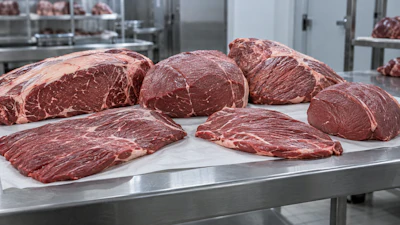
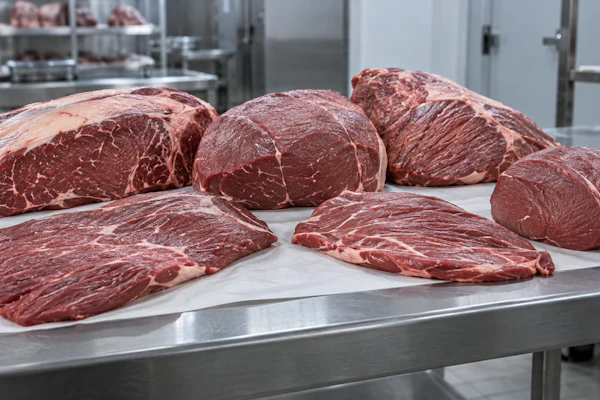
AI-generated image
A recall of nearly 30,000 pounds of Argentine beef that entered U.S. commerce without required reinspection highlights gaps in import oversight, while rising beef imports amid record-low domestic cattle inventories raise concerns about herd rebuilding and market competition for American ranchers.
The USDA recalled approximately 29,628 lbs of raw boneless beef from Argentina after it bypassed required import reinspection, classified as a Class I health hazard despite no confirmed illnesses.
U.S. cattle inventory stands at 86.2 million head, the lowest level in roughly 75 years, while beef imports surged 24% year-over-year to 542 million lbs in June 2026.
The number of U.S. cattle operations declined by more than 150,000 farms between 2017 and 2022, with production costs reaching a record $1,762 per head in 2025.
New USDA labeling standards effective January 1, 2026 now require beef labeled "Product of USA" to come from animals born, raised, slaughtered, and processed domestically.
Federal support includes the $500 million SPUR program for small and midsize beef processing facilities to strengthen domestic production capacity.
On Aug. 7, the U.S. Department of Agriculture’s Food Safety and Inspection Service (USDA FSIS) announced that Corte Argentino USA LLC is recalling approximately 29,628 lbs of raw boneless beef imported from Argentina after the products entered U.S. commerce without the benefit of import reinspection. The products were produced between May 15 and May 20, 2026, by Frigorífico Gorina SAIC and distributed to retailers and distributors in Florida and Texas. The FSIS classifies the recall as Class I, its highest health-hazard category, although the agency reports no confirmed illnesses or injuries related to the products.
Imported meat can come from countries whose inspection systems the FSIS has determined to be equivalent to the U.S. system, but that does not remove the requirement for U.S. reinspection. The FSIS says imported meat, poultry, and egg products must be reinspected at an approved import inspection facility before entering commerce. That process includes document review and may include product examination or laboratory testing, depending on the shipment and inspection direction.
The recall comes as cattle groups and farm organizations raise broader concerns about expanding beef imports, including the effect on domestic cattle markets, the ability of ranchers to rebuild herds, and the transparency of origin claims used on beef products.
Domestic cattle numbers remain low
The U.S. entered 2026 with 86.2 million cattle and calves, including 27.6 million beef cows, according to the USDA’s National Agricultural Statistics Service. The total inventory is at its lowest level in roughly 75 years following years of drought, elevated production costs, herd liquidation, and related pressures.
The number of cattle operations has also declined. The 2022 Census of Agriculture counted 732,123 farms with cattle and calves on hand, down from 882,692 in 2017. That is a loss of more than 150,000 operations in five years.
Beef imports continue to rise
At the same time, U.S. beef imports are increasing. The USDA’s Economic Research Service reports that U.S. beef imports in June 2026 totaled 542 million lbs, up 24% from the prior year. The USDA forecasts total 2026 beef imports at 6.132 billion lbs, a 14% year-over-year increase.
That volume follows a record-setting 2025 and reflects tight domestic supplies. The USDA also forecasts 2026 beef exports at 2.333 billion lbs, meaning imports are expected to substantially exceed exports this year.
For ranchers, the timing matters. Rebuilding the cattle herd requires producers to retain heifers for breeding, absorb higher costs, and wait years before additional cattle reach the market. Industry groups argue that adding lower-priced imported beef during that period could weaken cattle prices and discourage herd expansion.
In an Aug. 21 statement, National Cattlemen’s Beef Association Chief Executive Officer Colin Woodall said, “flooding the market with government-subsidized, below-market beef is not the way to rebuild the American cattle herd.”
The American Farm Bureau Federation raised similar concerns in an Aug. 26 analysis, noting that cow-calf production costs reached a record $1,762 per head in 2025, according to USDA Economic Research Service data. The organization said increased imports could discourage long-term investment in herd rebuilding.
The U.S. Cattlemen’s Association has also criticized efforts to rely on imports as a short-term response to beef prices. In a May 13 statement, USCA President Justin Tupper said, “We can’t import our way out of this problem.”
Argentina’s role expands
Argentina’s role in U.S. beef supplies is growing as imports rise. The recalled products involved beef from an Argentine establishment, and the incident highlights the continued importance of FSIS import reinspection even when products originate from countries with inspection systems considered equivalent by the U.S.
The issue also intersects with recent trade actions. In 2026, the U.S. temporarily expanded access for imported lean beef trimmings at lower tariff rates to increase supply for ground beef production and ease consumer price pressure. A separate temporary action allowed an additional 300,000 metric tons of lean beef trimmings to enter at the lower in-quota tariff rate from Sept. 1 through Nov. 30.
Those actions are intended to address tight domestic supplies, but cattle groups argue that short-term import measures may work against long-term herd rebuilding.
Origin transparency gains attention
Increased imports have also renewed attention on how beef origin is communicated to consumers. Ranchers have sued JBS Foods USA, Tyson Foods, Cargill Meat Solutions, and National Beef Packing, alleging the companies marketed beef from foreign-raised cattle as “Product of USA.”
The dispute reflects broader concerns about the USDA’s former labeling policy, which allowed meat from foreign-born and foreign-raised animals, including those slaughtered abroad, to carry a “Product of USA” claim if it was subsequently processed domestically. The USDA later determined that the policy did not reflect the commonly understood meaning of the claim and revised the standard to align with the animal’s origin. The USDA’s revised voluntary “Product of USA” and “Made in the USA” labeling standard took effect Jan. 1, 2026. Under the rule, single-ingredient FSIS-regulated products can use those claims only if they come from animals born, raised, slaughtered, and processed in the U.S.
The issue gained further attention on Sept. 4, when the White House issued an executive order directing federal agencies to review policies affecting ranchers. The order says the Secretary of Agriculture, in consultation with the U.S. Trade Representative and the Assistant to the President for Economic Policy, may issue or amend regulations, as allowed by law, to require mandatory country-of-origin labeling for beef products or develop legislative recommendations. The executive order was intended to support the financial viability and market access of U.S. ranchers while giving domestic production clearer recognition among consumers.
For beef producers, the labeling debate centers on consumer transparency, fair competition, and whether domestic cattle producers receive clear market recognition. It is separate from the food safety issue raised by the Corte Argentino recall, which involved product entering commerce without required U.S. import reinspection rather than confirmed contamination.
Federal support targets domestic capacity
Federal efforts to support domestic beef production have also expanded. The USDA’s Plan to Fortify the American Beef Industry identifies several areas for strengthening domestic production, including improved access to grazing land and capital, enhanced risk-management tools, added processing capacity, and broader market access.
In 2026, the USDA also announced actions focused on smaller processors, including the Small Processors Action Plan and the Strengthening Processing for U.S. Ranchers Program, which provides up to $500 million for eligible small and midsize beef processing facilities. The White House also cited the SPUR program and additional support for small and very small processors in its September executive actions on livestock markets.
The challenge ahead
The Argentine beef recall underscores the role of U.S. import oversight even when no contamination or illnesses are reported. FSIS import reinspection provides an additional checkpoint for documentation, product condition, labeling, and compliance before imported meat enters commerce.
As beef imports rise amid reduced domestic production and low cattle inventories, substantial volumes are likely to continue moving through the FSIS inspection system. For regulators, the challenge is maintaining effective oversight as import volumes grow. For cattle producers, the challenge is rebuilding domestic supply while competing in a market shaped by imported product, price pressure, and renewed debate over origin labeling.
The issue is not simply whether beef is domestic or imported. It is whether the U.S. can maintain strong food safety controls, support domestic herd rebuilding, and give consumers clear information about where their beef comes from.
See What’s Possible in Food Manufacturing at PACK EXPO International
Explore new machinery & materials from 2,600 exhibitors. Gain insights from 150+ free educational sessions. Find solutions to enhance quality & protect your brand at North America’s largest packaging & processing event for food, beverage & beyond.