Amazon uses ISTA testing standards to ensure packaging performs under demanding AMXL network conditions, where products over 50 pounds must survive handling by forklifts and mixed freight environments. The company is evolving from general standards to category-specific certification requirements, particularly for high-impact items like televisions.
- Amazon's AMXL network handles products over 50 pounds in demanding conditions including forklifts, clamps, and mixed freight environments
- Ships in Product Packaging (SIPP) is the current standard, requiring products to ship in their primary packaging without additional overboxes
- Category-specific testing protocols already exist for televisions and are being evaluated for other high-impact XL categories
- Amazon is expanding testing scope to include upstream inbound transportation from manufacturing sites, not just fulfillment through delivery
- Effective packaging reduces returns and replacement logistics costs while improving customer satisfaction and repeat purchases
 Paul Larson, Sr. Program Manager, AMXL Packaging Strategy, Amazon
“ISTA testing is our ability to make sure that they do not have this experience,” Larson said, referring to damaged deliveries that erode customer trust.
Packaging built for the network
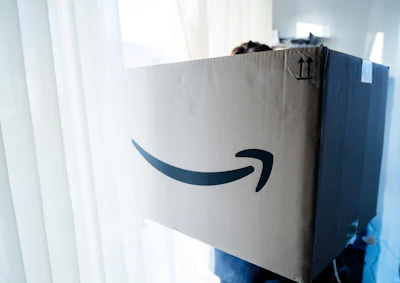
For brands (Amazon calls them suppliers) selling through Amazon, especially in the heavy and bulky category, packaging is expected to align with how Amazon operates. The AMXL network handles products over 50 lb., from appliances to fitness equipment, often moving through facilities where forklifts, clamps, and mixed freight environments are the norm.
“We are a network that was designed to ship as-is… we rely on the vendors to provide us the right packaging to make it through our network,” Larson said.
That reliance is amplified by the variability of the product mix. In a single fulfillment environment, items as different as treadmills, televisions, and large furniture pieces may be staged side by side, each requiring packaging that can withstand handling, transport, and longer delivery distances. With fewer AMXL fulfillment centers than in Amazon’s small-parcel network, some shipments travel significantly farther before reaching the customer. Amazon’s AMXL network handles large and bulky products across varied categories, requiring packaging that can withstand mixed freight environments, specialized handling, and extended transit distances.Amazon
Testing as a foundation, not a differentiator
Amazon’s approach to testing has evolved over more than 15 years, beginning with the adoption of ISTA 3A protocols in 2009 to support its early Frustration-Free Packaging initiative. Over time, that expanded into co-development of ISTA 6 protocols, category-specific tests such as those for televisions, and updates to reflect changing materials and handling conditions.
The company has opted to continue working within the ISTA framework rather than developing a fully proprietary standard.
“We could do that, but that’s not what we wanted to do… we need to leverage what we speak globally as the global level standard,” Larson said.
That decision reflects the scale and diversity of Amazon’s supplier base. A shared standard reduces friction across regions and vendors, particularly as packaging expectations extend globally. Amazon’s packaging testing approach has evolved from no formal standard pre-2009 to ISTA-based protocols, category-specific tests, and the shift toward Ships in Product Packaging (SIPP).Amazon
From FFP to SIPP
Amazon’s packaging programs have also evolved in how they are defined. Frustration-Free Packaging (FFP) gave way to Ships in Own Container (SIOC), and more recently to Ships in Product Packaging (SIPP).
According to Larson, the shift was driven in part by the need for clearer, more globally consistent terminology. SIPP more precisely describes the expectation that the product’s primary packaging will serve as its shipping container, without the need for an additional overbox.
That model is already central to AMXL operations, where overboxing is often impractical due to size and weight. But the next step may be formalizing certification requirements.
 Amazon’s packaging programs have progressed from Frustration-Free Packaging (FFP) to Ships in Own Container (SIOC) and now Ships in Product Packaging (SIPP), reflecting a move toward clearer, globally consistent definitions.Amazon
Category-specific expectations
As Amazon expands its heavy and bulky assortment, a single testing approach is proving insufficient for all product types. The company has already introduced category-specific protocols for televisions and is evaluating similar approaches for other segments.
“I really feel that there’s a need… they’re more unique than the standard brown box,” Larson said.
Amazon has already taken that step in televisions (the so-called TV standard), where category-specific testing is required before products enter the network. Larson indicated that similar requirements are being evaluated for other high-impact XL categories. While large items already ship in their own packaging, formal certification—potentially aligned with Ships in Product Packaging (SIPP) programs used elsewhere in Amazon’s network—could follow.
In fact, during a Q&A session, Larson confirmed that certification requirements for certain XL categories, similar to those already in place in other parts of its network, are in AMXL's scope at the moment.
“We are looking into that and I’m pretty confident that some sort of requirement will come in time,” he said.
That shift points toward more tailored packaging validation, where performance criteria reflect the realities of specific product categories rather than a generalized distribution model. For oversized products, Amazon’s network relies on packaging designed to ship without an outer box, placing greater demands on durability, handling, and transit performance.Adobe Stock 1965960983
A broader view of the supply chain
Another area under evaluation is the portion of the supply chain that occurs before products reach Amazon’s facilities. Current testing largely validates performance from Amazon receipt through final delivery, leaving upstream transit less formally addressed.
“The test actually starts from our receipt of the product… we’re missing kind of a big chunk,” Larson said, referring to inbound transportation from manufacturing sites.
Future testing approaches may expand to account for that segment, potentially introducing new expectations for suppliers around packaging durability prior to fulfillment.
Packaging’s role in operational performance
Within Amazon’s broader operating model, packaging performance feeds directly into customer experience and operational efficiency. Larson described how effective packaging contributes to a reinforcing cycle: fewer damages lead to fewer returns, which reduces cost and supports consistent delivery outcomes.
“When we get it right… better packaging makes happier customers. Happier customers… buy more products,” he said.
In that context, packaging is closely tied to metrics such as returns, replacement logistics, and delivery reliability. These are factors that affect both Amazon and its suppliers. Amazon’s flywheel model connects customer experience, seller growth, and selection. Packaging performance—validated through testing—supports consistent delivery outcomes that feed into this cycle.Amazon
Ongoing standard development
Amazon continues to work with ISTA on updates to existing protocols and development of new ones, particularly as materials and handling conditions evolve. Recent changes, such as updates to overbox testing to reflect a shift from air pillows to paper dunnage, illustrate how testing standards are adjusted in response to operational changes.
The company is also investing in supplier-facing initiatives, including the Amazon Packaging Support and Supplier (APASS) network, aimed at sharing best practices and aligning vendors with current expectations.
For suppliers, the direction is consistent: packaging must be validated against real-world conditions, align with Amazon’s network requirements, and increasingly, meet defined certification criteria in key categories.