This week's major food and beverage industry developments include Mars announcing a $1.4 billion investment in manufacturing modernization, Tyson Foods restoring a second shift at its Amarillo beef facility by summer 2027, growing concerns about banana crop vulnerability due to disease, and innovative packaging designs including interlocking olive oil bottles and sustainable Castile soap packaging.
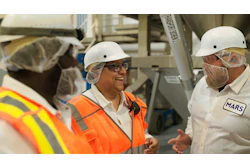
- Mars Investment: Mars announced a $1.4 billion investment in manufacturing modernization, partly driven by growth in the pet food industry and expansion into other manufacturing sectors.
- Tyson Foods Expansion: Tyson plans to restore a second shift at its Amarillo, Texas beef facility by summer 2027, bringing back roughly 1,700 jobs eliminated earlier in 2026, supported by a new partnership with Allied Beef Company.
- Banana Crop Risk: The global banana supply relies on a single species vulnerable to disease and pests, mirroring a historical crisis in the late 1800s that eliminated a previously popular banana variety.
- Cattle Supply Crisis: The U.S. faces the lowest cattle supply in 75 years, with the New World screwworm halting Mexican cattle imports in 2025 and driving up beef processing costs.
- Packaging Innovation: New design trends include interlocking glass bottles for premium condiments and sustainable Castile soap packaging with QR codes for multiple applications, demonstrating how design drives product differentiation and accessibility.
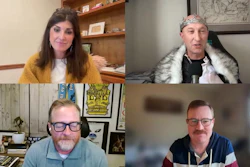
Matt Reynolds: Hi, I'm Matt Reynolds. I'm the editor of Packaging World magazine, back with another edition of the End of the Line podcast, where my colleagues and I get together at the end of a week to review what's come across our desks—interesting topics, interesting news—just to take each other's temperatures and see where we're at. I'm joined, as always, by my partners in crime: Derrick Teal with ProFood World magazine; Anne Marie Mohan, who's with me on Packaging World, amongst other things; and Casey Flanagan, the man about town, who wears a lot of different hats with ProFood World, Packaging World, and various other operations and editorial throughout the company.
Welcome, everybody. First off, I wanted to kick things off with some bigger-picture, industry-spanning news. It sounds like there's a lot going on in food and beverage right now. Either Casey or Derrick, maybe you guys can kick things off.
Derrick Teal: I'll kick us off. Taking the temperature—hopefully we use oral thermometers. The big thing that happened this week was Mars announced a $1.4 billion, with a B, investment in some of their manufacturing. It's going to be modernizing some of their facilities. It's a lot. It's not just with their plants; there's also talk about some veterinary services. The main thing we've been talking about for a while is how much the pet food industry has been growing for Nestlé, Mars, and others involved. While it doesn't specifically say this is the case, I think this reinvestment is a direct response to that growth. Not just for their pet food, but they're going to use that money from their pet food to invest in other manufacturing. That's a lot, especially when we've been talking so much—I'm the doom-and-gloom guy: “They're shuttering plants. This plant closed, this plant closed, this was lost.”
And here comes Mars. I don't know if there's any correlation with coming out after the midterms with this announcement, because this isn't something that just happens overnight. But I think it's interesting that you're making this large investment in manufacturing. It doesn't say specifically in the States, but I believe it is. Still, I thought that was pretty neat. Casey, you got something that came across your desk that was just as cool.
Casey Flanagan: Exactly. I have some more good news here. Maybe we should take John Krasinski's job with that Some Good News series he did.
Matt Reynolds: Is that even going anymore? I'm not sure. It was a pandemic-era thing. I doubt he's still keeping it up.
Derrick Teal: I know he sold it off at some point.
Matt Reynolds: He sold it. I mean, good news.
Casey Flanagan: Yeah, it's funny, right? More good news. I have another big investment and a big shift happening with Tyson Foods. They've announced plans to restore a second shift at their Amarillo, Texas, beef facility by summer 2027. This is interesting because this is the same shift that Tyson eliminated earlier in 2026, so within the year. At the time, the news about that was saying it had affected roughly 1,700 jobs. That cut also came alongside the closure of a Nebraska Tyson facility—the entire facility closing—and that was over 3,200 jobs at that place. No word on that place in this new update, so just focusing on Amarillo. The news about Amarillo is coming alongside a new rancher partnership. It's kind of the catalyst for this. Tyson plans to partner with Allied Beef Company to strengthen its connection with American ranchers, hoping to improve domestic cattle supply and support Tyson's long-term beef production. A Reuters report was sharing that this is happening amid the lowest level of cattle supply in 75 years, and that's driving up costs for beef processing. A complication within that, though, is the New World screwworm. Concerns about its spread halted Mexican cattle imports in 2025, but the USDA is now gradually reopening those ports for cattle with enhanced safeguards to protect against that. An analyst with Stephens who talked with Reuters mentioned that might be a reason for this partnership. It's cool to see that this shift is coming back. It's great news for that facility. I find it really interesting that within a year, they're doing these major swings of cutting 1,700 jobs and then bringing back a bunch of new jobs by bringing this shift back. We'll see where this goes.
Matt Reynolds: It's definitely overall good news for the U.S. cattle industry that's been very much maligned in the past couple of years. I'm more worried about the screwworm. First the murder hornets and now screwworms. It's not like your grandpa's Old World screwworm. This is a New World screwworm on our doorsteps.
Derrick Teal: There have been problems with that in Central and South America. Was it two years ago it started coming back or something like that? Then it progressively was heading northward, and that's why the U.S. restricted the transportation of cattle from Mexico to the U.S.
Matt Reynolds: We've seen, just with what happened with the bird flu and chickens in general over the past few years, what these kinds of animal pandemics can do to our food supply, supply chain, prices, and everything. It throws things way out of whack. I know you guys have been covering that frequently in the food world.
Derrick Teal: What's funny is, I don't know if many people realize this, but the bananas that we currently get are just one species of banana that basically was bred, and it's the only one really that's used now. There's a disease or an insect, I believe, that impacts the bananas. Without a number of different varieties of bananas, this could be—it's doom and gloom, here we go—potentially devastating to our banana crop, which actually already happened years ago in the early 1900s, I believe, or late 1800s, maybe. There was a different type of banana that was more popular, that didn't look quite as good but was apparently more flavorful, that went the way of the dodo—or went the way of that banana—because of that disease or insect.
Casey Flanagan: I've heard that's where banana candy flavor comes from. The reason banana candy doesn't taste anything like a banana is because it tastes like the bananas used to taste.
Matt Reynolds: That's been a longstanding mystery of mine.
Casey Flanagan: A little fact for you there.
Matt Reynolds: Good. All right. In the interest of time, let's shift over to the packaging side of the equation. I know many of our audience members here are on a podcast, so nothing like the audio podcast medium to present some package design, shelf-impact innovation. Anne Marie, you've always had your finger on the pulse of new and interesting shelf design, shelf impact, package design, structural design, that sort of thing. You've had a few interesting ones come across your desk lately, I've seen.
Anne Marie Mohan: I have, yes. Let me start by saying I have been blissfully unaware of the screwworm and the banana crisis, so I think I'll just stay in my lane with packaging design and not listen.
Derrick Teal: Never listen to me or Casey. You'll be much happier.
Anne Marie Mohan: Since I started reporting on packaging, I've just loved packaging design. I love the structural design and the graphic design in the sense of using design as a marketing tool—not so much structure as a new material, which is also fascinating, but I just love the design side. We get so many releases coming across our desks on new designs, and there are so many that are just beautiful. We can't cover them all, but every once in a while, one will come across that's just really different. I love how packaging can really stir in you that emotional connection to a product. The first one, whether you're listening to the podcast or watching the video, you're not going to see this package because I don't have it. I'm waiting for it to come to me from the U.K. I talked to a woman named Nora Curry. She's in the U.K., originally from France, and she developed a new olive oil, salad dressing, and balsamic vinegar line, and the packaging to go with it. It's really interesting. It's pretty, and it looks like a piece of modern art.
Each bottle has a section that protrudes, and then the other bottle has a section that's inverted so that they fit together. They interlock. You can put them on your counter or your table. They're pretty. They're made of glass, and they have a very silky finish, as she told me—I haven't had my hands on them—like a matte print varnish. They're something you want to keep on your counter. She said people are always playing with them when they get them in their hands because they're just fun. Beyond that, her goal was really to create a salad dressing that she would enjoy. She said she had a salad dressing, hated it, went looking everywhere, and couldn't find something she liked.
This was her own journey to find a product that she would enjoy. The thing that I think is very interesting about this project is that it shows you how much more innovative a smaller company can be, since they don't have all these filling machines already installed. They don't have all these processes, so they can really experiment. She did have to invest quite a bit in the molds and a minimum order quantity of these bottles, but she's already in Harrods in less than a year, so that's pretty cool. They sound like they're really good quality. She also just came out with a chili pepper that fits right in there because they interlock and she uses the same mold, so she can keep expanding that line. Enough about olive oil. The other one I've got is one that I have reported on in the past. I think this is the third time I've talked about Cleancult. If you've never seen their initial commercial or promo, I did a story and included the video. It's so fun. It's all a take on cults—the cult of clean. They just came out with Castile soap. It's kind of blurry, but it's a really fun '70s retro vibe, I guess. This was really popular in the '70s, and then it went out of vogue, but it's all natural ingredients. You can use it for 20 different applications: your hair, your laundry, washing your dog. Kind of like one of those long-ago Saturday Night skits where you can use it to clean the sink and put it on your cereal. I spoke with Brian Luopberger.
The company is interesting because they've always been about sustainability as well. Their initial packaging was this gable-top carton along with reusable bottles. They didn't do that with this one because they would need 20 different bottles, since every application requires a different dilution. On here, they do have a QR code and information on how much of this to use for every application. I just love it. It's so fun, such a '70s vibe.
Matt Reynolds: Anne Marie gets all the cool stuff delivered to her doorstep, I swear. That one is cool, and you've been following Cleancult for some time. It reminds me of—not quite '70s, I would say '80s—some of the “How a Bill Becomes a Law” type of commercials. That's the same vibe I'm getting from it.
Derrick Teal: That Log from Ren & Stimpy: “Rolls down stairs, rolls over in pairs, rolls over your neighbor's dog.” It's great for a snack, it fits on your back. It's Log, Log, Log.
Matt Reynolds: It does everything.
Derrick Teal: The only tool you need is a log.
Anne Marie Mohan: Right. The only soap you'll ever need.
Casey Flanagan: With the olive oil, too, having that upscale glass packaging always catches my eye. It's always something I enjoy. A personal anecdote: My wife and I were just at the grocery store last week and picked up a bottle of wine that's shaped like a cat. It's this nice glass bottle. We don't even care about the wine. We're looking for the cat-shaped vase that we're going to have at the end of it. If you can find something that gets people interested in that way, I feel like that's a good way to differentiate yourself. Do you know if they're going to be individually on store shelves, or if they have to be next to each other to get the full effect?
Anne Marie Mohan: They are sold separately, for sure, and then you can get a set. If they're sold separately, they do have that puzzle piece on the side, but that's not a big deal. She said people are also keeping them. Another thing I didn't mention, though, is with the olive oil, one thing that really disappoints her, or she hates seeing in restaurants, is the glass bottles with the sun shining on the olive oil, which totally degrades it. That was another one of her strategies: to make it so that the sun wouldn't affect the olive oil. The bottle is fully covered, fully printed.
Matt Reynolds: Interesting. I feel like there's a lot of runway for other condiments, not necessarily just olive oil, because it's almost like “collect the whole family.” If they nest together, I can imagine all sorts of post-intended applications, because they're nice enough to sit out in, say, a bathroom setting, if you wanted to use it for hand soap or something like that. You could have a whole collection where you could change the colors and have them interlock or nest together with different products, shampoos and stuff. Although I would probably advise against glass in the shower situation. Other than that, the reuse element—a lot of runway for future products, I think.
Anne Marie Mohan: Another unintended consequence, she said, was that one of her friends was looking at it and said this would be good for someone with poor eyesight because they could identify the product by the shape. It's interesting.
Matt Reynolds: That brings up a natural segue to accessibility, something we've been following. I know Anne Marie and I have heard from the likes of Target and the Arthritis Foundation, who are working on accessible packaging. The wider idea is that people have different sets of abilities to open things as simple as OTC pain relievers and so on. Arthritis is one issue, but there are many others. Making sure that packaging is designed accessibly, and not just some subset of packaging targeting one small audience—and it's really not a small audience—but actually making all packaging accessible to all is the bigger picture. One small skirmish on that front is happening now. We just heard from the telecom industry. TIA is the acronym, the Telecom Industry Association, along with the Mobile and Wireless Forum. They asked the FCC—the Federal Communications Commission; I'm in alphabet soup here, apologies for all the acronyms—just this week to let their device makers, the usual suspects, Apple, Google, and everything in between, replace the printed regulatory text that goes inside cartons. We all go to PACK EXPO and see these inserter machines that put literature or leaflets into packages for all sorts of products. In this case, we see them in telecom products, phones, and devices like that. But to replace those with a single QR code or a 2D code linked to an updatable page, so it's not a static page. It has to update with whatever is new. Right now, it's optional. It's not to replace the paper inserts, but one can envision that could be a future state. Apparently, the FCC looked at QR codes back in 2017 and decided consumers weren't quite ready for it back then. Jeez, 2017 was almost 10 years ago at this point. At that point, Pew says only 42% of adults 65 and older had smartphones that could easily scan and access a QR code.
That number is now 91% today, over 65, my parents included. Also, there was a little event somewhere between 2017 and today that really got people used to using QR codes at restaurants and so on, and that was the pandemic. I'm thinking of this as a narrow example because the FCC and communications have their own set of laws and unique circumstances. But I think there's a really big parallel with OTC pharma, things like the bottle of pain reliever we mentioned before. It's usually sold in a carton with a folded leaflet inside it.
Removing that leaflet is going to mean less paper, fewer insertion steps on the packaging line. Maybe you can remove a step on the packaging line for paper insertion. You're not going to have to pay for all the printing and so on. Regulators abroad and some big companies like Bayer have been testing this for years. Liz isn't here today, but Healthcare Packaging has been covering this since at least 2022. It's interesting and something all CPGs should watch. I think there's a unique circumstance because this is mobile phones and smartphones. There's an implication that the device itself is going to be the access. A QR code, of course that's going to work if it's in a smartphone box or carton, because you're holding the smartphone. But that's not necessarily the case across the board, and sometimes a smartphone doesn't necessarily imply access to Wi-Fi. What does it mean for non-mobile-phone or device products? It's a long-winded way to say that accessibility is a fraught issue, and something other industries and parallel industries like mobile phones and electronic devices are facing right now.
Anne Marie Mohan: That's a really interesting statistic you shared about the rise in the number of people over 65 with smartphones over the last 10 years. I'm thinking about my mother, though. She's 92. She has kind of a smartphone, but she has no idea how to use it beyond making a phone call. This would not work for her, although I must say I don't think she would be able to read a little pamphlet either. We take it so for granted: Read the QR code and get the information. But there are a lot of people out there, I would think especially the older generation, who aren't using it. I think about the example of the “Digital for You” or “Digital U” coupons or something at our local Jewel, where you have to go on their app to find these coupons. They'll have them advertised. I'm on the Nextdoor app for people in the neighborhood to share information, and so many people complain about that because they're like, “How do I even access this? I can't get it. What's the point?” There are a lot of people who don't feel comfortable using technology like that. I could see a real problem.
Derrick Teal: I was just wondering what the regulatory angle would be, because when you're talking about food packaging, that has to be on the package right there. I don't think putting it on a QR code and scanning it that way—even though technically you can get the information—I think that's irrelevant because it has to be on that package by law. I'm wondering how they would get around that or what the implications would be with medicine.
Casey Flanagan: That's a great point. If so much of it, just by law, has to be there already, how much more are you accomplishing? I do think it's interesting. You said it was 91% of people over 65 in the most recent—
Matt Reynolds: As of 2025, yes.
Casey Flanagan: If you think about that, that's 9% of people over 65 getting left in the dust with this. It's still a big subset of that demographic that would not be able to, or would have a tough time, accessing that. I do think it's a good point, Anne Marie, that a lot of people just don't want to deal with the apps and stuff like that. There's one simple way you can get information to the consumer, and it's on a piece of paper going with your product. Maybe for the sake of simplicity, that's useful. But I also say that as someone who is totally willing to scan a QR code and use it that way. There's nuance to this, I guess.
Matt Reynolds: There is. It always feels like an arc. We're keeping an eye on, for instance, Sunrise 2027, which will be where a point-of-sale system in every grocery store is ideally going to be able to read a QR code at speed by next year. I think more than 90% already are in the U.S. It's just some of the small bodegas and mom-and-pops that might not have the latest point-of-sale systems that aren't there. You have this long tail where you're going to continue to use the regular, traditional GTIN or the 1D barcode, just as in this case, I would assume you're going to continue to use the leaflet alongside and augmented by the QR code. But it gets to a point where that's time-bracketed. There's going to be a time when the leaflet is no longer necessary at all because we get to a certain point. Right now, we're in that both-and phase. I should also add that this specific case that the TIA and the Mobile and Wireless Forum are lobbying for actually does qualify the devices.
A smartphone is one tier because this actually has the ability to read the QR code that would be telling the consumer more. The access is implied there. But for, let's say, earbuds or even a wireless router, something that doesn't have any kind of HMI or interactive element, that is not imbuing the consumer with any further information. They still have to have an outside piece of equipment in order to access that. I guess what I'm trying to say is there's going to be some long, undetermined period of time where both are required. But you can see a distant horizon where the literature is no longer there and everything becomes digital. Every single industry—from food and beverage, where you sit, Derrick and Casey, to OTC, where Liz would be sitting, to CPG—is going to have its own pathway there and its own amount of time. We're seeing it in CPG right now with Sunrise and the continued existence of the 1D barcode and the GTIN during the ascent of the 2D barcode. They'll both coexist for a little while until they won't.
Derrick Teal: I think it's funny that you brought up routers because that is actually the case right now with anything technology-related: graphics cards, processors, computer cases. They almost never come with literature anymore. It's maybe one little sheet, a quick startup that has maybe five different things on it, but then the QR code for the full instructions. Like you said, it is happening.
Matt Reynolds: Interesting stuff to watch. Anything else, or should we head off into the weekend and get ready for another week of battle in the trenches of packaging and processing?
Anne Marie Mohan: I vote weekend.
Casey Flanagan: Weekend sounds good.
Matt Reynolds: Good. All right, thanks, everybody. Tune in next week for another episode of the End of the Line podcast and video podcast. Thanks, everyone. Bye-bye.