Read the full article at ProFood World to learn more about Glier's Goetta's new production process with the Mepaco ThermaBlend systems.
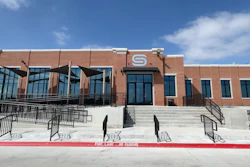
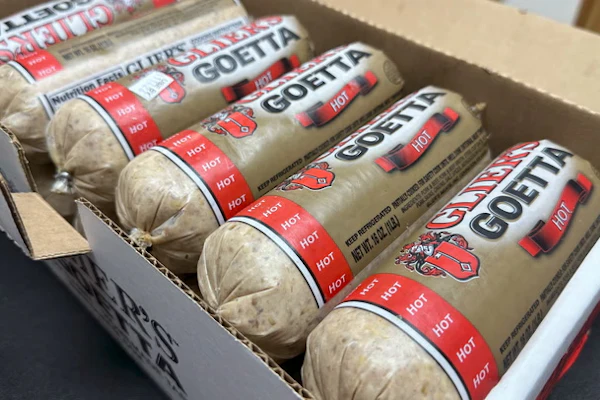
Casey Flanagan: Hi, I’m Casey Flanagan with ProFood World. I’m here at Glier's Goetta in Covington, Kentucky. Goetta is a Cincinnati area staple. It's a mix of pork and beef and steel cut oats. There's a unique manufacturing process to create it, and we're going to take a look inside to see how it's made.
Glier’s still begins by cooking pork and beef in kettles before grinding the meat. But what happened next used to be much more labor intensive. The oats and broth hydrated in long tanks for hours before employees mixed batches by hand.
David Glier: Every batch of goetta that we made had a guy sitting with an oar, turning the goetta over and over and making sure that the oats didn’t sit on the bottom, that the meat was appropriately mixed with the oats.
Casey Flanagan: Glier’s eventually found a used Mepaco ThermaBlend mixer with steam jacket and vacuum, and had the manufacturer help to rebuild it. The system worked without requiring any changes to Glier’s recipe.
Today, Glier’s uses two ThermaBlend systems—a 700-pound unit for regular production and a larger 2,100-pound system for peak demand. Together, they’ve significantly shortened production, improved batch-to-batch consistency and eliminated the physically demanding job of manually stirring every batch.
David Glier: Because we have these steam-jacketed blenders, all of that adverse environment and all of that labor is taken out of the process.
Casey Flanagan: From there, finished goetta is discharged into bins and moved to packaging, where it’s stuffed while still hot, manually clipped and then cooled before case packing.
The added efficiency has helped Glier’s keep production on a single shift and continue growing inside its historic Covington facility.
David Glier: When we thought it had to be manual, we were growing to the point that we needed more and more space to produce, and now we don’t.
Casey Flanagan: And Glier’s is already working with Mepaco on the next step: integrating the initial meat-cooking stage into the equipment to further modernize production of this Cincinnati staple. Read the full article at ProFood World for more details on how Glier's upgraded its goetta process.