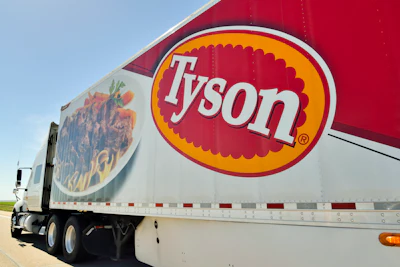
Tyson Foods announced plans to restore a second production shift at its Amarillo, Texas beef facility by summer 2027 through a partnership with Allied Beef Company, aiming to strengthen the domestic cattle supply chain amid the tightest U.S. cattle supplies in 75 years.
- Tyson Foods plans to restore the second shift at its Amarillo facility by summer 2027.
- The partnership with Allied Beef Company connects Tyson directly with American ranchers to improve cattle supply visibility and scheduling
- The U.S. faces its tightest cattle supplies in 75 years, with livestock costs outpacing gains from higher beef prices
- The USDA is reopening southern border ports to Mexican cattle imports, which previously represented 3-5% of U.S. cattle slaughtered
- Tyson's beef segment reported a $1.135 billion loss in FY2025
Tyson Foods plans to establish a long-term partnership with Allied Beef Company and restore a second production shift at its Amarillo, Texas, beef facility, which was eliminated earlier in 2026, the company announced November 9.
The proposed partnership would connect Tyson directly with American ranchers, aiming to strengthen the domestic cattle supply chain and support the company’s long-term beef production, Tyson says.
In anticipation of the partnership, Tyson is working to fully restore a second production shift at the facility—the company has already started restoring some second-shift operations—and it plans to make the shift fully operational by summer 2027.
The elimination of Amarillo’s second shift was expected to affect 1,761 jobs, according to a NewsNation report cited by ProFood World in January. The shift cut was accompanied by a facility closure at a Lexington, Neb., beef facility, which eliminated 3,212 jobs. The changes came after Tyson reported a $1.135 billion loss in its beef segment for FY2025, NewsNation said.
“The future of our beef business depends on strong partnerships across the supply chain,” Wes Morris, Chief Operating Officer at Tyson Foods, shared in the November 9 announcement. “We’re proud to announce our intent to partner with Allied Beef and the American ranchers they represent while continuing to invest in facilities like Amarillo. Together, we plan to strengthen our beef production, creating value for American ranchers, and helping ensure a reliable supply of high-quality beef for customers and consumers.”
Restoring Amarillo’s second shift will grow Tyson’s production and create significant additional employment opportunities, the company says.
Allied Beef says the partnership will strengthen connections across the cattle supply chain and create new opportunities for ranchers while helping to support the continued growth of beef production.
A partnership amid a tight cattle supply
Tyson’s partnership with Allied Beef comes as the U.S. faces its tightest cattle supplies in 75 years, a Reuters report says. The shortage has driven up livestock costs, outpacing gains from heightened steak and hamburger prices.
The partnership also comes as USDA's Animal and Plant Health Inspection Service (APHIS) moves forward with a phased reopening of southern border ports to livestock imports from Mexico. The agency announced plans to reopen the Columbus, N.M., port to cattle imports on October 26 as part of the plan. The reopening process includes enhanced safeguards against New World screwworm and continued evaluations of animal health conditions.
Before U.S. imports of Mexican cattle were halted, they used to make up between 3% and 5% of U.S. cattle slaughtered, according to Pooran Sharma, Analyst at Stephens, who told Reuters the proposed partnership likely reflects the resumption of those imports.
“A direct relationship with ranchers could provide [Tyson] with greater visibility into cattle availability, improved scheduling, and better plant utilization,” Sharma said.