Today’s news is a vivid reminder of how important track and trace capabilities have become in the food sector.
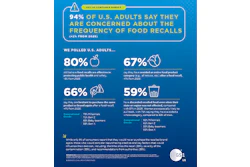
A “potentially massive” recall of foods made with the commonly used additive called hydrolized vegetable protein (HVP) was announced by the U.S. Food and Drug Administration on March 4. The tainted HVP was made at a plant operated by Basic Food Flavors Inc. of Las Vegas, NV.
FDA has asked food producers to check inventories for products that used recalled lots of HVP. It’s a pretty safe bet that some food producers are going to have more trouble than others when it comes to checking inventories for products that might contain the recalled HVP. If records are based on clip boards and paper and pencil, good luck. On the other hand, if those records are being generated and managed by one of the new data logging devices that are popping up around the food processing and packaging space, then checking inventory is going to be a whole different story.
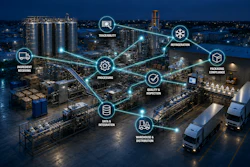
I can think of one firm in particular that should be able to check its inventory pretty painlessly. They’re called Q4 Integral Group and they’re based in Minden, NV. A relatively new company producing 1-L aseptic brick packs for retailers like Starbucks, Q4’s bar coding strategy provides a uniquely powerful track-and-trace capability. The bar coding doesn’t just begin at the packaging stage. Incoming raw materials are given a unique identification bar code. Take a box of sugar or a bulk container of juice concentrate, for example. In the case of sugar, every time sugar from that box is used, its use is entered into the system by a scan of the bar code. Any finished product out in the marketplace that has that sugar in it can be traced back to that box immediately.
Representatives of Q4 will be at the Packaging Automation Forum May 3-4 in Chicago to talk about how they’ve leveraged new Information Technology tools to tightly integrate their entire manufacturing operation. They’ll be joined by speakers representing General Mills, Mars, L’Oreal, Perrigo, PepsiCo, and Lion Nathan Brewery, and all will be talking about how they are finding ways to integrate packaging lines and packaging machinery into their business systems.
Speaking of integration as it relates to packaging, I also find it encouraging to see how the Packaging Machinery Manufacturers Institute has re-positioned its huge Pack Expo Exhibition so that processing is given a seat at the table as well as packaging. The wall between processing and packaging is an artificial one. Integrate the two and overall manufacturing efficiencies will be gained. Pack Expo’s embrace of processing will help package goods manufacturers achieve precisely that kind of manufacturing integration.