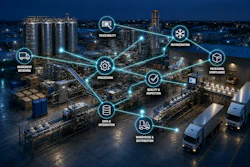
This episode looks at how retail mandates from companies like Walmart are setting the real timeline, even as the FDA’s traceability rule stays caught up in closed-door industry discussions. It covers how equipment makers are responding with smarter data capture, middleware that connects legacy machines to modern systems, and audit-ready documentation, and why those upgrades could become the data foundation for future AI use in processing.
Follow this podcast on your favorite streaming platform - links can be found by clicking here.
Transcript
Welcome to Through the Line, the podcast exploring innovations and information across the packaging and processing landscape. From topics impacting consumer packaged goods and healthcare packaging to the latest technologies in food processing operations.
Hi, I'm Casey Flanagan, Associate Editor with Pro Food World. This AI-generated podcast episode covers how food manufacturers are advancing traceability technologies even after the FDA's delay of FSMA Rule 204. It explores how retailer demands, data standardization initiatives, and equipment upgrades are driving lot tracking momentum regardless of regulatory uncertainty.
Today's deep dive explores how food manufacturers are accelerating their investments in traceability technology and equipment. And this is happening despite a 30-month delay to the FDA's FSMA Rule 204 in a generally uncertain regulatory environment.
Yeah, uncertain is definitely the right word for it.
So welcome to the deep dive, everyone. Our mission today is to really examine this comprehensive article on food manufacturing traceability. We need to understand why the processing industry is just pushing aggressively forward on lot level tracking.
Even when regulators are hitting the brakes.
Exactly. Or facing major legal hurdles. Imagine for a moment that the federal government suddenly announces that the speed limit on all major highways is completely suspended for the next three years.
You'd probably think you could just relax.
Put the car in cruise control, stop worrying about compliance. But what if the toll booths along that same highway suddenly declare they will not let you on the road at all unless your vehicle has a state-of-the-art actively transmitting data tracker?
Aaron Powell That's a great way to frame it because for you listening on the factory floor, that is not hypothetical at all.
Aaron Powell No, it is exactly what is happening right now.
It's such a fascinating dynamic to unpack, and the landscape you're navigating is undeniably complex. To understand the momentum of all these equipment upgrades happening across your facilities, we first have to look at the current state of regulatory chaos.
Aaron Powell Which is happening at both the state and federal levels.
Yeah. Exactly. Right now, there is this distinct tension between what lawmakers conceptually want to achieve and what is scientifically and practically enforceable on a production line.
Aaron Powell Legislative ambition colliding with physical reality.
Aaron Powell Exactly. The reality of supply chain data management.
Aaron Powell And we can see a perfect real-world example of this tension playing out at the state level if we look at West Virginia.
Aaron Powell Oh the food dye situation.
Trevor Burrus Yeah. So the state attempted to ban petroleum-based food dyes entirely. And this was supposed to start in 2025 through House Bill 2354.
Aaron Powell But it didn't quite pan out that way.
Aaron Powell No. The legislative intent was clear, but then just seven days into 2026, a federal court delivered a preliminary injunction in favor of the International Association of Color Manufacturers.
So they essentially blocked the state ban.
Aaron Powell Exactly. And the reasoning here is highly relevant to anyone dealing with compliance. The legislation used words like poisonous and injurious without actually defining those terms scientifically.
Which is the critical failure point right there. When regulatory language relies on subjective descriptors instead of objective, measurable thresholds.
Like parts per million limits.
Exactly, like PPM limits. Without that, it just fails to provide the scientific support required for a state ban to hold up in federal court.
Aaron Powell Because how do you even comply with that?
Aaron Ross Powell You can't. You cannot engineer a compliance protocol around the word injurious. And this state level uncertainty is mirrored perfectly by these massive shifts at the federal level regarding data traceability.
Aaron Powell Which brings us squarely to the FDA.
Aaron Powell The Food and Drug Administration, yes.
Aaron Powell So in March 2025, the FDA announced it was delaying the Food Safety Modernization Act, specifically the highly anticipated Rule 204 by a massive 30 months.
Aaron Powell A huge delay.
Aaron Powell And this is the cornerstone regulation for the processing industry's future. So to make sure we are evaluating this with complete accuracy, let's look at the exact definition of this rule from our source material.
I think that's crucial.
Aaron Powell Okay, here it is. Rule 204 is intended to enable identification of food safety incidents within 24 hours through digital records and lot level tracking throughout the supply chain.
Aaron Powell Exactly. And the main mechanism for hitting that 24-hour turnaround involves these strict record keeping obligations for any company that manufactures, processes, packs, or holds foods on the food traceability list.
Aaron Powell Which the industry usually just calls the FTL.
Aaron Ross Powell The FTL. Which includes items deemed high risk for contamination, leafy greens, soft cheeses, certain seafoods. Got it. But the rule doesn't just ask for a general ledger of where these foods went. It actually requires what are known as key data elements or KDEs, and those are associated with critical tracking events or CTEs.
Aaron Powell Okay, let's ground those acronyms in a concrete example for the listeners managing these lines. So a critical tracking event, a CTE, is a physical action, right?
Yeah, exactly.
Aaron Ross Powell Like receiving a pallet of ingredients at your loading dock or transforming those ingredients during processing or shipping the final packaged product.
Aaron Powell Yep, those are all CTEs.
Aaron Powell And then the key data elements, the KDEs, those are the highly specific digital footprints of that event. You need the exact lot code, the precise time, the location identifier, and the quantity.
All of that specific data.
Aaron Powell So if a food safety incident occurs, say a salmonella outbreak linked to a specific farm, companies must have the capability to extract these KDEs from their systems.
And provide them to the FDA within 24 hours or within another reasonable timeframe established by the agency.
Aaron Powell And that 24-hour extraction requirement is where the reality of the factory floor really clashes with regulatory ambition, isn't it?
Aaron Powell Oh, absolutely. Tracing a single lot of contaminated product backward through multiple distribution centers, processing plants, brokers.
That could take weeks.
Easily weeks, if you are relying on paper records or disconnected spreadsheets. So when the FDA announced that 30-month delay, I think the immediate assumption by a lot of people outside the industry was that bureaucratic turnover or administrative backlog was to blame. But the industry perspective points to a much more structural reality.
Aaron Powell Yeah, our sources highlight this perfectly. Dr. Jennifer McIntyre, the founder of Food Safety Strategy, she addressed this exact point.
What did she say?
She stated, quote, I don't believe the staff changes at the FDA had much to do with the 30-month extension. The FDA realized it would be impossible to enforce the rule if the Jan 2026 date had stood.
Aaron Powell And her assessment is spot on. It really highlights the fact that mandating a 24-hour turnaround for digital lot level tracking across thousands of disparate facilities, many with legacy equipment, it requires an interconnected digital infrastructure that just does not exist universally yet.
Enforcement would have been practically impossible.
Trevor Burrus Because a huge portion of the industry simply lacked the hardware and software architecture to comply.
Aaron Powell But this is where the narrative takes a really sharp turn for you, the listener.
It really does.
Getting a 30-month delay on a massive federal mandate feels like getting a massive extension on a daunting term paper.
Yeah, you feel like you can finally relax. Trevor Burrus, Jr.
Exactly. It seems like processing facilities finally have a moment to breathe, put their pencils down, maybe allocate their capital expenditures elsewhere for a bit.
But it is absolutely not a break.
No. That is the most deceptive part of this entire situation. The regulatory work has not stopped. It is merely shifted out of the public eye.
Which is concerning.
Very. And it is shifted in a way that has caused significant alarm and confusion among packaging and processing professionals. Which leads us directly to the controversies surrounding the Partnership for Food Traceability.
Ah, yes, the PFT.
So Congress utilized the 2026 Appropriations Bill to add a new comment period for the food traceability rule in February 2026.
Which is highly unusual.
Bypassing standard regulatory procedures via an appropriations writer, already a heavy-handed legislative maneuver. But the execution of this comment period was incredibly restrictive.
They excluded the general public.
And the wider industry. It was limited exclusively to the PFT, which is an organization consisting of only about 10 food companies.
Just 10 companies. The alarm generated by that maneuver is entirely justified. When you are asking thousands of facilities to overhaul their operational architecture, transparency is vital.
Absolutely. And Dr. McEntire Reese's serious concerns regarding this unprecedented move. She noted that the only listening session scheduled prior to the close of the comment period for the draft guidance was limited to paying members of the PFT.
Wow.
Yeah. Her direct quote captures the sentiment of the wider industry perfectly. She said, quote, I don't think anyone likes the idea of secrecy.
And she's right. When decisions affecting the entire supply chain are siloed among a fraction of a percent of the participants, trust just erodes rapidly.
Aaron Powell But despite the concerns regarding restricted access, that closed door meeting did take place on March 6th. And the framework established by the FDA and the PFT focused heavily on the mechanics of lot level tracking. They set out with highly specific objectives.
Aaron Powell Like identifying the exact points in the supply chain where lot level tracking has the potential to break down.
Aaron Ross Powell And examining the subsequent challenges those breakdowns create for facilities, discussing specific technological and operational solutions. Crucially, they also discussed exploring potential regulatory flexibilities to comply with the food traceability rule.
Aaron Powell And it is so vital to note the stark contrast between this closed door exclusive session and the traditional public comment meeting.
Aaron Powell The one titled Challenges and Solutions in Lot Level Food Traceability.
Exactly, which did not take place until June 15th, 2026. Aaron Powell Yeah. Aaron Powell Of course it did. Establishing the foundational framework and discussing potential regulatory flexibilities with a closed group of 10 companies well before opening the floor to the broader public in June naturally leads to questions about whose operational realities are being prioritized.
Aaron Ross Powell Because those 10 companies probably represent massive, highly capitalized operations.
Exactly, with very distinct logistical capabilities. Their solutions and their desired flexibilities might look very different from, say, a mid-sized regional processor.
Aaron Powell Okay, but let me play devil's advocate for a moment here. Aaron Powell Sure. Aaron Ross Powell Given the immense technical complexity of tracking key data elements across critical tracking events for thousands of different products, isn't a small, highly focused group of 10 companies a much more efficient way for the FDA to draft these initial technical guidelines?
Aaron Powell On paper, yes.
Aaron Ross Powell Because opening the floor to thousands of different facilities at the very beginning of the drafting process, that could result in endless debate, competing agendas, absolutely zero progress.
Aaron Powell From a purely administrative standpoint, your logic holds up. A small, well-resourced group is absolutely more agile when drafting complex technical specifications. It prevents design by committee. However, for the broader processing industry listening to this deep dive, that administrative efficiency comes at a very high cost. It creates a dangerous vacuum of uncertainty.
Ah, I see.
Facility managers and compliance officers are left guessing what those 10 companies are deciding on their behalf. And they're wondering whether the resulting rules will require completely different equipment than what they currently plan to purchase.
Which is terrifying when you're talking about massive capital investments.
Exactly. Stuart Thomas, the head of sales at Mettler Toledo, he summarized this reality on the ground by stating, quote, there still seems to be a limited understanding of how to comprehensively comply with the upcoming regulations.
And that vacuum of uncertainty brings us to the core contradiction we are exploring today.
The big question.
If the FDA has delayed enforcement by two and a half years, and the actual rulemaking process is currently mired in closed-door subcommittees, leaving the industry guessing, why are food manufacturers still rushing to upgrade their equipment right now?
Why not just wait?
The answer is unyielding retail pressure.
The major retail chains.
They have essentially become the de facto regulators of the food supply chain.
And that is the primary driver of capital investment today. These major retail chains are not waiting for the FDA to finalize its timelines or finish its subcommittee meetings.
No, they are pushing ahead. Look at Walmart and Sam's Club. They wield massive influence over the entire manufacturing sector, and they implemented firm requirements with an August 1, 2025 deadline.
That's a hard deadline.
Very hard. They required suppliers of all food and beverage items to comply with ASN or advanced shipping notice and packaging requirements.
And for those who don't know, the advanced shipping notice digitizes the receiving process, so the retailers' back-end systems know exactly what product from what lot is on a truck before it even arrives at the distribution center.
Furthermore, Walmart required food suppliers to confirm the FSMA 204 eligibility of their products directly in the item catalog if they had not already done so.
And they didn't back down when the FDA announced their delay, did they?
Not at all. Walmart made their stance explicitly clear in an October 2025 memo, and it essentially overrides the federal timeline.
What did they say?
They directly addressed the federal delay, stating, quote, While the FDA has recently proposed a 30-month extension to the compliance date for the food traceability rule, we strongly encourage all suppliers to maintain momentum in their compliance efforts.
Wow. So they are basically telling the processing industry that a federal delay does not equal a commercial delay.
Exactly. If you want your products on their shelves, you need to provide the digital traceability data right now.
And the processing industry is responding to that retail mandate with significant operational changes.
The data supports that, right?
Definitely. The January 2026 manufacturing outlook study revealed that 30% of respondents report digital technologies are currently affecting operations as they systematically replace paper records with electronic systems.
Aaron Powell, which is a massive logistical pivot.
It is. Furthermore, Dr. McCountire pointed out that the Food Safety Preventative Controls Alliance began offering FDA recognized training on traceability. And even though the rule does not currently require this specific training, the industry interest is extremely high.
Because manufacturers know they need the expertise to satisfy their retail partners.
Exactly. But we are seeing different operational responses based on the size and capital flexibility of the manufacturer.
That makes sense. We saw a quote about that from Craig Lorray, the global marketing manager for light industry at Eeries.
What was his take?
He noted, quote, traceability expectations are high among customers, and the level of discussion has significantly increased. Smaller producers may be more hesitant because they're unsure how the rules will ultimately be interpreted or enforced.
Which is completely understandable. For a smaller producer, investing half a million dollars in new networking equipment without knowing the final FDA rule is a massive risk.
Huge risk. But conversely, we see a much more aggressive strategy at the top of the market. Molly Dome, the quality lead at Industrial Magnetics, she observed, quote, larger manufacturers often act proactively and create their own internal expectations while waiting for more regulatory clarity.
Because they have the capital to invest in baseline digital infrastructure now, they know that whatever the FDA eventually decides, having high-resolution, standardized data will be a prerequisite.
Which brings us back to that highway analogy from earlier. The federal rules, the official speed limits, might be paused, but the toll booths, these massive retail chains, they dictate the reality of the journey.
If Walmart says you need a digital tracker to enter their ecosystem, you install the tracker.
Exactly. This transition from paper to digital is no longer just about preparing for a future FDA audit. It is an immediate prerequisite for maintaining your commercial viability.
It's table stakes now.
So how are processing professionals actually executing these changes? Let's look closely at how original equipment manufacturers, or OEMs, are meeting this moment on the factory floor.
And the major focus driving these equipment upgrades is data standardization. Data standardization is really the invisible engine of modern manufacturing. OEM upgrades right now are not just about compliance, they are supporting broader enterprise AI strategies across processing, manufacturing, and product development.
Because AI needs good data.
Exactly. Enterprise AI requires massive amounts of clean, standardized data to function properly. It cannot analyze a scanned PDF of a handwritten clipboard log.
Definitely not.
So equipment suppliers are upgrading data communication capabilities on both new machines and existing legacy equipment to ensure that raw data flows seamlessly, securely, and in a standardized format from the factory floor directly into the enterprise resource planning systems.
And we can see this play out with specific equipment providers making tangible changes to their hardware and software. Returning to Craig Lorray at EREAS, he states that food producers are actively looking for more data from their equipment.
They want it to be smarter.
They don't just want a machine that sorts or processes, they want a machine that reports on its own activities. In response, EREAS is developing software to not only capture that data, but to log it in a way that is genuinely useful for manufacturers.
That's key.
For example, they recently upgraded their Quality Retail Compliance or QRC software, specifically to provide audit-ready documentation.
Oh, that's smart.
Yeah. The software takes the raw machine data and automatically formats it to meet the exact reporting structures required by those retail mandates.
And that focus on audit-ready documentation solves a massive administrative headache for compliance teams. But we are also seeing fascinating hardware upgrades driven entirely by the need for better data capture.
Like what?
Molly Dome at Industrial Magnetics explained that the conversation with processors is shifting toward how magnetic separation equipment is applied within processing systems. Producers are actively requesting higher strength or higher Gauss magnets.
Really? Just stronger magnets.
Yeah, and the mechanism behind why they want stronger magnets is really interesting. It isn't just about catching larger pieces of tramp metal that might break a downstream grinder.
Okay, so what's it for?
By utilizing higher Gauss magnets, the facility improves its capture performance at specific control points. This allows them to pull incredibly fine metallic dust or particulates out of the product stream.
But why does that matter for data traceability?
Because tracking the volume of those microscopic particulates over time serves as a highly accurate diagnostic tool. It gives the facility high resolution data regarding potential contamination trends.
Oh wow.
If you suddenly see a spike in fine stainless steel dust, your AI system can flag that an upstream mixer or conveyor is slowly grinding itself down. That gives you a predictive maintenance alert well before a catastrophic equipment failure or a major contamination event occurs.
Okay, that is a perfect example of how a compliance-driven hardware upgrade transforms into a real predictive operational advantage.
Absolutely.
But the challenge for many facilities remains their existing machinery. A massive processing plant cannot afford to just replace a reliable 20-year-old sorting machine just because it lacks a Wi-Fi card or an Ethernet port.
No, that would be financial ruin.
Aaron Powell So Stuart Thomas at Metler Toledo addresses this specific hurdle. He notes that customers are looking to gather data from older devices by adding communication components and pursuing middleware solutions.
Middleware is huge right now.
Yeah. Metler Toledo's products data management software is a prime example of this approach. It provides real-time monitoring by utilizing Microsoft's SQL Server 2022 Express Edition.
Aaron Powell Which is brilliant. Think of middleware like a universal translator operating on the factory floor.
Okay.
It takes the proprietary, often analog signals of a legacy machine that was never designed for modern network connectivity. It translates that raw output into a standardized digital format and feeds it into the central SQL database right alongside the data coming from brand new, natively digital equipment.
So it bridges the gap between old iron and modern AI.
Exactly.
But this raises a vital question regarding these legacy equipment upgrades. Is bolting aftermarket sensors and middleware onto older machines just a temporary band-aid?
Aaron Powell A lot of people ask that.
Are facilities just doing the bare minimum to appease Walmart's immediate deadlines until they can afford to replace the entire line, or does this represent a permanent operational shift?
It is undeniably a permanent operational shift. While the initial catalyst for installing these communication components might be the immediate pressure of retail compliance, the outcome is a permanent enhancement of the facility's analytical capabilities.
Aaron Powell They're actually seeing the benefits.
Yes. Food manufacturers are already seeing tangible returns on investment from these data standardization initiatives. By unlocking the data trapped inside their legacy machines, facilities are identifying hidden bottlenecks, reducing energy waste, and improving overall product consistency.
So it goes way beyond just passing an audit.
Exactly. They are strengthening their foundational traceability programs permanently. Once a facility experiences the operational clarity that comes with real-time, lot level data visibility, they do not go back to paper records, regardless of when FSMA 204 ultimately takes effect.
Aaron Powell That operational clarity is clearly worth the investment.
Absolutely.
So to summarize our findings today, the traceability landscape you are operating in is defined by a stark contrast.
A very clear divide.
On one side, you have a federal regulatory body that has delayed enforcement by 30 months, state level bans being blocked by federal injunctions due to a lack of precise scientific definition, and future regulatory frameworks being drafted in closed-door subcommittees that exclude the broader public.
The legislative side is just a quagmire of delays and uncertainty.
Exactly. But on the other side, you have unyielding customer demands and retail mandates from giants like Walmart that have made advanced digital lot level traceability a non-negotiable reality for the packaging and processing industry today.
The toll booths are demanding the data right now.
The toll booths are not waiting. And the processing industry is clearly demonstrating that it cannot afford to wait for regulatory certainty.
The continuous improvement of traceability systems, driven by immediate commercial necessity and the threat of losing major retail contracts, has completely outpaced the speed of federal legislation.
So upgrading your data infrastructure is no longer a future-proofing exercise.
No, it is the cost of doing business today.
Which leaves us with a vital concept for you to consider as you evaluate the capital expenditures for your own processing lines this quarter?
It's an important question.
With facilities currently retrofitting legacy equipment with sensors, high gauss magnets, and middleware primarily to satisfy immediate retail compliance and audit requirements, how will this forced baseline of high-resolution standardized data eventually reshape the way your facilities deploy enterprise AI for entirely new product development in the years to come?
The compliance mandate of today is really building the innovation infrastructure of tomorrow.
Very well said. Thank you all for joining us for this deep dive.
Thank you for listening to Through the Line Packaging and Processing. You can listen to more episodes on all streaming platforms. Be sure to visit us at packworld.com, profoodworld.com, and healthcarepackaging.com for more packaging and processing news. This podcast was edited by Bri Guntz.
Companies in this podcast
Videos from Industrial Magnetics, Inc.


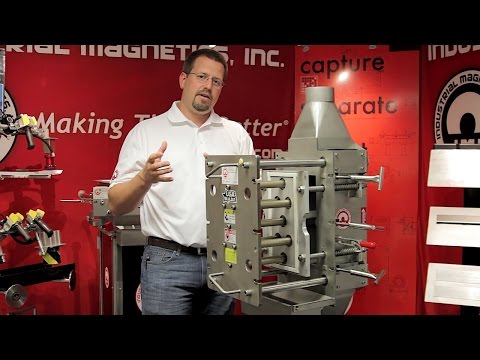
Videos from Eriez