Adoption will require coordination between purchasing decisions, customer expectations and the operating requirements of individual facilities.
Dusan Petkovic/Adobe Stock
FDA-approved PRRS-resistant pigs, developed using CRISPR gene editing technology, offer pork processors and producers a way to reduce disease-related supply disruptions and losses that cost the industry $1.2 billion annually. The genetic modification prevents porcine reproductive and respiratory syndrome infection while maintaining normal meat quality, potentially enabling more consistent livestock supplies and better plant scheduling.
FDA Approval: The CRISPR-edited pigs received FDA approval on April 29, 2025, after safety and food quality review confirmed no concerns for consumers or animals.
Disease Impact: PRRS caused an estimated $1.2 billion in annual U.S. pork production losses from 2016 through 2020, with growing herds accounting for 68% of losses.
Genetic Modification: Scientists deleted exon 7 from the CD163 gene using CRISPR-Cas9 technology, disrupting the virus infection process while preserving protein function.
Meat Quality: Research found no statistically significant differences in meat composition, quality, or carcass characteristics between edited and unedited pigs.
Supply Chain Coordination: Processors must implement product tracking systems, maintain separate inventory codes, and align with export rules and customer specifications for successful adoption.
A genetic change made before a pig is born could eventually help pork plants manage one of their most persistent upstream risks: disease-related disruptions in livestock supply. The CRISPR gene edit that makes pigs resistant to porcine reproductive and respiratory syndrome (PRRS) has received U.S. Food and Drug Administration (FDA) approval, bringing the technology closer to broader commercial use.
The introduction of PRRS-resistant pigs could affect the entire pork supply chain, from breeding and herd management to livestock procurement and plant operations. Healthier herds could reduce disease-related losses and growth setbacks, helping producers deliver more consistent supplies of market-ready pigs. For processors, adoption will require coordination between purchasing decisions, customer expectations and the operating requirements of individual facilities.
Targeting a costly disease
PRRS causes reproductive problems in breeding animals and respiratory disease in growing pigs. An Iowa State University analysis estimated that the disease caused $1.2 billion in annual U.S. pork production losses from 2016 through 2020, about 80% higher than its estimate for 2006 through 2010. Growing herds accounted for 68% of the more recent losses. The virus continues to evolve, complicating control, while vaccines offer limited protection.
PIC (Pig Improvement Company), the porcine genetics business of Genus, advanced the development of PRRS-resistant pigs by building on pioneering findings reported in 2015 by scientists at Genus, the University of Missouri and Kansas State University. Using CRISPR-Cas9, a tool that allows researchers to cut DNA at a targeted location, the company deleted exon 7, a specific segment of the pig’s CD163 gene. That segment encodes a portion of the CD163 protein involved in establishing PRRS virus infection. Removing it disrupts the infection process while retaining the rest of the protein.
Researchers make the alteration in embryos to establish breeding animals, which subsequently transmit it through conventional reproduction. Resistance requires two copies of the edited gene, one inherited from each parent. Animals with only one copy can carry the trait without being resistant themselves, making breeding strategy essential to rollout.
Approval precedes wider adoption
The FDA approved the intentional genomic alteration on April 29, 2025. Its review concluded that the alteration was safe and effective for its intended use and raised no food safety concerns for people or animals consuming products from the pigs. Ongoing monitoring is also required to verify the stability of the edit and resistance trait, and to identify any potential animal health concerns.
In its 2026 annual report, Genus said commercialization was beginning in certain Latin American countries while it continued seeking approvals in Mexico and Japan, major markets for U.S. pork, and in China. Export access is therefore a central commercial consideration for U.S. adoption. Beyond regulatory approvals, the economic case will depend on disease pressure, genetics costs and breeding schedules.
Potential value for producers
For producers, potential value includes avoiding PRRS-related deaths, reproductive losses and slower growth.
Fewer secondary bacterial infections could also reduce the need for antibiotics, which treat bacterial complications rather than PRRS itself. Reduced reliance on antibiotics could appeal to consumers concerned about their use in livestock production.
Resistance to PRRS leaves other disease risks in place, so producers will still need veterinary oversight and biosecurity.
Implications for processing and plant scheduling
The gene edit is intended to prevent infection, rather than change the processing characteristics of pork. A Genus-funded study published in Frontiers in Genome Editing in March 2024 found no statistically significant differences in meat composition or the measured meat quality characteristics between edited and unedited pigs. The reported meat quality and composition comparison involved 10 animals per genotype, so the findings should not be interpreted as a guarantee of identical performance across every commercial setting.
The FDA’s broader review similarly found no significant differences in the muscle composition, nutritional content, carcass characteristics and meat quality of the groups evaluated.
The research also examined animal performance and inheritance of the edit. Researchers assessed pigs from birth through growth and, for selected females, production of their first litter, while breeding studies demonstrated stable inheritance through three subsequent generations.
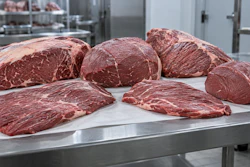
The meat-quality and composition findings support the expectation that existing slaughter, chilling, fabrication and packaging systems can handle the animals and their pork. They do not establish a basis for faster line speeds, different cooking schedules or longer shelf life. Plants would still need to verify incoming material against their specifications and maintain established food safety controls.
The larger potential benefit is a more consistent livestock supply, with fewer disease-related disruptions affecting the number and timing of animals ready for market. If resistance reduces mortality and growth setbacks, procurement teams could have more reliable forecasts of market-ready animals. Greater predictability could help plants coordinate livestock receiving, staffing, slaughter schedules and cooler capacity. These are potential downstream benefits of healthier herds, rather than plant-level improvements already demonstrated through broad U.S. deployment.
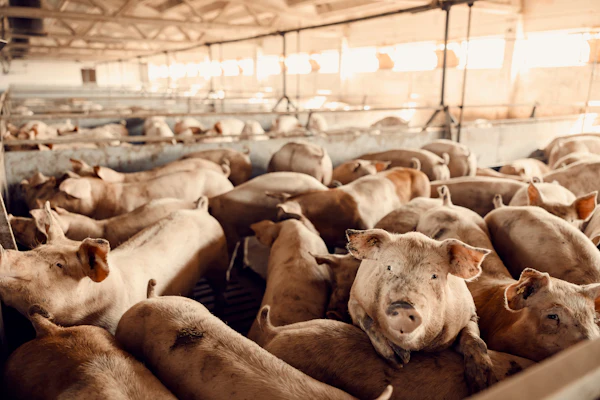
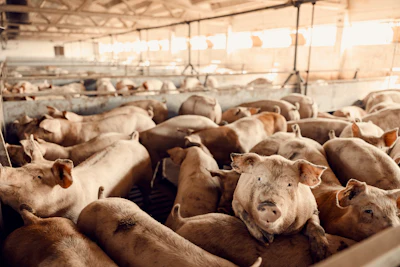
As PRRS-resistant pigs enter commercial supply chains, processors may need to adapt how they document livestock sources and product eligibility.Dusan Petkovic/Adobe StockMaintaining product identity and market access
As PRRS-resistant pigs enter commercial supply chains, processors may need to adapt how they document livestock sources and product eligibility. Where export rules or customer contracts distinguish pork from edited animals, plants would need a reliable way to carry that information from livestock receiving through carcass identification, fabrication, packaging and shipping.
Maintaining product identity becomes particularly important when material from multiple carcasses is combined, since the resulting batch must meet the requirements of its intended market. Depending on customer specifications, facilities might use designated production lots, separate inventory codes and documented controls for commingled trim. These arrangements would need to connect supplier records with finished-product destinations and shipping documentation.
Processors would also need suitable markets or outlets for offal and other byproducts. Planning would therefore need to account for the full range of products generated from each animal, including material destined for food manufacturing or rendering.
Labeling requires careful distinctions
U.S. bioengineered food disclosure rules do not apply uniformly to every product containing meat. The U.S. Department of Agriculture explains that a product subject to the Federal Meat Inspection Act generally falls outside the National Bioengineered Food Disclosure Standard when meat is its predominant ingredient. Fresh pork and many pork-first products therefore fall outside that standard’s scope.
However, the agency cautions that exemption from mandatory disclosure does not, by itself, justify a “non-GMO” claim referring to the absence of genetically modified organisms. Products with different formulations and regulatory jurisdiction require separate evaluation.
Processors should distinguish mandatory disclosures from voluntary production claims and customer specifications. A statement about reduced antibiotic use, for example, needs evidence to support the claim; PRRS resistance alone does not establish that an animal was raised without antibiotics.
For packaging operations, the practical issues include approved artwork, accurate product descriptions and matching the correct labels to eligible lots. Customer communication may also require information beyond what appears on the retail package.
From disease resistance to commercial readiness
The potential benefits of PRRS-resistant pigs extend beyond herd health to the dependability of pork production. Translating demonstrated disease resistance into broader commercial value requires coordination throughout the supply chain.
Broader adoption will depend on breeding and procurement, reliable product records, export approvals and consumer acceptance. Transparent communication about the technology, its benefits and regulatory oversight can help customers understand how the pigs are bred and assessed for disease resistance, animal health and food safety.
PRRS-resistant pigs highlight gene editing’s growing role in protecting livestock health and supporting stronger plant operations. The technology’s promise lies in making disease resistance a lasting asset for the pork industry and potentially other livestock sectors.
 As PRRS-resistant pigs enter commercial supply chains, processors may need to adapt how they document livestock sources and product eligibility.Dusan Petkovic/Adobe Stock
 As PRRS-resistant pigs enter commercial supply chains, processors may need to adapt how they document livestock sources and product eligibility.Dusan Petkovic/Adobe Stock